


Hanle, Ladakh: India's Celestial Sanctuary
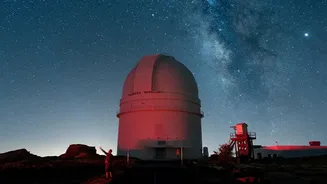
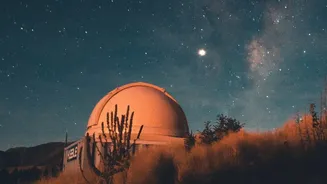
Considered the crown jewel of Indian astronomy, Hanle in Ladakh is more than just a destination; it's a sanctuary for the stars. Situated at a breathtaking altitude of 4,500 metres, it was officially designated as India's first Dark Sky Reserve. This
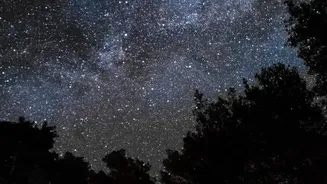
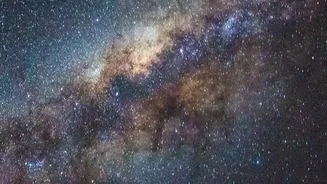
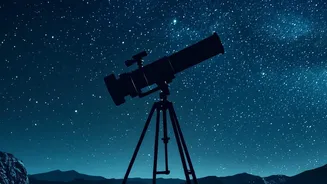
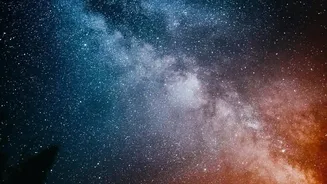
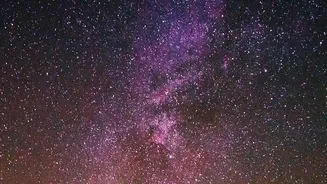
high-altitude cold desert offers exceptionally clear and dry atmospheric conditions, making it home to the Indian Astronomical Observatory, one of the highest in the world. For visitors, this translates to an almost surreal celestial experience. On a moonless night, the Milky Way is not just a faint smudge but a brilliant, structured river of light stretching from horizon to horizon, so bright it can cast a faint shadow. The area is a haven for serious astrophotographers and anyone seeking a profound connection with the cosmos. The best time to visit is between June and September when the weather is clearer.
Spiti Valley, Himachal Pradesh: A High-Altitude Desert Dream
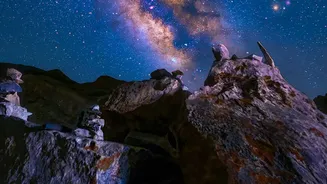
Spiti Valley's otherworldly landscape of barren mountains, ancient monasteries, and remote villages makes it a spectacular destination by day, but its true magic arguably emerges at night. This cold desert region in Himachal Pradesh boasts some of the darkest skies accessible in Asia, with villages like Kibber, Komic, and Langza offering near-perfect conditions for stargazing. At altitudes often exceeding 4,000 metres, the air is thin and free from the light and air pollution that plagues lower regions. This high-definition viewing allows the naked eye to spot not just constellations but also distant galaxies and meteor showers. Many travellers find the experience of seeing the stars from the world's highest villages, like Komic, to be the most memorable part of their trip. The ideal window for a visit is from May to October when the roads are open and the skies are generally clear.
Rann of Kutch, Gujarat: Stargazing Over Salt Flats
The Great Rann of Kutch offers a stargazing experience unlike any other in India. This vast, flat expanse of white salt desert creates an uninterrupted 360-degree panorama of the night sky. Far from major urban centres, the region has minimal light pollution, allowing for brilliant views of the cosmos. The dry desert air during the winter months from November to February ensures crystal-clear visibility. The experience is particularly unique during the Rann Utsav festival, where visitors can camp under the stars after a day of cultural immersion. On moonless nights, the sky is a dense blanket of stars, while a full moon baths the white salt in an ethereal, silvery glow, offering two distinct but equally magical spectacles. Kala Dungar, the highest point in Kutch, provides an excellent vantage point for panoramic views of the star-filled sky.
Coorg, Karnataka: A Southern Starry Escape
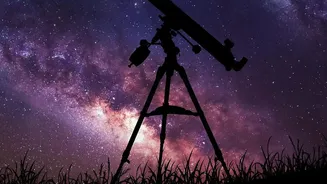
For those in Southern India, the misty hills of Coorg (Kodagu) in Karnataka provide a tranquil and accessible escape for celestial viewing. While not as high or dry as its Himalayan counterparts, the region's distance from major city lights and its lush coffee and spice plantations offer pockets of profound darkness. The southern valleys near the Brahmagiri foothills are particularly noted for their dark skies, where the Milky Way is clearly visible on moonless nights. The best viewing season is from November to May, after the monsoons have cleared the skies. For those wanting to see the dense galactic core of the Milky Way, the window between February and May is ideal. Several astro-camps and observatories, like the one by Starscapes, offer guided sessions with telescopes, making it a perfect destination for both curious travellers and families.