




What is Agrivoltaics?
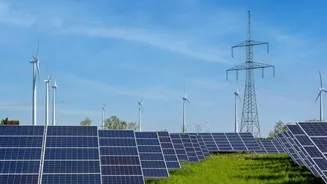
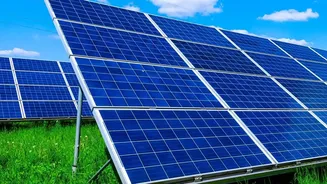
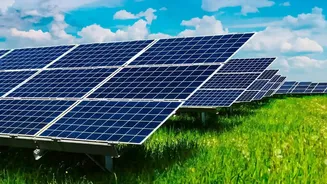
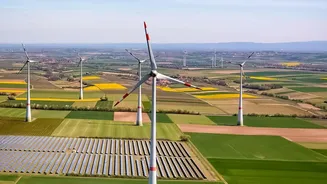
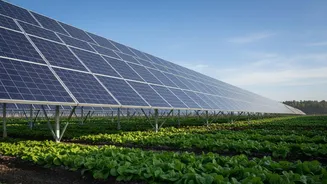
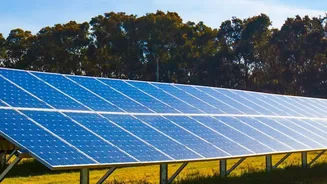
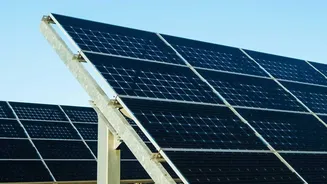
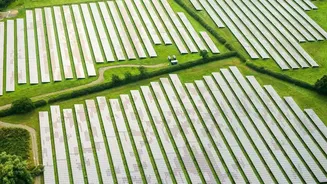
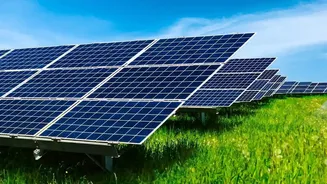
Agrivoltaics, also known as solar farming, is the practice of using the same parcel of land for both solar power generation and agriculture. Instead of conventional solar farms that cover the ground completely, agrivoltaic systems mount solar panels high
enough off the ground to allow crops to grow underneath. This dual-use approach is designed to tackle two of India’s most pressing challenges: producing clean energy and ensuring food security. With India aiming to install 500 GW of renewable energy capacity by 2030, the demand for land is immense. Agrivoltaics presents a way to expand solar infrastructure without taking fertile land out of food production, potentially increasing total land productivity by up to 160% compared to single-use farming or solar generation.
The Unexpected Benefits of Shade
While it may seem counterintuitive to shade crops, the partial shadow cast by solar panels creates a unique microclimate that can be highly beneficial. In India's often harsh climate, this shade protects plants from excessive heat, heavy rainfall, and hailstorms. This protection reduces heat stress on crops, which can lead to improved yields for many shade-tolerant varieties like leafy vegetables, turmeric, and certain spices. The cooler temperatures under the panels, which can be 3-5°C lower during peak summer heat, can also extend the growing season for heat-sensitive crops. Pilot projects have shown that while some sun-loving crops may see a slight reduction in yield, others like ginger and turmeric have shown yield improvements of up to 25%.
A Critical Solution for Water Scarcity
One of the most significant advantages of agrivoltaics in the Indian context is water conservation. The shade from the solar panels reduces the rate of moisture evaporation from the soil. This means less water is needed for irrigation, a crucial benefit in a country where many agricultural regions face severe water stress. Studies have indicated that water savings in agrivoltaic setups can be substantial, ranging from 15% to 30%. For some crops in arid regions, this can make a monumental difference. Some advanced systems are even being designed to integrate rainwater harvesting, further bolstering water security for farmers and reducing the strain on India’s precious groundwater resources.
Boosting and Stabilising Farm Income
For millions of Indian farmers grappling with unpredictable weather and fluctuating market prices, agrivoltaics offers a powerful new source of financial stability. It provides a dual income stream from the same piece of land. Farmers continue to earn money from their crop yields while also generating revenue from the electricity produced by the panels. This can be done by leasing their land to solar developers for a fixed annual income or by selling the power generated to the grid themselves under schemes like PM-KUSUM. This turns solar energy into a reliable 'third crop' for farmers, providing a predictable income that is not dependent on a good monsoon or favourable market conditions. State-level initiatives in Delhi, Maharashtra, and Gujarat have already started promoting models that provide farmers with stable monthly incomes for participating in solar projects.
Challenges on the Horizon
Despite its immense potential, the widespread adoption of agrivoltaics in India faces several hurdles. The primary challenge is the high upfront capital cost of installing these systems, which are more expensive than traditional ground-mounted solar farms. Furthermore, there is a need for more research to identify the most suitable crops for different regions and to optimize the design of the solar arrays—such as panel height and spacing—to balance electricity generation with agricultural productivity. A lack of clear, unified government policies and financial incentives specifically for agrivoltaics has also slowed progress. For the push to succeed, it will require a concerted effort from policymakers, researchers, and financial institutions to create an ecosystem that makes this technology accessible and profitable for the average farmer.