






The artificial intelligence boom has long been seen as the engine of the market, but a sharp November selloff in tech stocks suggests a new reality is dawning. Investors are finally asking: what is the real cost of this AI revolution?
A Reality Check for the AI Boom
The first week of
November saw a severe rout in technology stocks, wiping trillions from market valuations and sending the tech-heavy Nasdaq into a correction. On November 5th alone, the Nasdaq Composite dropped 5.5% while the S&P 500 fell 4.4%, marking its worst day since April 2025. This wasn't a general market panic; it was a targeted hit on companies at the heart of the AI buildout. Chipmakers like Nvidia and companies involved in data center infrastructure led the decline. For much of the past few years, merely announcing a major investment in AI was enough to send a company's stock soaring. This November rout signals that this era of blind faith is over. Investors are no longer just cheering for spending; they are scrutinizing the bill.
The Staggering Cost of Intelligence
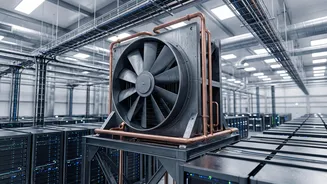
Building the future of AI is proving to be extraordinarily expensive. The industry’s largest companies, known as hyperscalers, are projected to spend around $730 billion to $800 billion on capital expenditures in 2026 alone, with estimates climbing to $1 trillion in 2027. These costs are driven by a voracious appetite for advanced GPU chips, the construction of massive data centers, and the enormous energy required to power them. A single AI-optimized data center can cost over $1 billion to build. This spending has become so immense that, for the first time, the biggest tech players are seeing their capital expenditures outpace their cash flow. Five top tech firms recently posted a combined free cash flow deficit of $14 billion, a stark reversal from a $143.5 billion surplus a year prior. This has forced them to take on significant debt to fund their AI ambitions, a move that introduces new risks.
From Growth to 'Show Me the Profit'
The market's mood has shifted from 'growth at any cost' to 'show me the profits'. The central question is no longer how much companies are investing in AI, but whether those investments can generate a clear and timely return. Analysts have pointed out that for the current level of spending to be justified, AI-related revenues would need to grow tenfold by 2030, a pace that implies a much more severe disruption to the economy than is currently seen. The selloff was partly triggered by disappointing earnings reports that suggested this path to profitability is not guaranteed. When Google's parent company, Alphabet, reported slowing revenue growth in its core search segment, its shares tumbled, raising fears that its own AI tools might be hurting its ability to make money. Investors now want to see 'growth without runaway spending', rewarding companies that can demonstrate a reasonable balance between investment and returns.
A Correction or a Deeper Crisis?
Analysts are divided on whether this market downturn is a temporary, healthy correction or the beginning of a more significant crisis for the AI sector. Some argue the selloff is a necessary reset, letting some air out of what many saw as an AI bubble. They believe that a more measured pace of investment could actually be more sustainable in the long run, easing pressure on credit markets and inflation. Others believe the fundamentals driving the AI boom remain strong. They argue that the need for AI-driven productivity and new technologies will not disappear, suggesting the investment cycle will remain intact despite the market's 'indigestion'. However, external factors, such as the Democratic sweep in the US midterm elections, have added a layer of uncertainty, with investors now fearing tighter regulations on data center construction, particularly around their high energy and water usage.