






When and Where to See the Show
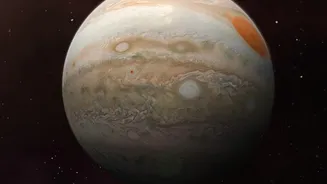
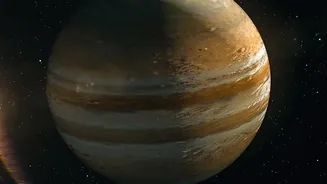
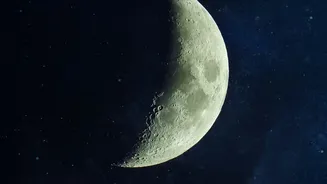
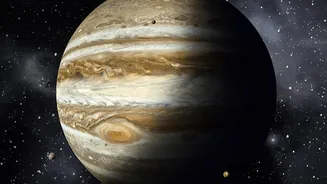
The main event happens in the early morning of Tuesday, October 6, 2026. Before the sun rises, look towards the eastern or southeastern sky. You'll find a waning crescent Moon, and Jupiter will appear as a stunningly bright, star-like object very close
to it. Jupiter rises around 2:30 to 3:00 AM local time, but becomes easier to spot as it climbs higher in the sky closer to dawn. While the Moon and Jupiter will be close on the morning of the 6th, it's also worth looking on the morning of October 5th, when the Moon will be near Mars, with Jupiter shining brightly nearby.
A Rare Occultation for Some
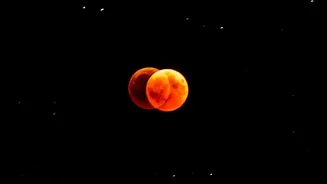
For many observers, this will be an exceptionally close meeting, known as a conjunction. However, for those in specific parts of the world, including eastern North America, the Caribbean, and parts of Africa, something even more special will occur: a lunar occultation. This is when the Moon passes directly in front of Jupiter, temporarily hiding the giant planet from view. While observers in India won't see the full occultation, they will still witness a strikingly close approach, making it a must-see event. The two celestial bodies will be near enough to create a memorable sight in the pre-dawn sky.
What You Will See
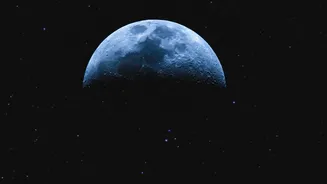
You don't need any special equipment to enjoy this celestial pairing. Jupiter is one of the brightest objects in the night sky, and you can distinguish it from a star because its light is steady and doesn't twinkle. On October 6th, it will be unmistakable next to the slim crescent of the Moon, which will only be about 20% illuminated. The sight of the bright planet hanging next to the delicate crescent Moon against the dark backdrop of the pre-dawn sky will be spectacular on its own. It's a fantastic opportunity for early risers to connect with the cosmos without any complicated charts or tools.
Enhance Your View with Binoculars
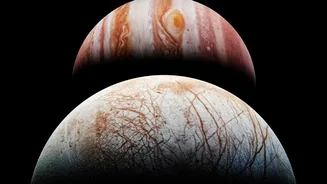
While the event is perfectly visible to the naked eye, a pair of binoculars or a small telescope will make it even more dramatic. With binoculars, Jupiter will resolve from a point of light into a tiny, pale disk. Even better, a basic telescope might reveal Jupiter’s four largest moons, known as the Galilean moons: Io, Europa, Ganymede, and Callisto. These tiny dots of light flanking the planet are a solar system in miniature. Seeing them for yourself can be an unforgettable experience, and this close approach with our own Moon provides the perfect chance to try.
Simple Tips for a Great Experience
To make the most of this stargazing opportunity, find a location with a clear view of the eastern horizon, away from tall buildings and direct streetlights. Give your eyes about 15-20 minutes to fully adjust to the darkness; this will help you see fainter details. Avoid looking at your bright phone screen, as it can ruin your night vision. If you use a stargazing app to help you get oriented, switch it to its red-light mode. Finally, be patient. The pre-dawn hours can be peaceful, and taking the time to simply look up and watch the sky is a rewarding experience in itself.