



Shastri's 'Smart' Mandate
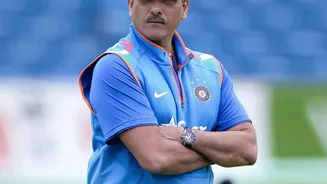
In a recent media interaction, former India head coach Ravi Shastri delivered a straightforward message for wicketkeeper-batsman Rishabh Pant: 'be smart'. Shastri clarified that he is not asking Pant to abandon his natural, aggressive style of play that has won
India matches in the past. Instead, the advice is a call for greater game awareness and judicious shot selection. 'He has immense ability and shouldn't change his natural game. Just remain aware of the match situation,' Shastri stated, putting the onus on Pant to balance his attacking instincts with the demands of the team at crucial moments.
The White-Ball Conundrum
Shastri's comments come at a time when Pant's place in India's white-ball teams is far from secure. While he remains a vital cog in the Test squad, renowned for his game-changing innings, his stocks in ODIs and T20Is have fallen due to inconsistency. The core issue has often been his high-risk approach leading to untimely dismissals, leaving the team in precarious situations. This has been a persistent criticism throughout his white-ball career, where moments of brilliance are often punctuated by frustrating lapses in judgment. This inconsistency is a major reason why he has reportedly fallen out of favour in the limited-overs formats as selectors begin to formalise plans for the next World Cup cycle.
A Crowded Field of Contenders
Pant's challenge is magnified by the intense competition for the wicketkeeper-batsman role. Players like KL Rahul, Sanju Samson, and Ishan Kishan are all strong contenders, each bringing a unique set of skills to the table. KL Rahul, in particular, has emerged as a reliable middle-order batsman and a steady presence behind the stumps, offering the team balance. Ishan Kishan provides another left-handed, aggressive option, while Sanju Samson's supporters have long advocated for his consistent inclusion based on his elegance and power. With the selection pool getting deeper, Pant can no longer rely on his potential alone; consistent, match-winning performances are the need of the hour to reclaim a permanent spot.
The High-Risk, High-Reward Dilemma
The debate around Pant encapsulates a classic cricketing dilemma: should a team back a player with a rare ability to single-handedly win a match, even if it comes with the risk of frequent failures? His supporters will point to his heroic, counter-attacking innings in Test cricket as proof of his value. He is a player who can turn a game on its head in a single session. However, in the tighter confines of a 50-over match, one reckless shot can prove far more costly. Shastri's advice is not to curb that match-winning instinct but to refine it. The challenge for Pant is to evolve into a player who not only entertains but who can be consistently relied upon to read the flow of the game and make smarter decisions under pressure.