








What Is This Celestial Pairing?
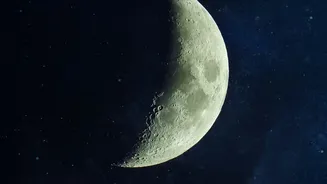
In late October 2026, the Moon will pass very close to a famous star cluster known as the Pleiades. This event, called a conjunction, is a line-of-sight phenomenon where two celestial objects appear near each other in our sky. On the nights of October 27th
and 28th, the waning gibbous Moon will glide past this sparkling group of stars, creating a stunning visual spectacle that will be visible for most of the night. The bright light of the Moon next to the delicate shimmer of the distant stars makes for a beautiful and easily observable pairing.
Meet the Pleiades: The Seven Sisters
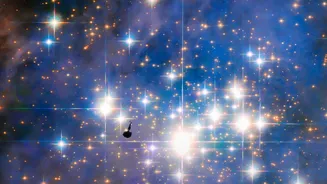
The Pleiades, also known as Messier 45, is one of the most recognisable star clusters in the night sky. To the naked eye, it often looks like a tiny, misty dipper made of six or seven faint stars. This resemblance is why it is famously nicknamed the 'Seven Sisters,' based on figures from Greek mythology. However, the cluster actually contains over a thousand young, hot blue stars, born from the same cloud of gas and dust about 440 light-years from Earth. In India, the Pleiades hold deep cultural significance. In Vedic astrology, this cluster is known as Krittika, the third of the 27 nakshatras (lunar mansions). The Krittikas are revered as the six celestial foster mothers of the war god Kartikeya, who developed six faces, one for each of them. This ancient connection makes watching the Moon visit Krittika a special experience, linking a modern celestial event with timeless mythology.
When and How to Watch
The best nights to view this event will be October 27th and 28th, 2026. You won't need any special equipment to see the pairing. Simply head outside a couple of hours after sunset and look towards the eastern sky. The bright Moon will be your guide, and the Pleiades cluster will appear as a small, tight group of stars nearby. To locate the Pleiades on any other night, first find the familiar constellation of Orion and its three-star belt. Draw an imaginary line through the belt stars upwards until you hit the bright, reddish star Aldebaran, the eye of Taurus the Bull. Continue that line a little further, and you will spot the compact, glittering patch of the Pleiades.
Tips for the Best Viewing Experience
While the pairing is visible with the naked eye, a few tips can enhance your view. First, try to find a location away from bright city lights. The darker the sky, the more stars of the Pleiades you will be able to see. Second, give your eyes about 15-20 minutes to fully adapt to the darkness. During this event, the Moon will be quite bright, which can wash out the fainter stars of the cluster. A simple trick is to block the direct glare of the Moon with your hand or by positioning yourself behind a tree or building. This will make it much easier to see the delicate sparkle of the Seven Sisters. If you have a pair of binoculars, bring them along. They are the perfect tool for this event, as they are powerful enough to reveal dozens more stars in the cluster while still providing a wide enough view to see both the Moon and Pleiades in the same frame.