





Looking for a truly magical escape? Stargazing offers a breathtaking window into the cosmos, but finding the perfect spot away from city lights can be a challenge. Our guide simplifies the search, highlighting India's safest and most spectacular locations.
Safety First: What to Look For
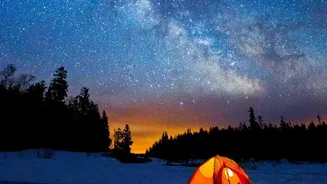
A great stargazing experience is both awe-inspiring and safe. Before you pack your bags, consider three key factors. First, minimal light pollution is non-negotiable; you need to be far from the glow of cities to see the faintest stars. Second, accessibility and personal security are crucial. Choose locations that are reasonably easy to reach and well-regarded by other travellers, especially if you plan to be out late. Third, prepare for the conditions. High-altitude locations get cold at night, even in summer, so dressing in warm layers is essential. Always carry a red flashlight, as it preserves your night vision, unlike the harsh glare of a white light.
Hanle, Ladakh: India's Official Dark Sky Reserve
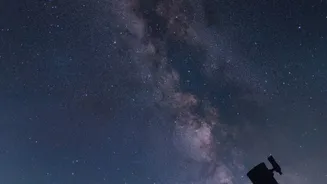
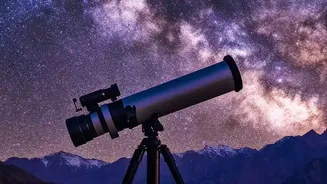
For the ultimate stargazing experience, Hanle in Ladakh is unparalleled. It is home to India's first-ever Dark Sky Reserve, a designated area where light pollution is actively controlled to protect the pristine night sky for astronomical research and tourism. Located at a breathtaking altitude of 4,500 metres, the dry, cold desert air and over 300 clear nights a year offer exceptional clarity. Here, the Milky Way is not just visible but appears as a brilliant, detailed arc across the sky. The reserve is a science-driven project aimed at boosting astro-tourism, with local guides trained to operate telescopes for visitors.
Spiti Valley, Himachal Pradesh: A High-Altitude Desert
Spiti Valley's remote, high-altitude landscape makes it a stargazer's paradise. Often called a 'cold desert', its dry climate and minimal population mean the skies are incredibly clear, ranking it among the best places for naked-eye astronomy. Villages like Kibber, Komic, and Langza are renowned spots, sitting at elevations where the thin air reduces atmospheric distortion. On a moonless night, the view is so clear that the Milky Way can be bright enough to cast a faint shadow. The best time to visit for clear skies is generally between May and October, avoiding the peak monsoon months that affect other parts of India.
Rann of Kutch, Gujarat: A Universe on Salt Flats
The Great Rann of Kutch offers a stargazing experience unlike any other. The vast, flat salt desert provides an unobstructed 360ndegree view of the horizon. With virtually zero light pollution, the night sky is incredibly dark, allowing constellations and planets to shine brightly. During the winter months, especially from November to February, the dry air leads to crystal_clear conditions. The experience is particularly magical during the Rann Utsav festival. On a moonless night, the stars are overwhelming, while a full moon illuminates the white salt flats, creating a surreal, glowing landscape.
Coorg, Karnataka: The Scotland of India
You don't have to travel to the Himalayas for a great view. In South India, Coorg offers serene stargazing opportunities amidst its rolling hills and coffee plantations. Away from the main town of Madikeri, areas like the southern valleys near the Brahmagiri foothills boast remarkably dark skies. The region's higher elevation and clean air, particularly from November to February, make for excellent viewing conditions. Several resorts and homestays cater to stargazers, with some even offering guided sessions with telescopes, making it an accessible and comfortable option for families and beginners.
Andaman and Nicobar Islands: Celestial Views by the Sea
The remote Andaman and Nicobar Islands are a fantastic destination for dark sky tourism. Far from mainland light pollution, islands like Neil Island (Shaheed Dweep) and Havelock Island (Swaraj Dweep) offer pristine, dark skies over the ocean. The best time to visit is during the dry season, from November to March, when the tropical skies are clear. Stargazing from a quiet beach, with the sound of waves in the background, is a deeply relaxing experience. The unobstructed horizons over the sea provide a unique setting for watching constellations rise and set.