

The Royal Treat: Rajasthani Ghevar
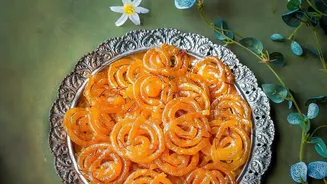
No Raksha Bandhan feels complete in Rajasthan without Ghevar. This disc-shaped sweet, with its intricate, honeycomb-like texture, is a festive masterpiece. Traditionally prepared during the monsoon season, particularly for Teej and Rakhi, Ghevar is more
than just a dessert; it's an experience. It's made from a batter of all-purpose flour and ghee, which is skillfully poured into hot oil to create its unique webbed structure. The crisp, golden disc is then soaked in sugar syrup and often garnished with rabri (thickened sweet milk), chopped nuts like pistachios and almonds, and a touch of saffron. While making it requires patience, the result is a showstopper that perfectly balances a crispy texture with melt-in-the-mouth sweetness, making the effort a true labour of love.
The Silken Sweet: Gujarati Sutarfeni
Delicate, flaky, and ethereally light, Sutarfeni is a Gujarati and Rajasthani classic that resembles fine, silken threads. The name itself translates to 'fine threads', which perfectly describes this intricate sweet. Traditionally, making it from scratch is a highly skilled, laborious process of stretching dough into paper-thin strands. However, modern recipes often use ready-made Kataifi or shredded phyllo pastry, making it more accessible for home cooks. These fine pastry threads are gently roasted or fried in ghee until crisp but still pale white, then drenched in a fragrant sugar syrup scented with cardamom or rose water. Topped with slivered pistachios and almonds, each bite is a delightful mix of crispiness and sweetness that dissolves in the mouth. It’s a sophisticated and unique sweet to celebrate the delicate bond of siblinghood.
The Undisputed Favourite: North Indian Kaju Katli
While regional specialities have their charm, Kaju Katli remains one of the most popular and beloved sweets for Raksha Bandhan across North India. This diamond-shaped fudge, made primarily from cashew nuts and sugar, is a symbol of celebration in many households. Its appeal lies in its smooth, melt-in-the-mouth texture and rich, nutty flavour that isn’t overwhelmingly sweet. The process involves creating a fine paste of cashews, which is then cooked with sugar syrup until it forms a pliable dough. This dough is rolled out and traditionally decorated with a thin, edible silver leaf (vark) before being cut into its signature diamond shape. Though widely available in shops, making Kaju Katli at home adds a personal touch that is deeply appreciated, making it a perfect gift to exchange after tying the rakhi.
The Coastal Charm: Maharashtrian Narali Bhat
In Maharashtra, Raksha Bandhan coincides with Narali Purnima, the coconut festival, making coconut-based dishes central to the celebration. Narali Bhat, or sweet coconut rice, is a fragrant and flavourful dish prepared as a festive offering. This is not a dessert but a part of the main festive meal. The dish is made with freshly grated coconut, rice, and jaggery or sugar, giving it a beautiful sweetness and texture. It's delicately spiced with cardamom, cloves, and sometimes a few strands of saffron, which lend it a warm aroma and a lovely golden hue. The combination of sweet jaggery, rich coconut, and aromatic spices makes Narali Bhat a comforting and wholesome dish that embodies the festive spirit of the Konkan coast. It’s a wonderful example of how regional produce and culture shape festival foods.
The Savoury Interlude: Pudachi Vadi
While sweets dominate the Rakhi platter, a savoury snack provides a much-needed balance. From Maharashtra's Vidarbha region comes Pudachi Vadi, a delightful deep-fried snack that’s crispy on the outside and packed with flavour on the inside. These are layered fritters made from a gram flour (besan) dough, which is rolled thin and filled with a spicy and aromatic mixture. The filling typically includes onions, coriander, grated dried coconut (copra), poppy seeds, and a blend of spices. The dough is rolled up with the filling inside, sliced into pinwheels, and then deep-fried until golden and crisp. The result is a multi-layered, crunchy snack bursting with sweet, spicy, and tangy notes. It's a perfect accompaniment to the festive sweets and a testament to the rich diversity of Maharashtrian cuisine.