

A Realm of Icy Relics
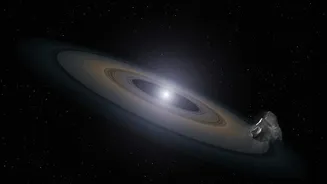
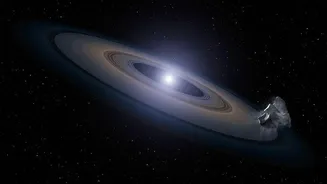
The Kuiper Belt is a donut-shaped ring of icy bodies circling the sun at a distance of billions of kilometres, far beyond the gas giants. Think of it as a cosmic deep freeze, storing planetary building blocks that have remained largely unchanged for over
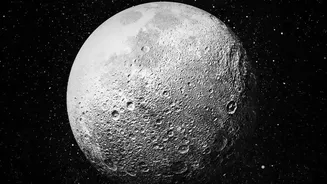
4.5 billion years. This region is home to dwarf planets like Pluto, as well as hundreds of thousands of smaller icy objects. For scientists, these bodies are not just cold, distant rocks; they are pristine time capsules that hold clues about the ingredients and conditions that led to the formation of planets, including our own.
Cosmic Messengers in Our Atmosphere
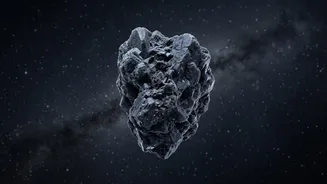
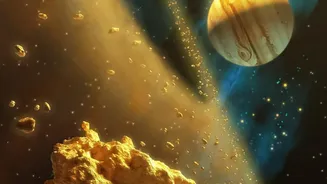
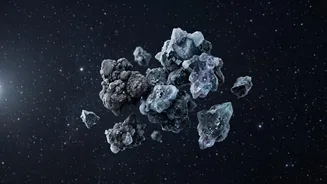
Getting a sample directly from a Kuiper Belt Object is incredibly difficult. While the New Horizons spacecraft has given us unprecedented views of Pluto and another object named Arrokoth, bringing a sample back is not yet feasible. However, nature provides another way. Collisions between objects in the Kuiper Belt, and even impacts from interstellar dust, create clouds of tiny particles. Some of these microscopic grains journey across the solar system and eventually fall into Earth's upper atmosphere. NASA high-altitude aircraft can collect this interplanetary dust from the stratosphere, providing scientists with physical samples of the most remote parts of our solar system.
The Tell-Tale Signature of 'Heavy' Water
In a recent study, a team of scientists analyzed 12 such dust particles and confirmed their origin in the Kuiper Belt by identifying unique scars left by solar energetic particles during their long journey. Inside these grains, they found something remarkable: hydrated minerals like saponite and serpentine. These clays only form when rock comes into contact with liquid water. This implies that the parent bodies of this dust once had liquid water in their interiors, likely melted billions of years ago by heat from the decay of radioactive elements. But the most groundbreaking discovery was in the water's chemical fingerprint. The minerals contained oxygen unusually rich in its heavier isotopes, oxygen-17 and oxygen-18. This 'heavy' oxygen signature is distinct from water found in the inner solar system.
An Isolated Primordial Reservoir
For decades, scientists have theorised that a reservoir of water enriched with heavy oxygen existed in the cold outer solar system, but finding proof has been difficult. Meteorites, which provide most of our physical samples of space rock, typically come from the asteroid belt between Mars and Jupiter, a region where materials have been more thoroughly mixed over eons. The unique chemical signature in these Kuiper Belt dust grains provides what researchers call 'compelling evidence' for a vast, ancient water source that was largely isolated from the materials that formed the inner planets. This means the water in the outer solar system had a different chemical evolution than the water that may have seeded Earth.
Why This Ancient Water Matters
This discovery is more than just a cosmic curiosity; it reshapes our understanding of the solar system's architecture and history. It confirms that the solar system wasn't a uniform blend of ingredients. Instead, there were distinct chemical zones that remained separate. Understanding the distribution and types of water is fundamental to piecing together the story of planetary formation. It helps explain how and where the building blocks of life might have been delivered throughout the solar system. By studying these pristine relics from the Kuiper Belt, we get a clearer picture of the raw materials that were available when Earth and its neighbours were just beginning to form, offering a new window into our own origins.