






The Illusion of Clarity
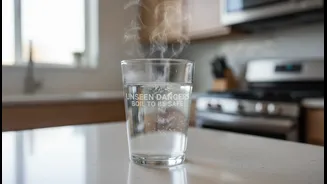
It’s a common belief that if water looks clean, it must be safe to drink. However, the most dangerous contaminants are often invisible to the naked eye. While your filter may remove sediment, dust, and rust, making the water appear crystal clear, it’s
the microscopic world of bacteria, viruses, and protozoa that poses the greatest health risk. These unseen microbes are responsible for a host of waterborne diseases that are widespread in India, including cholera, typhoid, hepatitis A, and various diarrhoeal illnesses. According to health agencies, millions of Indians are affected by consuming contaminated water every year, especially during the monsoon season when flooding can overwhelm water infrastructure and increase contamination. Relying on visual clarity alone provides a false sense of security.
Understanding Your Water Filter's Limits
Modern water purifiers come with a confusing array of technologies: RO (Reverse Osmosis), UV (Ultraviolet), and UF (Ultrafiltration). Each targets different types of impurities. A simple activated carbon filter is great for removing chlorine and improving taste but does little to stop bacteria or viruses. UF filters have pores that can block larger microbes like bacteria and protozoa, but viruses are often small enough to slip through. UV purifiers use ultraviolet light to damage the DNA of microbes, rendering them unable to reproduce and cause illness. While effective, this process requires clear water to work properly and is rendered useless during power cuts. Reverse Osmosis is considered one of the most effective methods, using a fine membrane to block most contaminants, including viruses. However, the effectiveness of any filter depends on regular, proper maintenance. Old membranes and expired filter cartridges can not only fail to protect you but may even become breeding grounds for germs.
The Persistent Threat of Viruses
Viruses are among the smallest and most challenging pathogens to remove from water. Pathogens like Hepatitis A virus and Norovirus are notoriously resilient and can cause significant illness even in small numbers. While high-end RO systems can effectively remove viruses due to their extremely small membrane pore size (around 0.0001 microns), many other common filters cannot guarantee complete removal. A UV filter is designed to inactivate these viruses, but its success hinges on sufficient exposure time and water clarity. If the water is even slightly turbid or the flow rate is too high, some viruses can escape the UV rays unharmed. This is where the simple act of boiling provides a crucial, non-negotiable layer of safety, ensuring these tiny invaders are neutralised.
Boiling: The Ultimate Safety Net
Boiling water is a time-tested, scientifically-backed method for disinfecting water. The World Health Organization (WHO) confirms that heating water to a rolling boil is sufficient to kill or inactivate all pathogenic bacteria, viruses, and protozoa. Bringing water to a rolling boil for just one minute effectively destroys disease-causing organisms like E. coli, Salmonella, Hepatitis A, Giardia, and Cryptosporidium. Unlike filtration methods that can have varying levels of effectiveness based on technology and maintenance, boiling is a straightforward process that works every time. Heat denatures the essential proteins and enzymes that microbes need to survive and multiply, making it a powerful and reliable method of purification. While filtration is excellent for removing chemical contaminants and improving taste, boiling provides the definitive final step to ensure microbiological safety.