




The Monsoon's Dual Personality
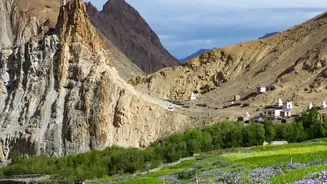
Spiti Valley itself is a cold desert located in a rain-shadow region, which means the main valley around Kaza, Tabo, and Key Monastery receives significantly less rainfall than the rest of Himachal Pradesh. While other parts of the state see heavy downpours,
Spiti often enjoys pleasant daytime temperatures between 15°C and 25°C, with dry, accessible terrain. The primary challenge for travellers is not the weather within Spiti, but on the approach roads. Both the Manali-Kaza and Shimla-Kaza highways pass through regions susceptible to the full force of the monsoon, leading to risks of landslides, flash floods, and sudden road closures. Recent weather alerts are active for Himachal until mid-August, advising extra caution.
Navigating the Key Access Routes
Choosing the right route is critical in August. The Shimla-Kaza highway (via Kinnaur) is generally considered the safer and more reliable option during the monsoon. It allows for gradual acclimatisation and, while not immune to landslides, especially on the stretch between Wangtu and Sumdo, it typically remains more stable. The Manali-Kaza highway, via the Atal Tunnel and Kunzum Pass, is a shorter but rougher route. Though it is currently open, this path features challenging water crossings and the infamous Gramphu to Batal stretch, which is prone to slush and blockages. Drivers should aim to cross water-logged sections before noon when water levels are lower. Regardless of the route, authorities stress that conditions can change rapidly, and same-day verification is essential.
Official Rules and On-Ground Advisories
While there are no widespread, officially mandated new 'road rules' like one-way traffic systems specifically for the entire valley due to weather, local authorities and police are enforcing strict advisories that function as de facto rules. The Lahaul & Spiti Police frequently issue updates, urging travellers to avoid unnecessary journeys during bad weather, stick to main highways, and never travel at night. In some instances, particularly on the Manali-Kaza road, travel might be restricted to 4x4 vehicles immediately after a reopening. Furthermore, authorities have previously banned parking and commercial activities in high-risk zones, such as areas prone to avalanches or landslides near the Atal Tunnel, to ensure public safety and clear access for emergency services. Tourists are repeatedly advised to heed the guidance of police personnel on the ground.
Essential Safety Checklist for Travellers
Smart and flexible planning is the key to a safe Spiti trip in August. The most crucial advice from seasoned travellers and local operators is to build buffer days into your itinerary. A trip with a tight schedule can be completely derailed by a single road closure. Always check the official Facebook pages of the Lahaul & Spiti Police or consult local contacts for real-time road status before starting your day. Travel with a vehicle that has high ground clearance, and if you are not experienced in Himalayan driving, hire a local driver. Carry essential supplies like extra fuel, water, snacks, a first-aid kit, and power banks, as services can be sparse and connectivity is often limited. Above all, prioritise safety over sightseeing and be prepared to change your plans at a moment's notice.