

The Problem with 'Just Right'
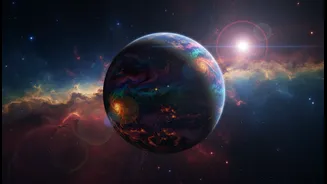
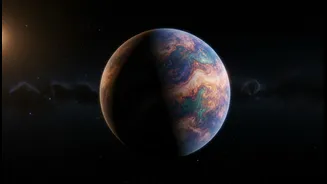
The habitable zone is defined as the orbital distance from a star where a planet could potentially have liquid water on its surface, a key ingredient for life as we know it. If a planet is too close, its water boils away; too far, and it freezes solid.
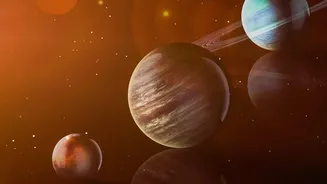
This simple and appealing concept has guided astronomers for years. However, this definition comes with a major catch. Our own solar system proves the point: Venus is technically on the inner edge of the Sun's habitable zone, but its runaway greenhouse effect makes it a scorching hellscape with surface temperatures hot enough to melt lead. Conversely, Mars is also in the zone but is a frigid, barren desert. Clearly, simply being in the right neighborhood doesn't guarantee a welcoming home.
An Atmosphere is a Planet's Best Friend
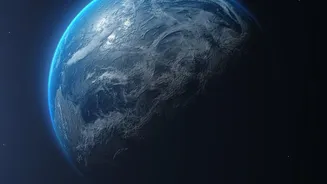
The crucial difference-maker is the planet's atmosphere. An atmosphere acts like a planetary shield and thermostat. On Earth, it provides essential protection from harmful solar radiation and keeps our planet's temperature stable enough for water to remain liquid and for life to thrive. Without it, Earth’s average temperature would plummet to well below freezing. For a planet to be truly habitable, it needs to possess a substantial atmosphere. This is why tools like the James Webb Space Telescope (JWST) are so revolutionary; they can analyze the light filtering through a distant planet's atmosphere to determine its chemical makeup. Excitingly, in July 2026, astronomers announced the first confirmed detection of an atmosphere around a rocky planet, LHS 1140 b, located in its star's habitable zone, marking a huge milestone in the search for life.
Beware the Temper of the Star
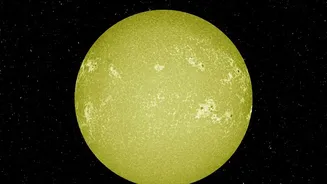
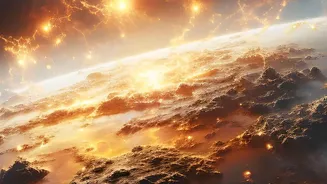
Even with a great location and a thick atmosphere, a planet's chances for life can be ruined by its parent star. Many exoplanets are found orbiting red dwarf stars, which are smaller and cooler than our Sun. Their habitable zones are much closer to the star, which creates a new set of problems. These stars are known for being extremely active, especially when they are young, frequently unleashing powerful stellar flares and coronal mass ejections. This intense radiation can blast a nearby planet, stripping away its atmosphere over time and irradiating the surface. A planet might be in the perfect spot and have the perfect atmospheric ingredients, but if its sun has a violent temper, it could still be a sterile, lifeless rock.
The New Checklist for Life
So, the search for life has evolved. It's no longer just about finding a planet in the habitable zone. The new checklist is more demanding. First, is the planet in the right location for liquid water? Second, does it have a substantial atmosphere to regulate its climate and protect its surface? Third, is its host star stable enough not to blow that atmosphere away? Only when a planet ticks all three boxes does it become a truly compelling candidate for habitability. This makes the search more challenging, but also much more precise. Instead of just looking for any world in the right place, astronomers are now hunting for worlds that have the complete package, bringing us one step closer to potentially finding life beyond Earth.