






The High Cost of Overpacking
Gone are the days when checking a bag was a given. Today, domestic airlines in India can charge anywhere from ₹600 to ₹700 per kilogram for baggage over the standard 15 kg limit at the airport. That means a bag that is just 5 kg overweight could cost
you over ₹3,000. Pre-booking extra baggage online is cheaper but still adds a significant cost to your trip. Beyond the financial sting, checking a bag means more time spent at the airport—waiting in line to drop it off and waiting again at the carousel upon arrival. Travelling with only a carry-on saves you money, time, and the stress of potentially lost luggage.
Choose Your Bag Wisely
Your first step is ensuring your bag meets airline requirements. For most domestic carriers in India like Air India and IndiGo, the standard cabin bag allowance is one piece weighing up to 7 kg. The typical dimensions are around 55 cm in height, 40 cm in length, and 20 cm in width. Always check your specific airline's policy before you fly, as rules can vary. Investing in a lightweight, modern carry-on with durable wheels and a smart layout can make a world of difference. Remember, the weight of the bag itself counts towards your 7 kg limit, so starting with a lighter bag gives you more capacity for your belongings.
Adopt the Capsule Wardrobe Philosophy
The secret to packing light for any trip is the 'capsule wardrobe' — a small collection of versatile items that can be mixed and matched to create multiple outfits. For a four-day trip, you don't need four completely distinct outfits. Instead, focus on a core colour palette of neutral tones (like black, grey, navy, or beige) for your main pieces. This ensures everything coordinates effortlessly. According to travel experts, this strategy not only saves space but also reduces the mental load of deciding what to wear each day.
Your Four-Day Carry-On Checklist
Building on the capsule philosophy, here’s a reliable template for a four-day trip. The goal is versatility and layering. Wear your bulkiest items, like a jacket and sneakers, on the plane to save space in your bag. Tops (4): Choose a mix of t-shirts, a casual shirt, and perhaps one slightly dressier top. Bottoms (2): One pair of jeans or sturdy trousers and one other option like chinos or a versatile skirt. You can typically wear a pair of pants for two days. Outer Layer (1): A lightweight sweater, cardigan, or jacket that can be layered over any of your tops. Shoes (2): One pair of comfortable walking shoes (wear these on the flight) and one other pair, such as flats, sandals, or loafers, that packs down small. Underwear and Socks (5 pairs): Pack one for each day, plus a spare. Special Occasion Item: If you have a specific event like a nice dinner, pack one appropriate outfit, such as a simple dress or a dress shirt.
The Art of Strategic Packing
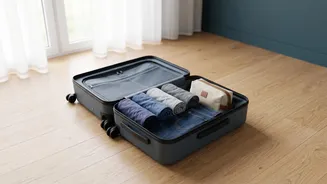
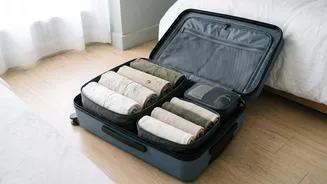
How you pack is as important as what you pack. Rolling your clothes instead of folding them is a classic space-saving technique that also helps minimize wrinkles. For next-level organization, invest in packing cubes. These zippered fabric containers allow you to compartmentalize your suitcase, turning it into a neat set of drawers. You can have one cube for tops, another for bottoms, and a third for underwear and socks. This not only maximizes space but also makes it incredibly easy to find what you need without rummaging through your entire bag. They are also great for separating dirty laundry during your trip.
Downsize Your Toiletries and Tech
Liquids are restricted in carry-on luggage, so embrace travel-sized toiletries. Decant your favourite products into smaller, reusable bottles or consider solid alternatives like shampoo bars and toothpaste tablets. Unless you have highly specific needs, you can often rely on the essentials provided by your hotel. For electronics, think minimally. Your smartphone can double as your camera, map, and entertainment device. Pack one universal adapter and a power bank, and ensure all your devices are fully charged before you leave home.