


Earth's Annual Aphelion
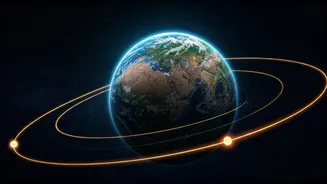
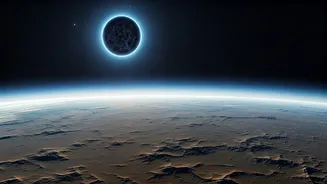
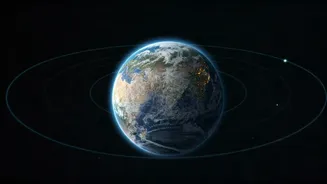
The fun fact at the heart of this puzzle is an astronomical event called aphelion. The word comes from the Greek roots 'apo' (away) and 'helios' (sun). On July 6, 2026, Earth will reach this point, its greatest distance from the Sun for the year. At that
moment, our planet will be approximately 152.1 million kilometres away from our star. This is a recurring event that always happens in early July. In contrast, Earth's closest approach to the Sun, called perihelion, happens in early January, right in the middle of the Northern Hemisphere's winter.
The Summer Paradox Explained
If we're farther from the sun, why is it hot? This is the most common and logical question, and the answer lies not in distance, but in tilt. Earth's seasons are caused by its axis, which is tilted by about 23.5 degrees. As Earth journeys around the Sun, this tilt means that for part of the year, the Northern Hemisphere is angled more directly toward the Sun's rays. This direct exposure, combined with longer daylight hours, is what creates summer. The Southern Hemisphere, tilted away at the same time, experiences winter. The distance from the Sun is not the main factor driving our seasons.
So, Does Distance Matter At All?
While tilt is the star of the show, distance does play a minor role. The difference between our closest and farthest points from the Sun is about 5 million kilometres. This might sound huge, but it only changes our distance by a little over 3%. It does, however, result in about 7% less solar energy reaching Earth during aphelion in July compared to perihelion in January. But this effect is overwhelmed by the impact of the axial tilt. However, this change in distance does have one noticeable, albeit subtle, effect. According to Kepler's laws of planetary motion, a planet moves slower when it's farther from the sun. Because Earth is at its slowest in its orbit during the Northern Hemisphere's summer, this actually makes it the longest season of the year by several days.
A Tale of Two Hemispheres
The situation is flipped for the Southern Hemisphere. Its summer occurs around January, when Earth is closest to the Sun (perihelion), and its winter happens around July, when Earth is farthest away (aphelion). In theory, this should mean that summers in the Southern Hemisphere are more intense than in the north. However, the Southern Hemisphere has significantly more ocean surface area, and water absorbs and releases heat more slowly than land. This moderating effect of the oceans largely cancels out the intensity you might expect from being closer to the Sun, keeping the seasonal extremes from becoming dramatically different from those in the north.
Not a Fixed Date
While aphelion consistently occurs in early July in our current era, the exact date wanders slightly from year to year. The gravitational pulls from the Moon and other planets cause slow shifts in the shape and orientation of Earth's orbit over long periods. This means that thousands of years from now, the timing of aphelion and perihelion will have drifted significantly relative to the solstices. For instance, back in the year 1246, the December solstice and perihelion occurred on the same day. These long-term changes, known as Milankovitch cycles, are a fascinating area of study related to long-term climate patterns on Earth.