




Why Coriander is the Perfect Starter Herb
Coriander, or dhania, is the undisputed workhorse of the Indian kitchen. It’s sprinkled on curries, ground into chutneys, and stirred into raitas. While flowers are beautiful, they offer a fleeting visual treat. Coriander, on the other hand, offers a continuous
harvest of flavour. It’s a fast-growing herb, meaning you’ll see results within weeks, providing a huge sense of accomplishment for new gardeners. Furthermore, it grows exceptionally well in pots, making it the ideal candidate for urban homes with limited space. Instead of buying bunches that wilt in the fridge, you can harvest exactly what you need, ensuring zero waste and maximum freshness.
Gathering Your Simple Supplies
You don't need a fancy setup. To start your coriander farm, you only need a few basic items. 1. **A Pot:** Choose a pot that is at least 6-8 inches deep and has drainage holes at the bottom. A wider pot is better than a deeper one, as it gives the coriander roots space to spread. Terracotta pots are great as they are porous and prevent waterlogging. 2. **Potting Mix:** Don't use heavy garden soil. Buy a light, well-draining potting mix. A good mix contains cocopeat, compost (like vermicompost), and perlite. This combination retains moisture without becoming soggy, which is crucial for healthy roots. 3. **Coriander Seeds:** You can use whole coriander seeds (sabut dhania) straight from your kitchen masala box! Just make sure they are not too old. 4. **A Watering Can or Spray Bottle:** Something to gently water your seeds and seedlings.
The Most Important Step: Preparing the Seeds
This is a pro-tip that dramatically increases your success rate. A whole coriander seed is actually a fruit containing two seeds. If you plant it whole, germination can be slow and sporadic. To fix this, you need to split them. Simply place the seeds on a hard surface, cover them with a cloth or paper, and gently roll a rolling pin (belan) or a glass bottle over them. You don't want to crush them into a powder, just apply enough pressure to split them into two halves. Many gardeners also recommend soaking these split seeds in water overnight before planting. This softens the outer shell and signals to the seed that it's time to wake up and grow, speeding up germination significantly.
Planting for a Lush Harvest
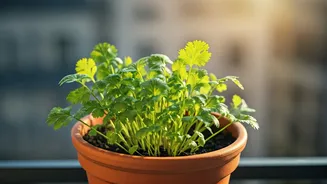
Now for the fun part. Fill your chosen pot with the potting mix, leaving about an inch of space from the rim. Lightly press the soil down, but don't compact it. Water the soil thoroughly until you see water draining from the bottom holes. This ensures the entire pot is moist. Now, scatter your split coriander seeds evenly across the surface. Don't worry about perfect spacing; a dense planting gives you a lush, leafy harvest. Cover the seeds with a thin layer (about half an inch) of the same potting mix. Gently pat it down and mist the surface with a spray bottle to settle everything in. Do not flood it with a watering can at this stage, as it can dislodge the seeds.
Sunlight, Water, and Ongoing Care
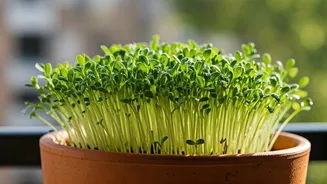
Place your pot where it will receive at least 4-5 hours of sunlight. Morning sun is ideal. In the intense heat of Indian summers, afternoon shade is a blessing, as coriander tends to 'bolt' (flower prematurely) in high temperatures. Keep the soil consistently moist but never waterlogged. A good rule of thumb is to stick your finger about an inch into the soil. If it feels dry, it's time to water. Once the seedlings are a few inches tall, you can water more deeply. In about 7-10 days, you should see tiny green shoots emerging. It’s a truly magical sight!
Harvesting Your Fragrant Sprigs
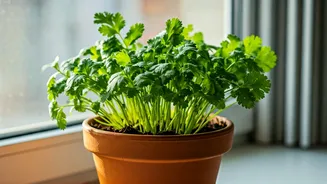
In about 3-4 weeks, your coriander plants will be ready for their first haircut. The key is to harvest using the 'cut and come again' method. Don't pull the entire plant out. Instead, use a pair of scissors to snip the outer, larger leaves at the base of the stem. Leave the inner, younger leaves untouched. This encourages the plant to put its energy into producing new growth from the center, giving you a continuous supply for several weeks. Regular harvesting actually promotes a bushier, healthier plant. You can harvest as and when you need, ensuring every sprig you use is packed with fresh, vibrant flavour.