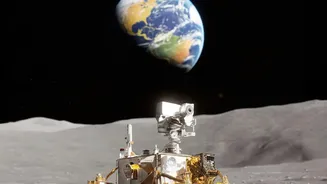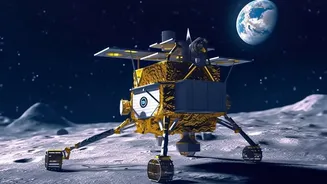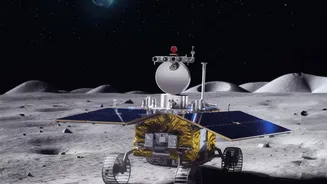







Why Send Robots First?
Building anything on the Moon is one of the most difficult engineering challenges imaginable. The environment is extreme, with no atmosphere, wild temperature swings, and constant radiation. Launching every single brick, beam, and habitat from Earth would
be astronomically expensive and logistically complex. A single kilogram of material can cost a fortune to send to the lunar surface. The solution, which space agencies like NASA and ESA are actively developing, is to let robots do the heavy lifting first. Autonomous machines can operate for months in hazardous conditions without needing life support, food, or a return ticket, dramatically reducing cost and risk.
The Robotic Ground Crew
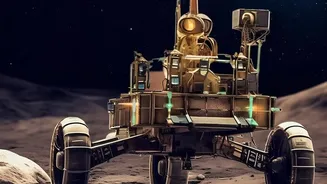
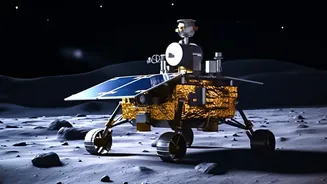
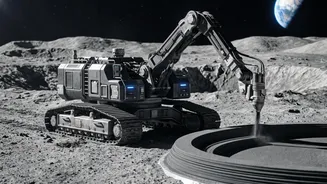
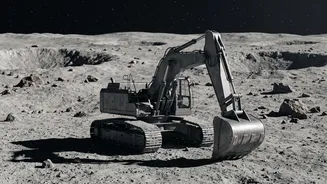
The first wave of robotic pioneers will act much like an advance construction crew. This fleet will consist of specialized machines, each with a specific job. Some will be rovers tasked with surveying the landscape and identifying the best building sites and resource deposits. Others, like NASA's planned IPEx (Infrastructure Pilot Excavator), are essentially robotic backhoes designed to dig, scoop, and transport large amounts of lunar soil, known as regolith. Just like on Earth, the first step is site preparation: clearing and leveling ground for landing pads, habitats, and roadways. These early, repetitive jobs are perfect for automation, freeing up future astronauts for complex scientific work.
Turning Moon Dust into Moon Bricks
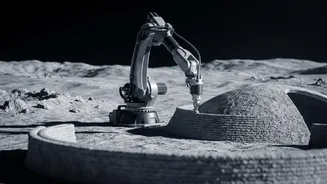
So the robots have excavated tons of moon dust. What now? They can’t exactly pour a traditional concrete slab. The key technology here is called in-situ resource utilization (ISRU), which is a fancy way of saying 'living off the land'. Multiple methods are being developed, but most centre on 3D printing. Companies like ICON, under contract with NASA for its 'Project Olympus', are developing systems that can melt the lunar regolith with high-powered lasers and extrude it layer by layer to form solid, ceramic-like structures. The European Space Agency (ESA) has also demonstrated that regolith can be mixed with a binding agent and 3D printed into strong, interlocking blocks, much like space LEGOs.
What Will They Actually Build?
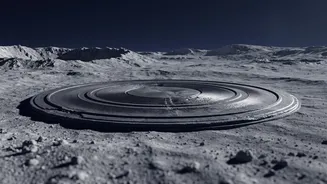
The initial construction priorities are all about safety and infrastructure. The very first thing needed is a landing pad. When a spacecraft lands, its rockets kick up dust and rock at incredible speeds, creating a hazard for any nearby structures. A solid, paved pad mitigates this danger. Next, the robotic builders will construct protective berms and shelters. By piling up or printing thick walls of regolith, they can create shields that protect habitats and equipment from radiation and micrometeorite impacts. Following that, they will build roads to make travel between sites easier and eventually erect the foundations and protective outer shells for the habitats where astronauts will one day live and work.
An International, Collaborative Effort
This vision isn't the work of a single entity. It's a global pursuit. NASA's Artemis program is a major driver, funding private companies like ICON, Astrolab, and Blue Origin to develop the necessary technologies, from construction systems to the rovers astronauts will use. The ESA has its own detailed plans for a 'lunar village' built with 3D-printed modules and robotic assistance. China is also advancing rapidly, with plans to test 3D printing bricks from lunar soil on its upcoming Chang'e 8 mission. Even commercial players like SpaceX have stated ambitions to use humanoid robots to help build factories and cities on the Moon. Each organization is contributing a piece to the puzzle of off-world construction.