



A Tiny Dot, a Cosmic Puzzle
Since the James Webb Space Telescope began delivering its stunning images, astronomers have been on a cosmic treasure hunt. They are searching for the earliest, most distant galaxies, specks of light from the universe's dawn. In this hunt, they've found
a curious category of objects nicknamed "little red dots." These faint, reddish smudges are incredibly far away, but their exact nature is a thrilling scientific detective story. Are they the first galaxies furiously building stars? Or are they a completely different, unexpected type of cosmic object? The answer reveals not just what’s out there, but how modern astronomy actually works. The process is a fascinating journey of discovery, debate, and verification.
Measuring the Universe's Stretch
To determine an object's distance, astronomers measure its 'redshift.' Because the universe has been expanding since the Big Bang, the space between us and a distant galaxy literally stretches. Light traveling through that expanding space also gets stretched, shifting its wavelength toward the red end of the spectrum. The farther away an object is, the more its light is redshifted. Initial estimates for some of these red dots, made using images from different color filters—a method called photometric redshift—suggested incredibly high numbers, placing them just a few hundred million years after the Big Bang. One famous candidate, CEERS-93316, was initially thought to have a redshift of over 16, which would have made it the most distant galaxy ever seen at the time.
Galaxy or Impostor? The Great Debate
A high redshift based on color alone isn't a guarantee. Astronomers need more definitive proof, which comes from spectroscopy. This technique splits an object's light into its component wavelengths, like a prism creating a rainbow, revealing the chemical fingerprints of elements. When scientists pointed Webb's spectrograph at CEERS-93316, they found a surprise. It wasn't an extremely distant galaxy. Instead, it was a closer, though still ancient, galaxy from about 1.2 billion years after the Big Bang (a redshift of 4.9). It turned out that glowing gas within this galaxy was emitting so much light at specific frequencies that it mimicked the appearance of a much more distant object. This case became a perfect example of how astronomers must carefully compare evidence before reaching a conclusion.
The Rise of Another Theory
While some red dots turned out to be cases of mistaken identity, others have been confirmed as genuinely ancient galaxies, like 'Maisie's Galaxy,' which exists a mere 390 million years after the Big Bang. But another intriguing theory has emerged for a class of these objects. Some scientists now believe many little red dots could be a new type of object entirely: an early, supermassive black hole growing at a furious pace, shrouded in a thick cocoon of gas and dust. This dense shroud would absorb most light, re-emitting it in the infrared spectrum that Webb is designed to see, giving it that characteristic red color. This theory helps explain why these objects seem to appear in large numbers in the early universe and then vanish—the black holes either burn out or clear away the obscuring dust as they evolve.
Why This Cosmic Detective Work Matters
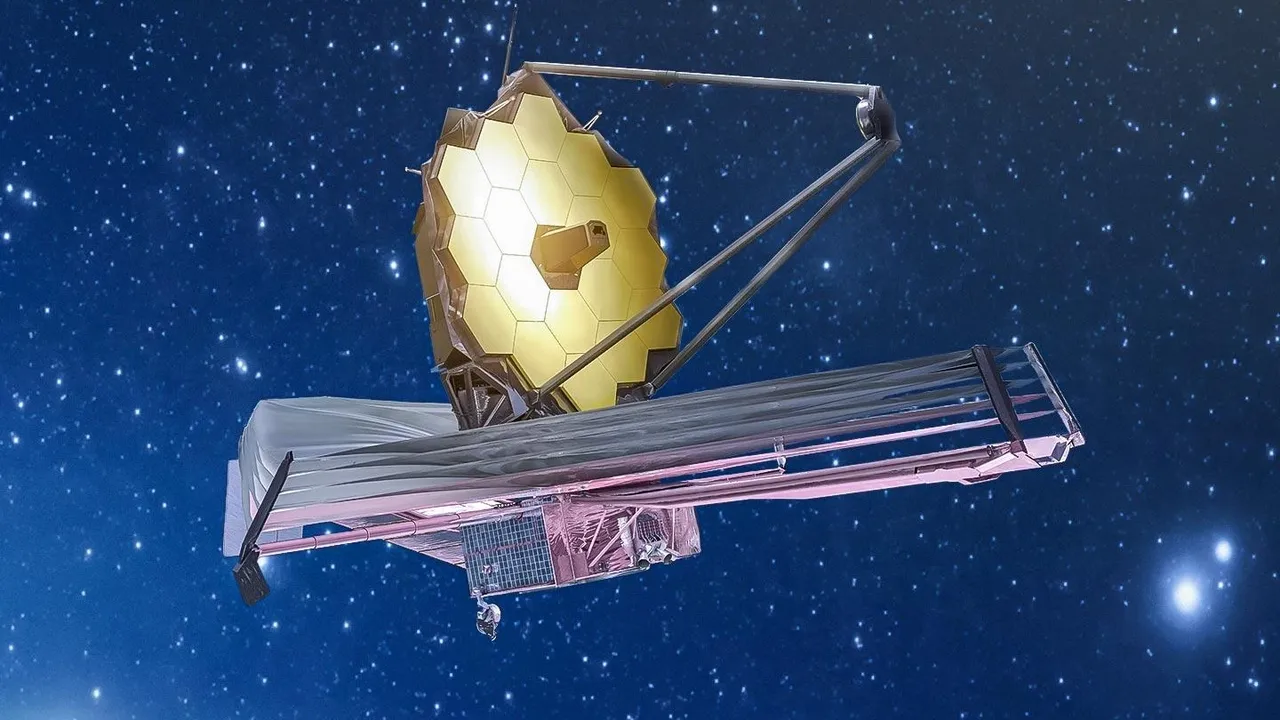
The study of these distant red sources is more than just a race to find the 'oldest' galaxy. Each candidate, whether confirmed, reclassified, or identified as something new, provides crucial data. If they are extremely early galaxies, they challenge models of how quickly large structures could form. The case of CEERS-93316 taught astronomers about potential pitfalls in photometric measurements. And if many are indeed cocooned black holes, it opens a new window into understanding how these cosmic giants grew so massive, so quickly after the Big Bang. The James Webb Space Telescope isn't just an observatory; it's a time machine that is allowing scientists to piece together the universe's baby pictures, one puzzling red dot at a time.