





The Daytime Strategy: A Total Blockade
Your battle against a hot bedroom begins long before you plan to sleep. The primary goal during the day is to prevent solar heat gain—the process of sunlight heating your room through the windows. The most effective weapon here is a good set of curtains.
Keep your windows closed and your curtains drawn, especially on windows that face the sun directly (typically east in the morning and west in the afternoon). Not all curtains are created equal. While any barrier helps, heavyweight blackout curtains are the champions. Their dense fabric is specifically designed to block light, and as a side effect, it significantly reduces the amount of heat that passes into the room. For maximum effectiveness, opt for curtains with a white or light-coloured backing, which can help reflect sunlight away. The key is to draw them before the room gets hot; once the heat is inside, curtains can actually trap it.
The Window Dilemma: When to Open Up
Opening windows seems like a natural way to cool down, but in a humid climate, it requires careful timing. Opening them during the day when it's hot and humid outside will only invite more heat and moisture into your home, making your fans less effective and your room feel muggier. The rule of thumb is simple: only open your windows when the temperature and humidity outside are lower than they are inside. This typically happens in the late evening or very early morning. If you have a way to check the outdoor humidity, a good guideline is to keep windows shut if the level is above 65%, as bringing in that moist air can make the room feel uncomfortable even if the temperature is slightly lower. The goal is to exchange the hot, stale air that has been trapped inside all day for the comparatively cooler, drier air of the night.
Mastering the Fan: It Cools People, Not Rooms
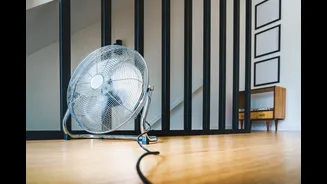
It's a common misconception that a fan lowers the temperature of a room. It doesn't. Instead, a fan creates a wind-chill effect by moving air across your skin, which helps sweat evaporate and makes you feel cooler. Because of this, there's no point in leaving a fan running in an empty room; you're just wasting electricity. Turn it on when you're in there and off when you leave. For a humid room, the direction of your fan is crucial. While a fan doesn't remove humidity, it can help by circulating air and preventing stagnant, moist pockets from forming. For a standard pedestal or box fan, the most effective technique for a hot night is to place it in an open window, facing out. This pushes the hot air from inside the room to the outside, helping to draw cooler night air in through another open window or door. This is far more effective than simply blowing the hot, humid air around the room.
The Ultimate Plan: Creating Cross-Ventilation
Combining your window and fan strategies creates the most powerful cooling effect without air conditioning: cross-ventilation. Once the evening air is cool enough, open windows on opposite sides of your room or home to create a natural breeze. To supercharge this, place a fan in one of the windows, facing out, to act as an exhaust. This actively pulls hot air out of the room, forcing cooler air to rush in through the other open window to replace it. If you have a ceiling fan, make sure it is rotating counter-clockwise in the summer. This pushes air straight down, creating a direct breeze that enhances the evaporative cooling effect on your skin. Combining a ceiling fan with an open window can create a constant, comfortable circulation that makes humid nights significantly more bearable.