




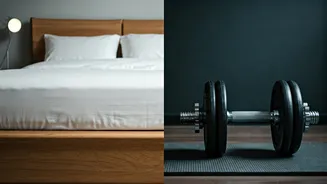




The Motivation Switch in Your Brain
Motivation isn’t just a feeling; it’s a biological process heavily influenced by sleep. Think of your brain as having competing drives. When you're well-rested, the drive to achieve goals—like sticking to your fitness plan—is strong. But when you’re sleep-deprived,
a more powerful, primitive drive takes over: the need to rest. Research shows that sleepiness acts as its own motivational force, actively suppressing the desire for other activities, including exercise. Furthermore, a lack of sleep messes with your brain's reward system, particularly dopamine signaling. This makes your brain undervalue the long-term satisfaction of a workout and crave low-effort, immediate gratification, like scrolling on your phone in bed. Suddenly, the mental push required to get to the gym feels less like a choice and more like an impossible task.
Why Every Rep Feels Heavier
It’s not your imagination: workouts genuinely feel harder when you’re tired. This phenomenon is called the Rate of Perceived Exertion (RPE), and it's one of the fastest ways sleep shapes your fitness. Studies consistently show that even a single night of poor or insufficient sleep can significantly increase your RPE. This means that the same weight, the same speed, and the same distance will feel more difficult than when you are fully rested. Your muscles and cardiovascular system might still be capable, but your brain interprets the effort as being much greater. This increased perception of difficulty leads to quicker fatigue, making you more likely to shorten your workout or reduce your intensity. Over time, this can create a negative feedback loop: workouts feel too hard, so you dread them, and your motivation plummets.
The Overnight Repair Crew
While you sleep, your body is anything but dormant. It’s running a full-scale repair and refueling operation. During deep sleep, your body releases growth hormone, which is critical for repairing the muscle tissues you’ve broken down during exercise. Cutting sleep short means you’re robbing your muscles of this crucial recovery time, leaving them less prepared for the next day's demands. In addition, sleep is when your body restocks its primary energy reserves, known as muscle glycogen. Waking up after a night of poor sleep is like starting a road trip with a half-empty fuel tank; you simply don't have the energy stores to perform at your best. This lack of physical readiness sends signals to your brain that you're not equipped for strenuous activity, further dampening your desire to move.
Turning Knowledge into Action
Understanding the link between sleep and motivation is the first step. The next is taking control. The good news is that you don't need to be a sleep scientist or invest in expensive gadgets to make a difference. Small, consistent changes to your daily and nightly routines, often referred to as 'sleep hygiene,' can have a profound and rapid impact on your sleep quality. By viewing sleep not as a passive state but as an active part of your training regimen, you can unlock a new level of energy and drive. Think of it as the ultimate pre-workout preparation that starts the evening before. Prioritizing your sleep is one of the most effective ways to ensure you have the physical and mental resources to crush your fitness goals.
Simple Tweaks for a Major Boost
Ready to improve your sleep tonight to fuel tomorrow's workout? Start with these simple, science-backed strategies. First, aim for consistency. Going to bed and waking up at roughly the same time every day—even on weekends—helps regulate your body's internal clock, making it easier to fall asleep and wake up refreshed. Second, create a 'wind-down' routine. In the hour before bed, put away electronics. The blue light from screens can suppress melatonin, the hormone that signals your brain it's time for sleep. Instead, opt for relaxing activities like reading a book, listening to calm music, or taking a warm bath. Third, manage your light exposure. Try to get some natural sunlight early in the morning, which helps to set your internal clock for the day. In the evening, keep the lights in your home dim to signal to your body that it's time to prepare for rest. Finally, optimize your bedroom. The ideal sleep environment is cool, dark, and quiet. Consider blackout curtains, an eye mask, or a white noise machine to eliminate disruptions.