




Why Governments Borrow Money
Just like households and businesses, governments often spend more than they earn in a single year. This gap between expenditure and revenue is known as the fiscal deficit. To cover this shortfall and to fund crucial long-term projects like highways, ports,
and social welfare schemes, the government needs to borrow money. This borrowing accumulates over time, forming the national debt. In India, a combination of historical deficits means the government is constantly in the market, seeking new funds not just for new spending, but also to pay back previous loans that are coming due.
The Government's Primary Borrowing Tool
The primary way the Government of India borrows from the public is by issuing bonds, known as Government Securities or G-Secs. Think of a bond as a formal IOU. An investor, which could be a large bank, an insurance company, or even a retail investor, buys a bond from the government. In return, the government promises to pay back the principal amount on a future date (maturity) and to make regular, fixed interest payments (known as coupon payments) in the interim. These G-Secs are considered the safest investment in the country, and their interest rates serve as a benchmark for the entire economy.
The Interest Rate Shockwave
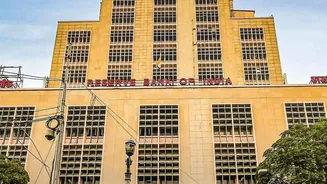
Here is where central bank policy becomes critical. When the Reserve Bank of India (RBI) increases its key policy rate (the repo rate), it is trying to control inflation by making it more expensive to borrow money. This immediately affects the bond market. With the RBI offering a higher rate, investors will demand a correspondingly higher interest rate on any new government bonds being issued. If new, safer G-Secs are offering a higher yield, why would anyone buy an older bond with a lower payout? Consequently, the government is forced to offer higher coupon rates on all its new borrowings to attract investors, directly increasing its future interest payment commitments.
The Debt Rollover Trap
A significant portion of government debt is relatively short-term. This means the government is not just borrowing for new projects, but is constantly issuing new bonds simply to repay old bonds that are maturing—a process called 'rolling over' the debt. When interest rates are rising, this becomes a dangerous cycle. The government finds itself replacing old, cheaper debt with new, more expensive debt. For example, a 10-year bond issued a decade ago at 6% interest might be maturing today, forcing the government to issue a new bond at the current market rate of, say, 7.5%. This difference might seem small, but when applied to trillions of rupees in debt, the total interest bill escalates dramatically. Recent data shows the stark reality: for every ₹100 the Indian government borrows, a significant portion, sometimes over 80%, goes towards paying off older debt, not for new spending.
What This Means for You
An escalating interest payment bill has direct consequences for every citizen. Interest payments are what's known as 'committed expenditure'—they are a legal obligation and must be paid. For the 2026-27 financial year, interest payments are projected to be the single largest item of expenditure for the central government, consuming around a quarter of the entire budget. This is more than the spending on defence or many major subsidies combined. When a larger slice of the budget pie is eaten up by interest, it leaves less money for everything else. This 'crowding out' effect means the government has fewer resources for building schools, hospitals, roads, and for funding education and health programs. In the long run, persistently high debt servicing costs can force a government to either cut back on public services or raise taxes to meet its obligations.