



Why Space is the Ultimate Medical Lab
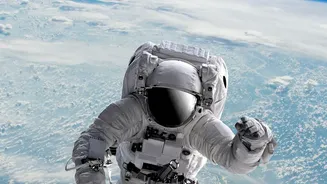
The human body is exquisitely adapted to life under Earth’s gravity. Take that away, and profound changes begin almost immediately. In the microgravity environment of space, astronauts experience a host of physiological shifts that mimic diseases and the ageing
process, but on a dramatically accelerated timeline. Bones can lose density at a rate of 1-1.5% per month, a rapid form of osteopenia. Muscles, no longer needing to fight gravity, begin to weaken and atrophy. Fluids shift upwards towards the head, affecting the cardiovascular system and even eyesight. The immune system can become suppressed, and the body is exposed to significantly higher levels of cosmic radiation. For medical researchers, this presents a unique opportunity: studying these changes in healthy astronauts provides a compressed model for understanding conditions that take decades to develop on Earth.
A Landmark National Collaboration
Recognising this potential, the Indian Space Research Organisation (ISRO) and the All India Institute of Medical Sciences (AIIMS) in New Delhi signed a Memorandum of Understanding (MoU) in early 2026. This formalises a collaboration aimed at strengthening India’s human spaceflight programme, including the upcoming Gaganyaan mission. The partnership will focus on a wide range of areas, including human physiology, cardiovascular health, genomics, immunology, and behavioural health in space. AIIMS will help develop training modules and use ground-based simulations, such as extended bed-rest studies, to mimic the effects of microgravity and prepare astronauts for the challenges ahead. The goal is to create a robust ecosystem for space medicine in India, ensuring the health and safety of its astronauts on long-duration missions.
From Space Stations to Local Clinics
The central question is how this highly specialised research benefits the average person. The answer lies in translation. The study of rapid bone loss in astronauts offers invaluable insights into preventing and treating osteoporosis, a condition affecting millions, particularly the elderly. Understanding muscle atrophy in space can lead to better therapies for patients who are bedridden or suffer from muscle-wasting diseases. According to Professor K K Deepak, former head of physiology at AIIMS, the accelerated ageing-like processes observed in space provide a powerful model for geriatric medicine on Earth. Furthermore, studying how an astronaut's immune system functions in a sterile, confined environment could yield new knowledge about immune disorders and how stress affects our ability to fight infection.
Innovations on the Horizon
Beyond direct disease research, the technical demands of space medicine often spur innovations that find their way into mainstream healthcare. The need to monitor astronauts' health remotely has been a major driver for advancements in telemedicine and wearable sensors, technologies that are now crucial for providing healthcare to remote and underserved communities on Earth. Developing compact, durable medical devices for a spacecraft can lead to more efficient and portable equipment for ambulances and rural clinics. Even research into how cells and proteins behave differently in microgravity could accelerate drug development and vaccine design by revealing molecular structures not easily observed on Earth. This collaboration isn't just about protecting a handful of space travellers; it’s about investing in a future where the solutions designed for the most extreme environment can help solve some of our most common health problems.