



What Are Stellar Nurseries?
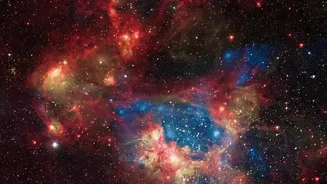
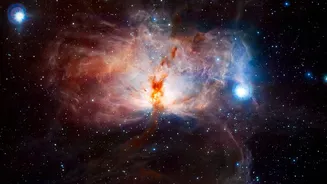
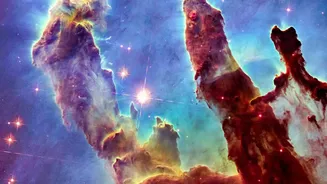
Before you can have planets, you need stars. Both are born in what astronomers call stellar nurseries. These are immense, cold clouds of gas and dust drifting through interstellar space. Spanning light-years across, these clouds are the raw material for new
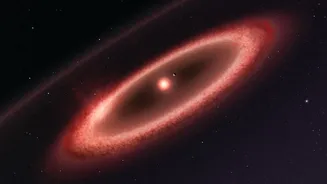
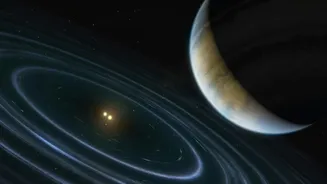
solar systems. Over millions of years, gravity begins to pull denser pockets of this material together, causing them to collapse and heat up, eventually forming a protostar at the center. The leftover gas and dust form a vast, spinning pancake of material around this baby star, known as a protoplanetary disk. It's within this turbulent, swirling disk that planets begin to take shape.
Webb’s Infrared Superpower
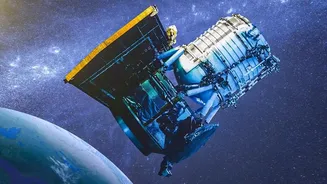
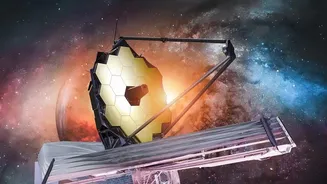
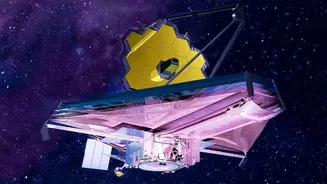
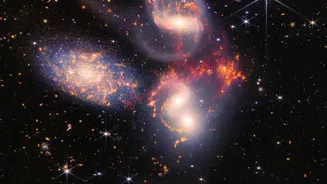
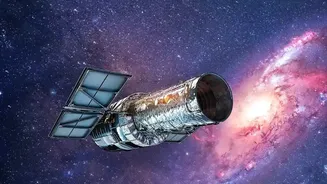
So why is the James Webb Space Telescope (JWST) such a game-changer for studying these nurseries? The answer lies in its ability to see in infrared light. The very dust clouds that give birth to stars and planets also act like a thick fog, completely blocking visible light. Telescopes like Hubble, which primarily see in visible and ultraviolet light, are often blinded by this dust. But infrared light, which has a longer wavelength, can pass through these dusty shrouds much more easily. This allows Webb to peer deep into the heart of stellar nurseries and capture images of processes that were previously invisible, revealing the hidden young stars and their surrounding planet-forming disks in unprecedented detail.
Spotting the Planetary Construction Zone
When Webb points its infrared eyes at a protoplanetary disk, it’s not just seeing a smooth, flat expanse. It’s looking for the tell-tale signs of planet formation in action. One of the most exciting discoveries is the presence of gaps and rings within the disks. Scientists believe these clearings are carved out by newly forming planets, which sweep up gas and dust along their orbital path, much like a snowplow clearing a road. By studying the size and location of these gaps, astronomers can infer the presence and even the mass of unseen baby planets. Webb's instruments are so sensitive they can also analyze the chemical composition of the disk, detecting water and organic molecules which are essential ingredients for life as we know it.
The Drama of Jets and Outflows
Planet formation isn't a gentle, quiet process; it’s a dynamic and often violent one. As young stars gather mass from their disks, they also blast out powerful jets of gas and energy from their poles. These jets, known as Herbig-Haro objects, slam into the surrounding gas cloud at supersonic speeds, creating spectacular shockwaves that light up the nursery. Webb has captured stunning, high-resolution images of these outflows, showing intricate structures of ejected material that trace the star’s growth history over thousands of years. These outflows play a crucial role in the star's evolution by carrying away excess momentum, which allows the star and its disk to continue collapsing and growing.
A Glimpse into Our Own Past
By studying these distant planetary nurseries, we are essentially looking at a cosmic photo album of what our own solar system might have looked like more than 4.6 billion years ago. Each image of a protoplanetary disk, each jet from a young star, and each detection of water in a swirling cloud provides a vital clue to understanding our own origins. The diversity Webb is uncovering shows there are many different pathways to forming a planetary system. Some discoveries are even challenging previous theories, for instance, by showing that planet-forming disks around smaller stars can last much longer than once thought, giving planets more time to form. With every new observation, Webb isn't just showing us how planets form out there; it's helping us piece together the story of how we got here.