


The Moon Meets a Supergiant Star
Kicking off the last full week of the month, look for the waxing moon as it makes a close pass by Antares, the fiery red heart of the Scorpius constellation, on August 21. Antares gets its name, which means “rival of Mars,” from its distinct and often
confusingly similar reddish hue. On this night, the Moon will act as a perfect guidepost, drawing your eye toward this massive star. The pairing will be a beautiful sight in the evening sky, visible to the naked eye. Look towards the southern sky after sunset to catch the duo. While they will appear close, they are of course separated by an immense distance, with Antares located about 550 light-years from Earth.
Catch the Last of the Perseids
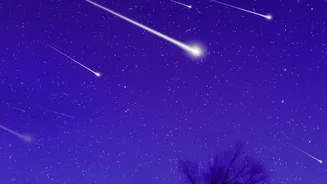
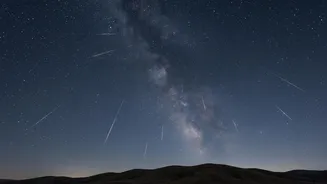
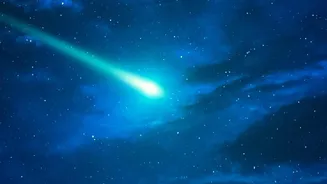
While the spectacular peak of the Perseid meteor shower occurred around August 12-13, the shower remains active until about August 24. This means you still have a chance to spot a few lingering “shooting stars” in the final days of the month. For the best chance of seeing one, find a location far from city lights, allow your eyes at least 20 minutes to adjust to the darkness, and look towards the northeastern sky in the hours after midnight. The Perseids are known for their bright, fast meteors that often leave persistent trails, so any you spot are likely to be memorable. Patience is key, as the rate will be much lower than during the peak.
A Partial Lunar Eclipse (For Some)
A partial lunar eclipse is scheduled to occur on August 28, 2026. During this event, a portion of the Full Moon will pass through the Earth's darkest shadow, the umbra, causing it to visibly darken. However, this particular eclipse will not be visible from India. The event will be observable across North and South America, Europe, and Africa. While Indian observers will miss out on the eclipse itself, they can still enjoy the sight of a brilliant Full Moon on this night, weather permitting. Knowing that our celestial neighbour is undergoing an eclipse elsewhere in the world adds a unique layer of cosmic perspective.
The Moon's Second Date with Saturn
If you missed their meeting earlier in the month, you have another opportunity to see the Moon pair up with the majestic ringed planet, Saturn. On the evenings of August 29 and 30, the now-waning gibbous Moon will once again have a close encounter with Saturn in the night sky. The duo will be visible in the constellation Pisces. This provides a wonderful opportunity for even casual observers to easily locate Saturn. The planet will appear as a steady, yellowish point of light near the Moon. While you won't see the rings without a telescope, knowing they are there makes the sight all the more special.
Saturn Shines Bright All Month
Beyond its meetings with the Moon, the planet Saturn is putting on a great show for observers throughout the end of August. The planet is heading towards its opposition in early October, which is when it will be at its closest and brightest for the year. In late August, it will already be a prominent object, rising in the east around sunset and remaining visible for most of the night. This makes it an excellent and reliable target for anyone with a small telescope. From a dark location, you might even be able to spot its famous rings. Look for it within the constellation Cetus.