


A Cosmic Crash in Stunning Detail
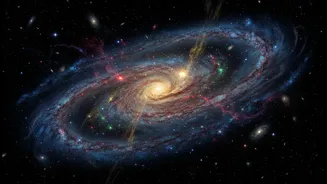
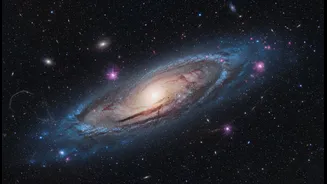
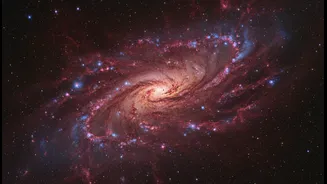
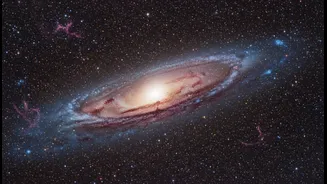
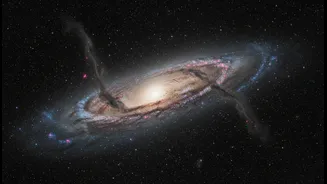
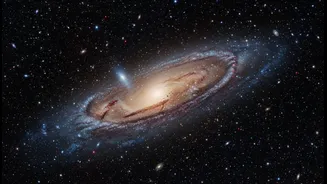
To celebrate its fourth year of science operations, NASA released an image of Centaurus A that peels back layers of dust and gas previously hidden from view. Located about 11 to 13 million light-years away, Centaurus A is famous among astronomers for
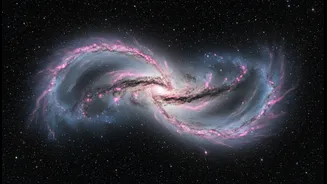
its peculiar shape—the result of a colossal merger between a large elliptical galaxy and a smaller spiral galaxy hundreds of millions of years ago. The collision created a chaotic yet beautiful structure, with a prominent parallelogram-shaped band of dust cutting across the galaxy's bright core. This isn't a quiet, settled galaxy; it’s an active laboratory for cosmic evolution, powered by the messy, creative process of two galaxies becoming one.
Peering Through Dust with Infrared Eyes
For decades, thick lanes of cosmic dust blocked our view of Centaurus A's heart. Telescopes like Hubble, which see in visible light, could only show the silhouette of these dust lanes. Even the retired Spitzer Space Telescope, which saw in infrared, lacked the power to resolve fine details. Now, Webb's advanced infrared instruments, MIRI and NIRCam, have pierced through that veil. What previously looked like a smooth glow is now revealed as a dense field of millions of individual stars. Astronomers can see intricate filaments of gas, glowing stellar nurseries where new stars are being born, and the eerie light from the galaxy's active supermassive black hole. This new clarity provides unprecedented detail about the aftermath of the ancient collision.
The Case for Galactic Archaeology
This detailed view is more than just eye candy; it's a form of galactic archaeology. By studying the different populations of stars—their ages, locations, and compositions—scientists can reconstruct the timeline of the merger. They can pinpoint when bursts of star formation occurred, how the collision stirred up gas and dust, and how the central black hole is feeding on the new material. The data from Webb shows how the active black hole is launching powerful jets and releasing enormous energy, which in turn shapes the evolution of the entire galaxy. Understanding this interplay between a galactic merger, star formation, and black hole activity is crucial for building complete models of how galaxies grow and change over billions of years.
A Glimpse into Our Own Future
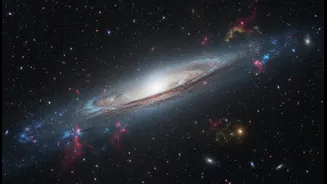
Studying galactic collisions isn't just an academic exercise about distant objects. It offers a preview of our own cosmic destiny. Our Milky Way galaxy is on a collision course with its nearest large neighbor, the Andromeda galaxy. In about 4.5 billion years, the two will begin a long, slow merger that will reshape our corner of the universe. While individual stars are unlikely to collide, the gravitational forces will trigger massive waves of star formation and dramatically alter the night sky. By studying nearby mergers like Centaurus A in such incredible detail, scientists can refine their models and better predict what will happen when Andromeda and the Milky Way finally meet. These chaotic cosmic events are not just destructive; they are a primary engine of creation and evolution in the universe, a process Webb is now helping us understand in stunning clarity.