






Your Pre-Travel Safety Check
Before you even put the key in the ignition, a quick vehicle check is your first line of defence against rainy conditions. Your tyres are the most critical component. Ensure they have adequate tread depth, as worn-out tyres cannot channel water away effectively,
dramatically increasing the risk of an accident. Check that your tyre pressure is at the manufacturer's recommended level. Next, inspect your windscreen wipers; they should clear the glass without streaking or skipping. If they leave smears, replace them. Finally, confirm all your lights are working—headlights, taillights, and brake lights. In heavy rain, visibility is severely reduced, and your lights are crucial for seeing and being seen by other drivers. Checking these basics takes only a few minutes but can make a significant difference.
The Danger of Low Visibility
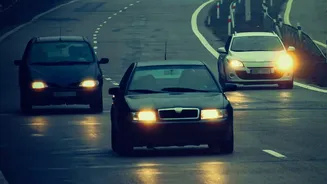
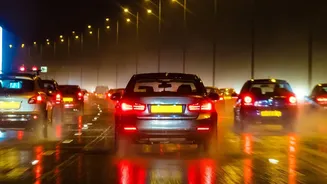
The most immediate challenge in a downpour is the loss of visibility. Heavy rain can make it difficult to see lane markings, pedestrians, and other vehicles. Your first adjustment should always be to slow down. Speed limits are designed for ideal, dry conditions, not torrential rain. Reducing your speed gives you more time to react to hazards. It is also vital to increase your following distance from the vehicle in front of you. In wet conditions, your car's stopping distance can increase significantly, so leaving several car lengths between you and the car ahead is a critical safety measure. Use your low-beam headlights to improve your visibility to others, but avoid high beams, which can reflect off the raindrops and cause glare, worsening your own view.
Understanding Hydroplaning
Hydroplaning, or aquaplaning, is one of the most frightening experiences a driver can have. It occurs when a layer of water builds up between your tyres and the road surface, causing the vehicle to lose traction and effectively glide on top of the water. This can happen at speeds as low as 35 mph (about 56 kph) if the water is deep enough. Worn tyres, high speed, and deep standing water are the primary causes. If you feel the steering suddenly become light or the vehicle start to slide, you may be hydroplaning. Do not slam on the brakes or make sharp steering movements. Instead, ease your foot off the accelerator and steer gently in the direction you want to go until the tyres regain contact with the road. The best way to avoid it is to slow down and steer clear of puddles and standing water.
The Deceptive Threat of Flooded Roads
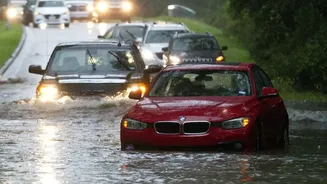
Encountering a flooded section of road is an immediate red flag. It is impossible to know the depth of the water or the condition of the road beneath it. The road surface could be washed out, or there could be hidden debris and dislodged manhole covers. It takes surprisingly little water to create a life-threatening situation. Just six inches of moving water can be enough to knock a person over or cause a driver to lose control of their vehicle. A foot of water is enough to float many passenger cars, and two feet of rushing water can carry away most vehicles, including SUVs and trucks. The official advice is unanimous and simple: Turn Around, Don't Drown. Never attempt to drive through floodwater. It is always safer to find an alternate route, even if it means a significant delay.