




The Challenge of a Changing Climate
Across India, farmers are on the front lines of a changing climate. Monsoons that arrive too late or not at all, followed by sudden, intense downpours, create a cycle of drought and flood that can devastate crops. Add to this the increasing frequency
of extreme heatwaves, and the challenge of securing a reliable harvest becomes immense. These 'difficult seasons' are no longer rare exceptions; they are a recurring reality. This volatility threatens not only the livelihood of individual farmers but the food security of the entire nation. In this environment, depending solely on traditional calendars and inputs is a risky gamble. A new approach is needed, one that builds resilience from the ground up.
The Living Foundation Beneath Our Feet
For generations, soil has often been treated as mere dirt—an inert medium to hold plants up. Science now confirms what traditional wisdom has long suggested: healthy soil is a complex, living ecosystem. A single teaspoon of healthy topsoil can contain billions of microorganisms like bacteria and fungi. This bustling community of life is crucial for a thriving farm. These organisms break down organic matter, cycle nutrients, and make them available to plants. Healthy soil is rich in organic carbon, has a good structure, and is teeming with life from earthworms to microbes. This isn't just 'dirt'; it's a dynamic, biological infrastructure that is the true foundation of agriculture.
Your Farm's Natural Insurance Policy
So how does this living soil help during a difficult season? The secret lies in its structure and composition. Soil rich in organic matter acts like a giant sponge. During periods of drought, it can hold significantly more water, making it available to plant roots long after the last rain has fallen. Conversely, when heavy rains arrive, the same healthy structure that holds water also provides channels for excess water to drain away, preventing waterlogging and root rot. This ability to both retain and drain water makes healthy soil an incredible natural buffer against the extremes of drought and flood, reducing risk and creating stability.
The Proof is in a Stable Yield
The ultimate goal for any farmer is a good harvest. While healthy soils often lead to higher yields over time, their most immediate and powerful benefit is yield stability. The benefits are most obvious in years when conditions are not ideal. A farm with degraded soil might produce a bumper crop in a perfect year but face total failure in a drought. A farm with healthy soil, however, is more likely to produce a decent, profitable yield even when the weather is uncooperative. This is because the soil's ecosystem continues to supply nutrients and water, helping crops withstand stress. It turns farming from a high-stakes gamble into a more predictable and sustainable business.
Practical Steps to Rebuild Soil Health
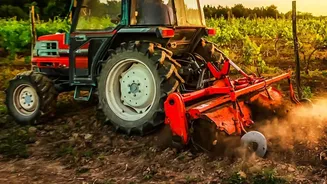
Improving soil health is not an overnight process, but it is achievable through practical, proven methods. One of the most effective strategies is to increase the organic matter in the soil. This can be done by adding compost and farmyard manure. Another key practice is minimising tillage, or ploughing, which protects the soil structure and the organisms within it. Planting cover crops, such as legumes, between main crop cycles keeps living roots in the ground, feeds soil life, and prevents erosion. Diversifying crop rotations instead of planting the same monoculture year after year can also break pest cycles and enhance soil biodiversity, which is key to a resilient system.