



A Breakthrough Observation
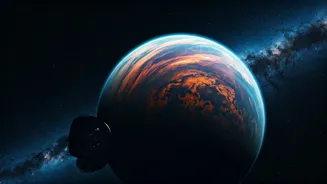
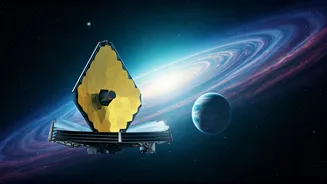
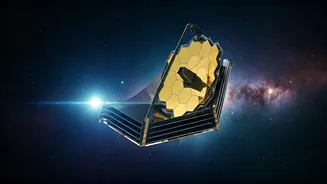
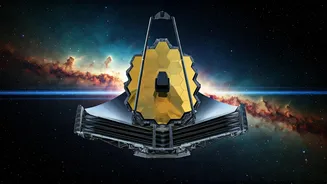
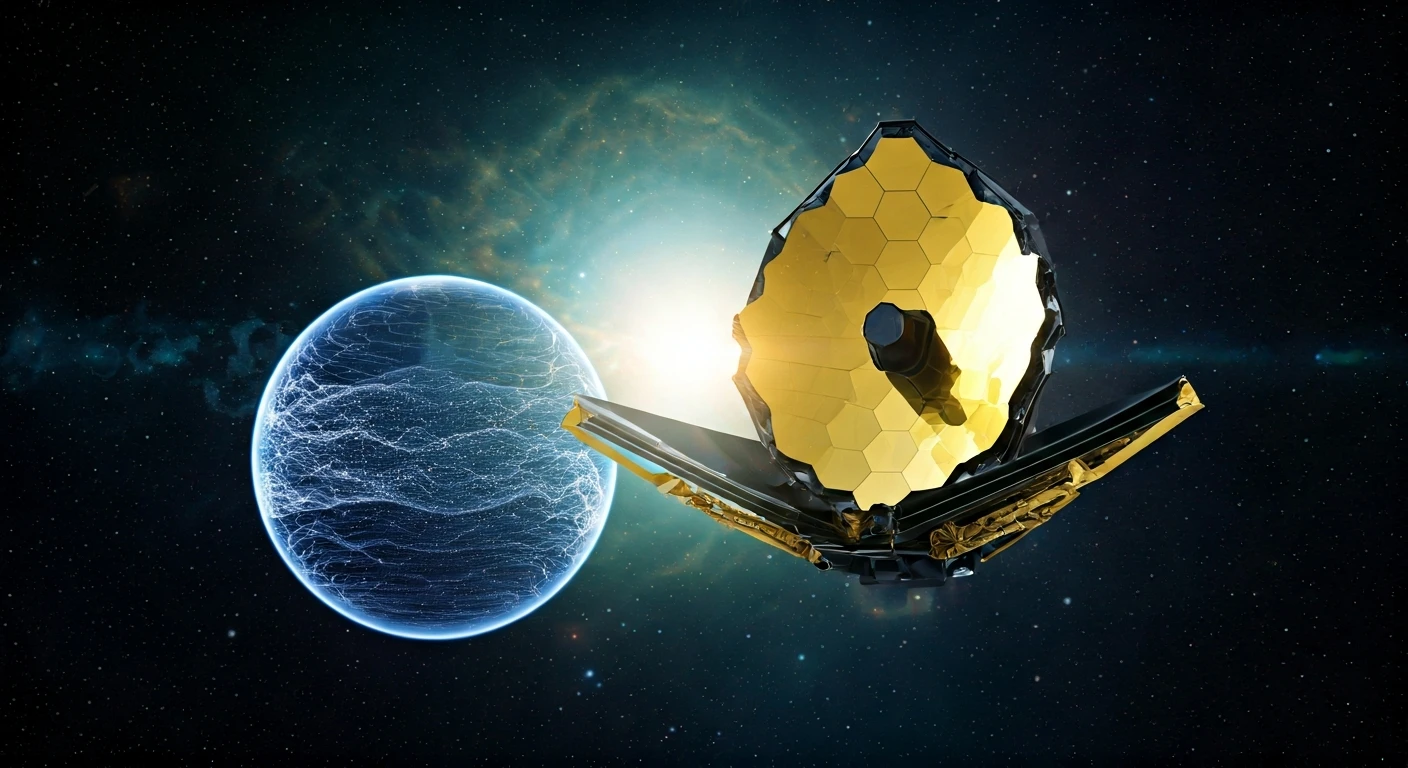
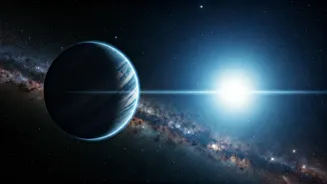
One of the James Webb Space Telescope's first and most celebrated feats was analyzing the atmosphere of WASP-96 b, a gas giant exoplanet located about 1,150 light-years from Earth. The telescope captured the unambiguous signature of water vapor, along
with evidence of haze and clouds—features that previous observations suggested might not even exist there. This discovery was a landmark moment, not just for what it found, but for proving that JWST could perform this kind of detailed atmospheric analysis with unprecedented precision. The planet itself is a 'hot Jupiter,' a puffy gas giant much larger than Jupiter but with less than half its mass, orbiting extremely close to its sun-like star every 3.4 days. This makes it an ideal, albeit scorching, laboratory for studying alien atmospheres.
Playing Hide and Seek with Starlight
Scientists can't see the atmosphere of a planet like WASP-96 b directly. Instead, they use a clever trick called the transit method. It works by watching a planet as it passes, or 'transits,' in front of its host star from our perspective. As the planet crosses, it blocks a tiny fraction of the starlight, causing a minuscule dip in the star's brightness. This initial dip tells astronomers a lot, including the planet's size and orbit. But the real magic happens at the very edge of the planet, where the star's light filters through the thin layer of its atmosphere before reaching the telescope. That filtered light carries the secrets of the atmosphere's chemical composition.
The Science of Transmission Spectroscopy
This technique of analyzing filtered starlight is called transmission spectroscopy. Think of it like a cosmic barcode scanner. Every element and molecule absorbs light at very specific wavelengths, or colors. It’s like having a unique fingerprint. The process starts by Webb measuring the star's normal light to get a baseline spectrum. Then, as the planet transits, the telescope measures the light again. The molecules in the planet's atmosphere—like water vapor, methane, or carbon dioxide—will absorb some of that starlight, creating dips or absorption lines in the spectrum. By comparing the star's original spectrum to the spectrum after it has passed through the planet's atmosphere, scientists can see exactly which wavelengths are missing.
Decoding Water's Signature
The data that scientists receive isn't a beautiful image but a graph called a transmission spectrum. This graph shows the brightness of light across a range of infrared wavelengths. The unambiguous signature of water on WASP-96 b appeared as a series of distinct peaks and troughs on this graph. These bumps perfectly matched the known absorption pattern of water when heated to a vapor. Each molecule has a unique spectral fingerprint, and the specific pattern of dips Webb detected was a clear match for H2O. This allowed scientists to say with high confidence that water was present. The Canadian-built Near-Infrared Imager and Slitless Spectrograph (NIRISS) was one of the key instruments used to capture these detailed measurements.
Beyond Water: A New Era of Discovery
Detecting water is just the beginning. The same transmission spectroscopy technique allows scientists to identify a whole range of molecules that are key to understanding a planet's climate and potential for life, such as methane, carbon dioxide, and even sulfur dioxide. These chemical inventories help astronomers build a more complete picture of what these distant worlds are really like. For instance, on another exoplanet, K2-18 b, Webb detected carbon-based molecules like methane and carbon dioxide in the atmosphere of a potential 'water world.' Every new atmospheric detail helps scientists refine their models of planetary formation and evolution, pushing us closer to answering the ultimate question: are we alone in the universe?