



The Challenge in Modern Imaging
Medical imaging is a cornerstone of diagnosis, offering a window into the human body to spot everything from broken bones to early-stage cancers. However, this powerful tool comes with inherent challenges. For radiologists, the sheer volume of images
can be overwhelming, leading to immense pressure and the potential for human error in interpreting complex scans. For patients, a primary concern with technologies like computed tomography (CT) is exposure to ionizing radiation. Historically, achieving a clear, high-quality image often required a higher radiation dose, creating a trade-off between diagnostic confidence and patient safety. This balancing act has been a central focus in radiology for decades.
How AI Acts as a Safety Net
Artificial intelligence acts as a powerful new layer of safety and precision. Using advanced algorithms trained on vast datasets of medical images, AI tools can analyze scans with incredible speed and consistency. Think of it as a highly trained assistant that can flag suspicious areas a human eye might miss, automate repetitive tasks, and ensure scans are optimized before they even begin. AI can help by automatically ensuring the patient is positioned correctly for a scan, which is crucial for accurate dosing, or by highlighting urgent findings like a stroke on a CT scan and moving that case to the top of a radiologist's worklist. This prioritisation ensures that critical cases receive immediate attention, which can dramatically improve patient outcomes.
Smarter Scans, Lower Radiation
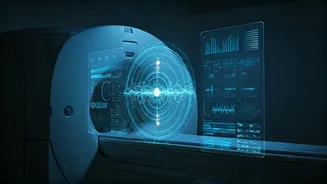
One of the most significant patient safety benefits of AI is its ability to dramatically reduce radiation exposure without compromising image quality. New deep learning reconstruction techniques allow AI to process images from lower-dose scans and intelligently remove the 'noise' that would typically make them blurry or unusable. The AI learns to distinguish between true anatomical structures and random image noise. The result is a high-quality, diagnostically clear image created with a fraction of the radiation. Studies have shown these methods can lead to meaningful radiation dose reductions of roughly 40% to 90% across various types of CT scans, which is especially important for children and patients who require frequent monitoring.
Enhancing Diagnostic Accuracy
Beyond radiation safety, AI significantly boosts diagnostic accuracy. It acts as a second set of eyes, meticulously scanning for abnormalities. These systems can detect subtle changes in tissues or organs that might be too small for the human eye to catch, helping in the early detection of diseases when they are most treatable. For example, AI can quantify changes in the brain related to Alzheimer's disease or flag tiny lung nodules that could be early signs of cancer. By highlighting these areas of interest, AI helps radiologists focus their attention where it's needed most, reducing the risk of missed findings and increasing diagnostic confidence.
A Human-AI Partnership
A common misconception is that AI will make radiologists obsolete. The reality is that AI is designed to augment, not replace, human expertise. A radiologist's job involves far more than just pattern recognition; it requires clinical judgment, contextual understanding of a patient's history, and communication with other doctors. AI excels at repetitive, data-heavy tasks, which frees up radiologists to concentrate on the most complex aspects of a case and on patient care. This collaborative approach, often compared to a pilot using an advanced autopilot system, combines the computational power of machines with the essential reasoning and empathy of a human expert, leading to better, faster, and more reliable care.