
Meet NASA’s New Cosmic Cartographer
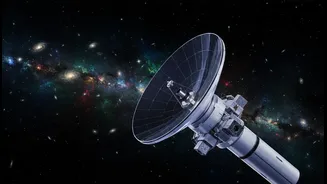
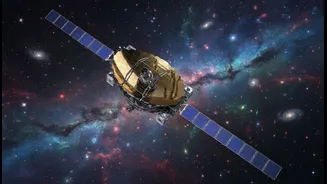
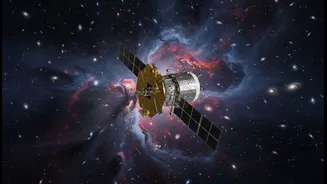
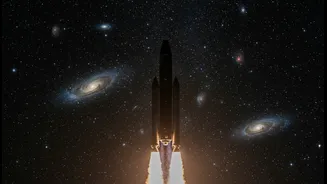
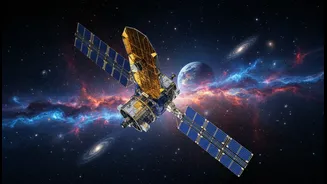
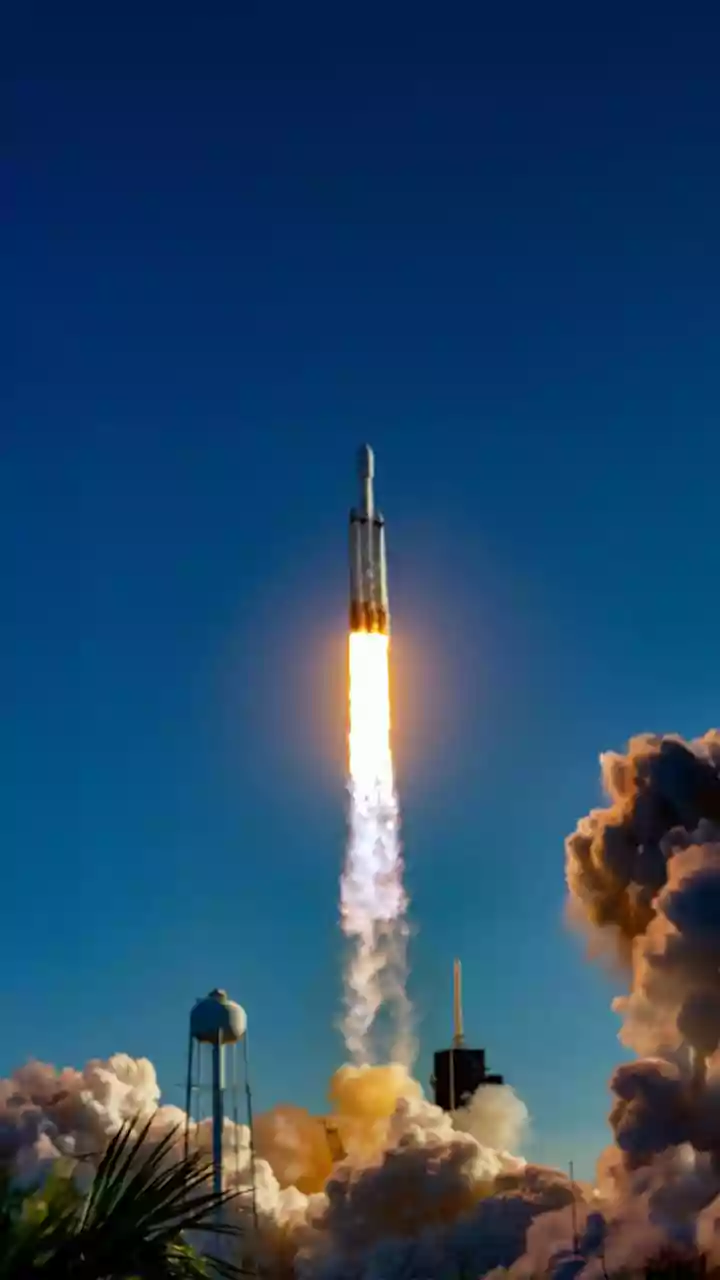
The Nancy Grace Roman Space Telescope is NASA’s next great observatory, named after the agency's first chief of astronomy, who was instrumental in planning the Hubble Space Telescope. Scheduled for launch on August 30, 2026, aboard a SpaceX Falcon Heavy
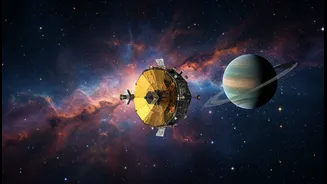
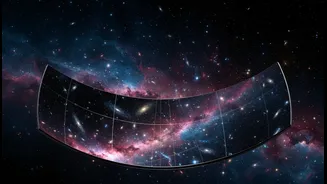
rocket, Roman is poised to revolutionize our understanding of the universe. While it shares a legacy with its predecessors, its mission is fundamentally different. Roman is a survey telescope, designed to capture vast swathes of the cosmos with incredible speed and efficiency. Its primary mirror is the same size as Hubble's at 2.4 meters, but its camera gives it a field of view that is at least 100 times larger. This means that in a single snapshot, Roman can capture a patch of sky larger than the apparent size of a full moon.
The 'Survey Specialist' Advantage
The key to Roman's power lies in its Wide Field Instrument (WFI), a 300.8-megapixel infrared camera. This instrument allows the telescope to survey the sky up to 1,000 times faster than Hubble can, while maintaining similar image sharpness. Think of it as the difference between a microscope and a panoramic camera. Telescopes like the Hubble and James Webb Space Telescope (JWST) are like microscopes, providing incredibly deep and detailed views of very small patches of the sky. They are perfect for studying individual objects in great detail. Roman, on the other hand, is the panoramic camera, built to create a massive map of the universe. Over its five-year primary mission, it will image more than 50 times the amount of sky that Hubble has in over 30 years. This rapid, wide-angle approach is ideal for statistical surveys, finding rare objects, and tracking cosmic changes over time.
A Complement to Hubble and Webb
Roman is not a replacement for Hubble or Webb, but a powerful complement to them. Its strength is finding targets of interest across a huge area. It will identify potentially fascinating objects—from rogue planets to distant supernovae—that the more focused Webb can then study in greater detail for things like atmospheric composition. Roman will operate in the near-infrared, similar to Hubble, but Webb is designed to see even further into the infrared spectrum, allowing it to peer into the very earliest moments of the universe. Together, the three telescopes will provide a more complete picture of the cosmos than any one could alone. Roman will find the 'what' and 'where' on a grand scale, while Webb and Hubble provide the 'what's it made of' and 'how does it work' for specific discoveries.
Unlocking Cosmic Mysteries
Roman's primary mission objectives are twofold: to hunt for exoplanets and to unravel the secrets of dark energy and dark matter. For exoplanets, Roman will use a technique called gravitational microlensing to conduct a massive census. By monitoring hundreds of millions of stars toward the center of our galaxy, scientists expect Roman to discover thousands of new planets, potentially including Earth-mass worlds. On the cosmological front, Roman will map the structure and expansion of the universe by observing millions of galaxies and distant supernovae. This data will help scientists understand the mysterious force known as dark energy, which is causing the universe's expansion to accelerate. The telescope will also probe the nature of dark matter by studying how its gravity warps the light from distant galaxies.