


Gravity Is Still Very Much in Charge
First, let's get the big misconception out of the way. Gravity doesn't just switch off once you leave the atmosphere. In fact, at the altitude of the International Space Station (ISS), about 250 miles up, Earth's gravitational pull is still about 90%
as strong as it is on the surface. If you could somehow build a tower that high and stand on it, you would feel almost your normal weight. So, if gravity is still pulling astronauts down with immense force, why aren't they crashing back to Earth? And why do they float? The answer to both questions lies in understanding what 'weight' truly is and recognizing that orbiting is a special kind of falling.
What You 'Feel' Isn't Gravity, It's the Ground
Here on Earth, you have mass—the amount of 'stuff' you're made of. Gravity pulls that mass downward. But you don't feel the pull of gravity directly. What you actually feel is the floor (or your chair, or the ground) pushing back up at you. Physicists call this the 'normal force'. It's a contact force. Imagine standing on a bathroom scale. The number you see is a measurement of how much the scale is pushing up to support you, which balances the force of gravity pulling you down. This upward push creates internal compression in your body—from your feet, up your skeleton, through your muscles—and your brain interprets this sensation as 'weight'. Without that push, the feeling of weight vanishes.
Your Daily Dose of Weightlessness
You've likely experienced this phenomenon without ever leaving the planet. Think of a roller coaster cresting a tall hill or the brief moment in an elevator when it starts to descend quickly. For a split second, you feel lighter, or even completely weightless. Your stomach lurches. In that moment, the seat or floor is falling away from you at the same rate you are. Because there's nothing pushing up on you, the normal force disappears, and with it, your sensation of weight. This state, where gravity is the only significant force acting on you, is called 'freefall'.
Orbit Is Just Falling Sideways, Endlessly
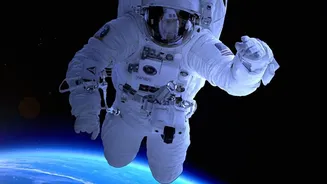
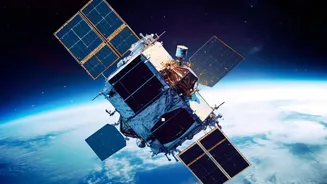
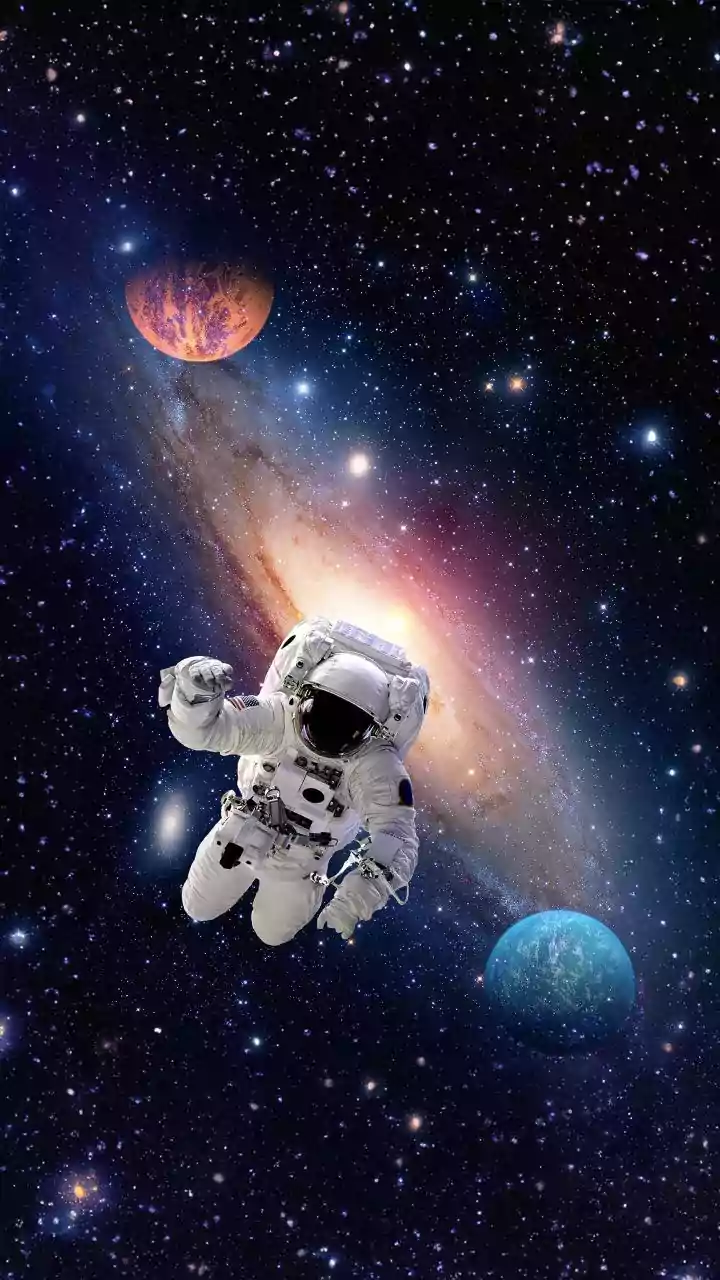
Now, let's go back to the astronauts. The ISS and everything in it are in a constant state of freefall toward Earth. However, they are also moving sideways at an incredible speed—about 17,500 miles per hour. This immense horizontal velocity means that as they fall downwards, the Earth's surface curves away from them at the exact same rate. They are perpetually 'falling around' the planet, never getting any closer to the ground. Douglas Adams famously wrote that the secret to flying is to 'throw yourself at the ground and miss'. That's a surprisingly accurate description of what an orbit is. Because the astronaut and the station are falling together, the floor of the spacecraft never gets a chance to push up on the astronaut. There are no contact forces, no normal force, and therefore, no sensation of weight.