









The New Automation Reality
The conversation around artificial intelligence has shifted from a futuristic concept to a present-day reality in the workplace. AI and automation are rapidly transforming industries by taking over routine and repetitive tasks. This includes functions
like basic data analysis, document processing, and even first-draft content creation. According to reports from institutions like the World Economic Forum and McKinsey, this technological wave is not just eliminating certain job functions but fundamentally changing the skill requirements for almost all roles. While the demand for technological literacy is soaring, there is an equally strong, if not stronger, emphasis on skills that are profoundly human. As AI handles the 'what', employers are increasingly looking for professionals who can master the 'why' and the 'what if'.
Redefining Workplace Creativity
When we talk about creativity in a career context, it’s not limited to artistic pursuits. In business, creativity is the engine of innovation and problem-solving. It’s the ability to connect disparate ideas, ask probing questions, and imagine solutions that don’t yet exist. While AI excels at analysing existing data to find patterns, it cannot replicate human intuition, cultural nuance, or emotional intelligence. True originality comes from lived experiences and unique perspectives, which are inherently human traits. Studies have shown that creative thinking is a top priority for organizations, as it's the skill that allows teams to interpret data in compelling ways, design revolutionary products, and develop strategies that resonate emotionally with customers.
AI as a Creative Co-pilot
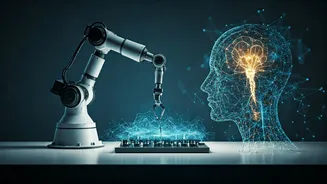
The most forward-thinking approach isn't to view AI as a competitor, but as a powerful partner that can amplify human ingenuity. Think of AI as a co-pilot, not the pilot. It can automate mundane tasks, freeing up valuable time and mental space for professionals to focus on higher-level strategic and creative thinking. For example, AI tools can generate dozens of initial concepts, analyse market trends, or process massive datasets, providing a solid foundation for human creativity to build upon. Research has shown that individuals who are more creative can use AI to produce even more creative outcomes, effectively using the technology as a tool to enhance their innate abilities. This synergy allows for faster innovation and helps teams overcome common pitfalls like groupthink by introducing unconventional starting points for discussion.
How to Cultivate Your Creative Edge
In a job market that increasingly values creativity, professionals must be intentional about cultivating it. This starts with fostering a mindset of curiosity and lifelong learning. Actively seek out diverse experiences, read outside your field, and engage with new ideas. Practice 'divergent thinking' by brainstorming multiple solutions to a problem, even impractical ones, to stretch your imagination. Developing AI literacy is also crucial; learn how to use AI tools and practice prompt engineering to effectively guide them toward creative outputs. Finally, focus on skills that complement creativity, such as critical thinking, complex problem-solving, and emotional intelligence. These human-centric capabilities, when combined with technical fluency, create a powerful and future-proof professional profile.