



What Is a Lunar Conjunction?
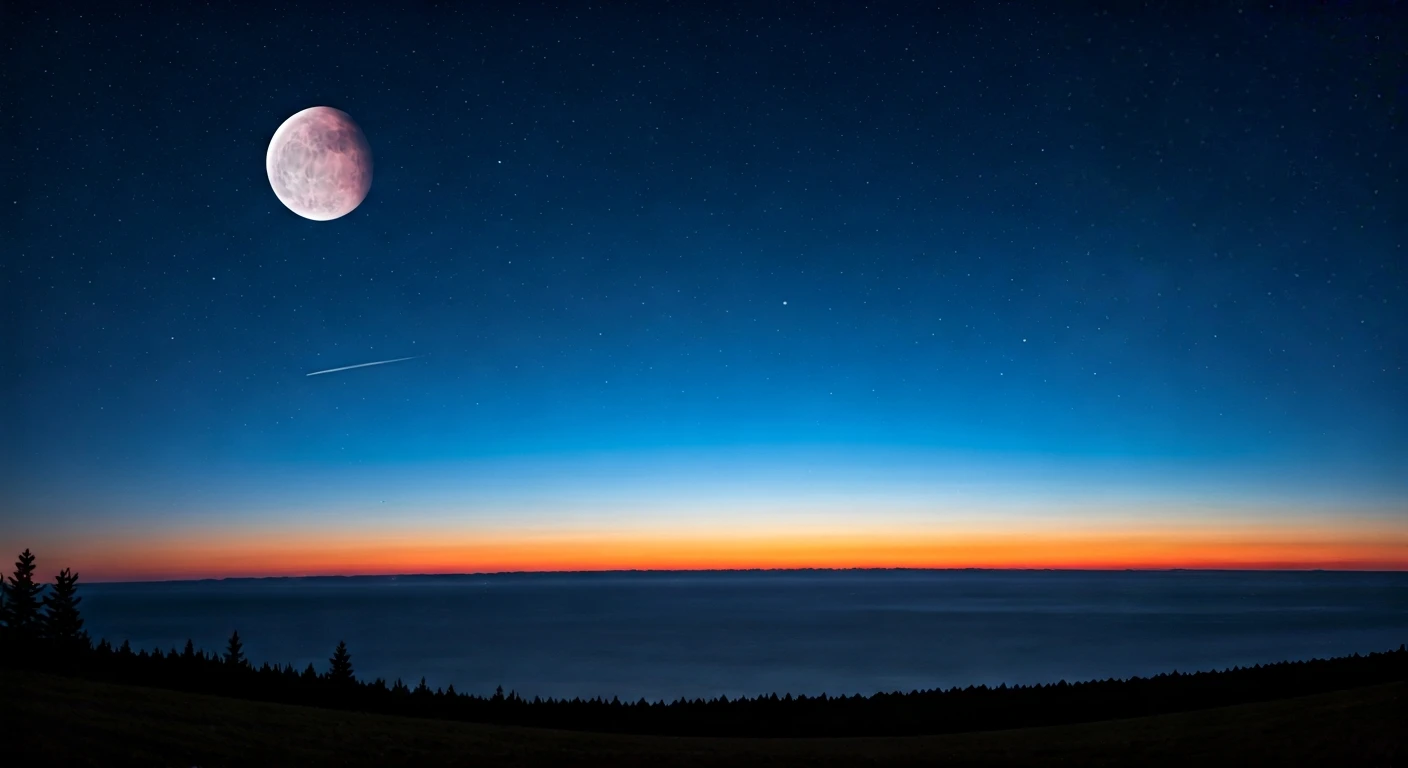
Tonight's event is what astronomers call a conjunction. In simple terms, when two celestial objects appear very close to each other in our sky, it's a conjunction. It’s purely a line-of-sight effect. The Moon, our closest celestial neighbour at about
384,400 kilometres away, will appear to cozy up to Spica, a star that is unimaginably farther away. Despite the vast distance separating them, their paths across our sky will intersect, creating a striking pair for observers on Earth. Sometimes the Moon passes directly in front of a star, an event called an occultation. While tonight is a close pass, it's still a visually compelling event that highlights the constant motion of our solar system against the backdrop of distant stars.
Meet Spica, the Star of the Show
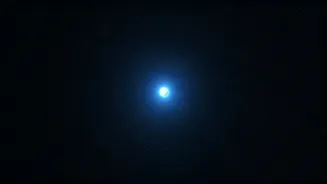
Spica isn't just any random star. It’s the brightest star in the constellation Virgo and the 16th brightest star in the entire night sky. Its name comes from the Latin word for "ear of grain," as it represents the sheaf of wheat being held by Virgo, the maiden. What you see as a single point of brilliant blue-white light is actually a binary star system, meaning it’s two stars orbiting each other so closely that they appear as one to our eyes. These stars are much larger and hotter than our Sun. Located approximately 250 light-years away, the light you see from Spica tonight began its journey to your eyes around the time the Mughal Empire was solidifying its rule in India. Thinking about that adds a layer of wonder to what you're witnessing.
When and Where to Look From India
The good news is that this event will be visible from all across India, provided the skies are clear. The best time to start looking is after sunset, once the sky darkens enough for the stars to become visible. The Moon will, of course, be the easiest object to spot. Once you’ve found it, look for a bright, solitary star shining steadily nearby. That will be Spica. Depending on the exact time you are watching, the star will either be to the side of the Moon, slightly above, or below. You don’t need to know the exact compass direction; simply find the Moon, and Spica will be its companion for the night. The pair will travel across the sky together, setting in the west in the early hours of the morning.
Do You Really Need a Telescope?
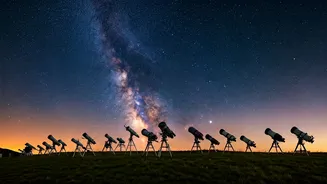
While the headline suggests a telescope, it’s not an absolute must-have. Your viewing experience will simply change depending on the equipment you use.
**With the naked eye:** You will easily be able to see the Moon and Spica as two distinct points of light, one incredibly bright and the other a steady, brilliant pinpoint. The visual of them hanging close together in the sky is beautiful on its own.
**With binoculars:** This is perhaps the best way for most people to enjoy the event. Binoculars will make Spica appear much brighter and more vivid, and you'll get a stunning view of the Moon's craters and seas along its terminator (the line between its light and dark sides). The wide field of view of most binoculars will allow you to see both the Moon and Spica in the same frame, which is a breathtaking sight.
**With a telescope:** A telescope will give you a close-up, high-definition view. You can focus on Spica to appreciate its sharp, blue-white colour, and then turn to the Moon to explore its surface in incredible detail. However, you might have to move the telescope slightly to switch between the two, as they may not both fit into the high-magnification eyepiece at the same time.
Tips for the Best Viewing Experience
To make the most of this celestial show, a little preparation goes a long way. First, try to get away from the glare of city lights. A park, a terrace, or any spot with a clear view of the sky and less artificial light will dramatically improve what you can see. Second, give your eyes time to adapt to the darkness. It takes about 15-20 minutes for your pupils to fully dilate, allowing you to see fainter stars. Avoid looking at your bright phone screen during this time. If you need a light, use a torch with a red filter, as red light is less disruptive to your night vision. Finally, get comfortable. Bring a chair or a blanket, some hot chai, and make an evening of it. Stargazing is as much about patience and peace as it is about the view.