






From the Ocean to the Lab
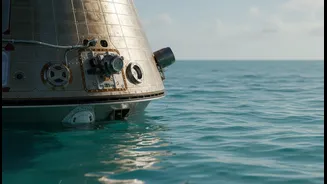
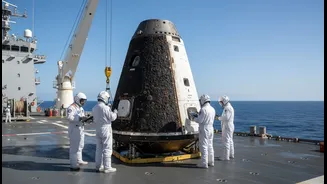
The journey of the Orion capsule didn't end in the Pacific Ocean. Following its precise splashdown, a highly coordinated recovery effort involving NASA and the U.S. Navy swung into action. The capsule was carefully secured and transported to a naval base
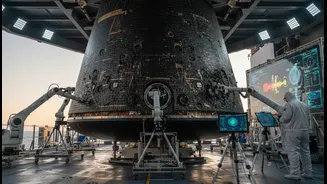
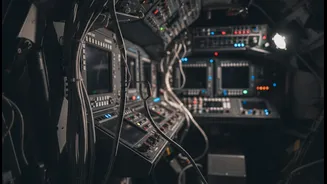
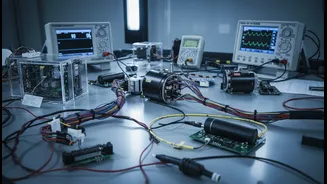
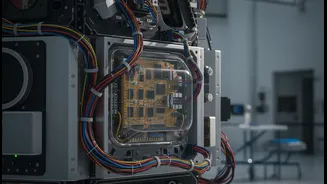
before beginning its overland trip back to NASA's Kennedy Space Center in Florida. This meticulous process isn't just about retrieving a piece of hardware; it's about preserving a priceless data recorder. Every component, from the crew seats to the avionics, is destined for intense scrutiny. Technicians will dismantle the spacecraft, retrieving onboard data and removing reusable parts for future missions. This de-servicing is the first step in a long-term analysis to compare flight data with the actual condition of the hardware, turning a successful test flight into a blueprint for what comes next.
The Heat Shield's Fiery Tale
The single most-watched component of the post-flight assessment is the heat shield. After the uncrewed Artemis I mission revealed some unexpected erosion of the ablative material, all eyes were on how the shield would perform with astronauts on board. During its return, Orion blazed through the atmosphere at nearly 35 times the speed of sound, with the heat shield enduring temperatures around 2,760°C. Initial inspections conducted right after splashdown and on the recovery ship brought a wave of relief. NASA reported that the char loss behavior seen on Artemis I was significantly reduced, matching predictions from ground tests. This result is a massive validation of the analytical work and adjustments made after the first mission, providing crucial confidence that the thermal protection system is robust enough for the crewed lunar landing to come. The heat shield will be sent to NASA's Marshall Space Flight Center for more detailed analysis, including X-ray scans to understand its performance at a microscopic level.
A Habitable Home in Deep Space
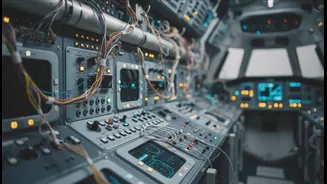
While the heat shield protected Orion from the outside, a suite of life support systems kept the four-person crew safe on the inside. A key objective of Artemis II was to prove these systems could sustain humans on a long-duration deep space mission. Post-flight checks will meticulously examine the performance of the environmental control systems, which supplied air and water, and managed the cabin atmosphere. Astronauts tested everything from meal preparation and waste disposal to exercise protocols. Even minor issues, like a problem with a urine vent line, will be thoroughly investigated to identify the root cause and implement corrective actions for Artemis III. This attention to detail is essential for turning Orion from a test vehicle into a reliable habitat for astronauts on missions that will last much longer than the 10-day trip of Artemis II.
The Data-Driven Path to Artemis III
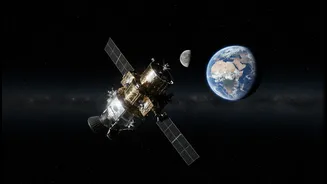
The 'bigger story' behind the Artemis II checks lies in the enormous cache of data collected throughout the mission. More than just a successful flight, Artemis II was a data-gathering expedition. The mission was designed to demonstrate and validate a wide range of systems, from propulsion and navigation to communications. Engineers are now poring over this data to refine their models and improve performance for future flights. The SLS rocket's performance, which delivered a near-perfect orbital insertion, is being analyzed. The manual piloting tests conducted by the crew provided invaluable data on the capsule's handling qualities. Every piece of information, from the performance of the launch pad to the function of onboard laptops, helps build a safer, more efficient, and more capable system for Artemis III—the mission slated to finally return human boots to the lunar surface.