


A Messenger From Another Star
For nearly all of history, every object we could see in the sky belonged to our solar system. Planets, asteroids, and comets were all born from the same cloud of gas and dust as our Sun, 4.6 billion years ago. But we now know we are not alone. Occasionally,
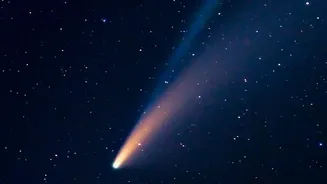
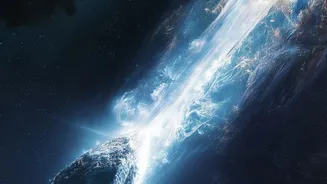
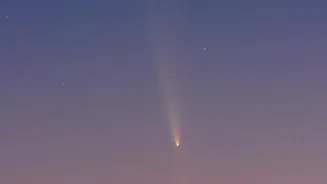
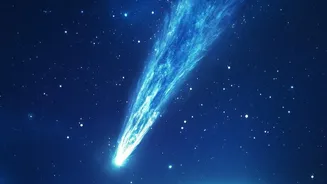
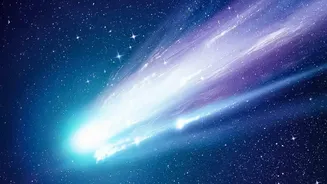
our system receives visitors: comets and asteroids ejected from their own star systems that now wander the galaxy. The latest is 3I/ATLAS, a comet discovered in July 2025 by the Asteroid Terrestrial-impact Last Alert System (ATLAS), a NASA-funded survey project designed to spot moving objects in the night sky. Its name signifies its status: the third interstellar object ever found. Its trajectory confirms it is not bound by our Sun's gravity; it is just passing through on a journey that began light-years away.
Not Our First Interstellar Rodeo
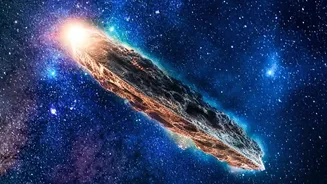
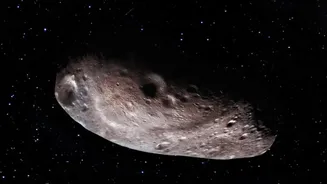
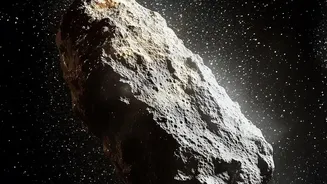
The discovery of 3I/ATLAS follows two previous interstellar visitors that captured the world's imagination. The first, 1I/'Oumuamua, detected in 2017, was a bizarre, cigar-shaped object that showed no visible cometary tail, leaving scientists debating its nature. Two years later, 2I/Borisov arrived, and it looked much more familiar. Discovered by an amateur astronomer, Borisov was clearly a comet, with a visible cloud of gas and dust, much like those from our own system. The arrival of 3I/ATLAS confirms that these visitors are not once-in-a-lifetime events but a regular, if infrequent, feature of our solar system. Some studies suggest as many as seven interstellar objects may pass through our system annually, though most are too small and faint to detect. Each one provides a new, unique data point for understanding the galaxy.
A Cosmic Time Capsule
The reason astronomers get so excited about these objects is that they are, in essence, free samples from other solar systems. We cannot yet send probes to other stars, but these objects bring pieces of those distant worlds to us. Comets are considered pristine leftovers from the planet-formation process. By studying the chemical makeup of 3I/ATLAS, scientists can analyze the raw ingredients that built planets around another star. It’s like being a geologist who is suddenly handed a rock from an entirely different world. Studying its composition—the types of ices, the abundance of organic molecules, and the ratio of different elements—can tell us if the building blocks of life (carbon, hydrogen, oxygen, and nitrogen) are common elsewhere in the galaxy.
What Makes 3I/ATLAS So Special?
While 2I/Borisov was comfortingly familiar, early observations of 3I/ATLAS suggest it has its own unique story. Using powerful instruments like the James Webb Space Telescope, astronomers have analyzed the gas sublimating from its icy nucleus as it warms near the Sun. These studies revealed an unusually high ratio of carbon dioxide to water, suggesting it formed in a very different environment than comets in our solar system. Some analyses of its trajectory and composition even suggest it could be ancient, perhaps as old as 11 billion years, originating from an old population of stars in the Milky Way's thick disk. This makes it not just a piece of another solar system, but potentially a relic from the galaxy's early history.
The Hunt for More Visitors
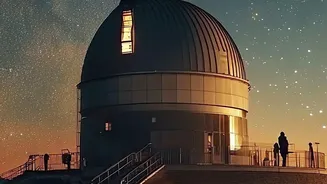
The discovery of three interstellar objects in just a few years is no coincidence. It is the result of new, powerful survey telescopes like ATLAS and the future Vera C. Rubin Observatory, which scan the sky with unprecedented speed and sensitivity. In the past, these faint, fast-moving objects would have passed by completely unnoticed. Now, astronomers are confident that we are on the cusp of discovering many more. Each new detection will help build a catalog of interstellar materials, allowing scientists to compare and contrast the chemistry of different star systems across the galaxy. This new field of study, practically non-existent a decade ago, is turning the entire galaxy into a laboratory for understanding how planets, and perhaps life, come to be.