




The Cosmic Hunt: Finding Needles in a Haystack
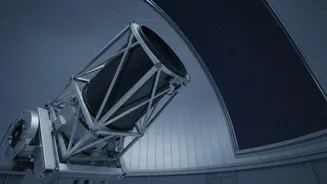
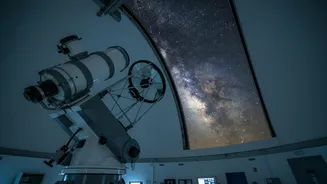
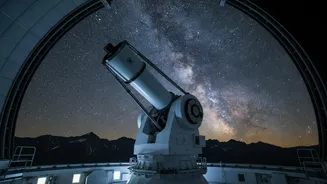
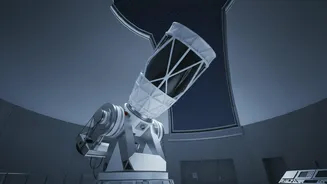
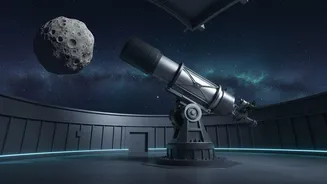
The first step in tracking a Near-Earth Object (NEO) is simply finding it. This immense task falls to powerful survey telescopes. Facilities like the Catalina Sky Survey in Arizona and Pan-STARRS in Hawaii continuously scan the night sky. They take multiple
pictures of the same patch of space minutes apart. Against the fixed backdrop of distant stars and galaxies, a moving asteroid will appear as a tiny speck of light that has shifted its position between images. Computers automatically flag these moving points, creating a list of potential new objects that need a closer look. This initial detection is the critical starting point for everything that follows, turning an unknown object into a known quantity.
Confirming the Target: A Global Follow-Up
Once a potential NEO is flagged, the global science community springs into action. Data on the object is sent to the Minor Planet Center, the worldwide clearinghouse for all asteroid and comet observations. To confirm the discovery and calculate an initial orbit, more observations are needed. This is a collaborative effort involving astronomers from major institutions, smaller observatories, and even the amateur astronomy community. Each new data point helps scientists refine the asteroid's projected path. This follow-up phase is crucial; it helps determine if the object is truly a near-Earth asteroid and provides a preliminary forecast of its future movements, flagging any that warrant top priority for closer monitoring.
Radar's Precision Power: From Path to Picture
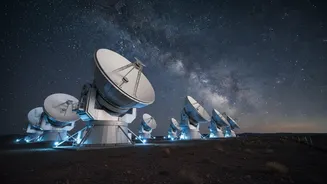
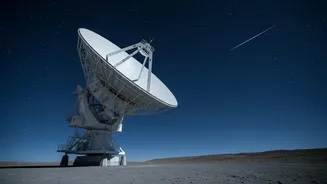
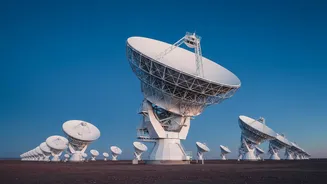
While telescopes are excellent for discovery, radar is the MVP of high-precision tracking. When an asteroid is set to make a close approach, powerful radar systems like NASA's Goldstone Solar System Radar in California get to work. By bouncing radio waves off the asteroid, scientists can gather a wealth of detailed information that optical telescopes cannot. Radar provides extremely precise measurements of the asteroid's distance and speed, which dramatically shrinks any uncertainty in its orbital path. It can also reveal the object's size, shape, rotation, and even surface features, turning a simple point of light into a detailed, three-dimensional model. This level of detail is vital for accurately assessing any potential risk.
From Data to Defense: Centralizing the Knowledge
All of this data—from initial surveys, follow-up observations, and radar tracking—flows to NASA's Center for Near-Earth Object Studies (CNEOS) at the Jet Propulsion Laboratory. CNEOS is the central hub for calculating high-precision orbits and predicting the future paths of NEOs for the next century and beyond. The center runs sophisticated automated systems called Sentry and Scout. Scout analyzes potential new discoveries for any immediate threats, while Sentry continuously scans the catalog of known asteroids for any future impact possibilities. If a credible threat is identified, CNEOS alerts NASA's Planetary Defense Coordination Office (PDCO), which is responsible for coordinating a response across government agencies and international partners.