
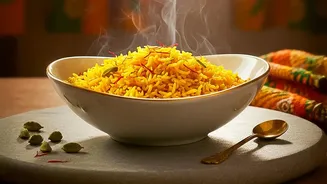
Known as 'red gold', saffron is the world's most expensive spice, prized for its vibrant colour and unmistakable aroma. But its true magic lies in its incredible versatility, bridging the gap between savoury meals and decadent desserts.
The Golden Thread of Flavour
Saffron consists
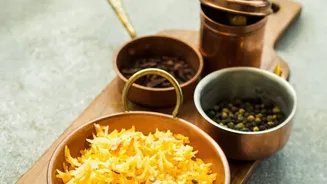
of the delicate crimson stigmas of a crocus flower, which must be painstakingly harvested by hand. It takes thousands of flowers to produce just a small amount, explaining its hefty price tag. But a little goes a long way. Its flavour is complex—floral, earthy, and slightly honey-like, with a subtle bitterness that keeps it from being exclusively sweet. This unique profile allows it to enhance savoury dishes with a rich, aromatic depth while also lending a sophisticated, fragrant quality to sweets. First cultivated thousands of years ago, its use has been documented from ancient Persia and Greece to India, where it has long been a symbol of prestige and celebration.
A World of Savoury Delights
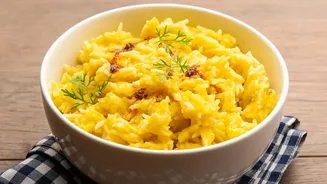
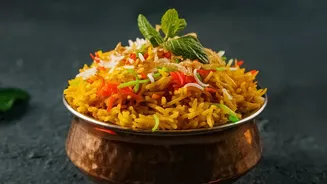
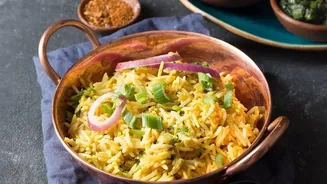
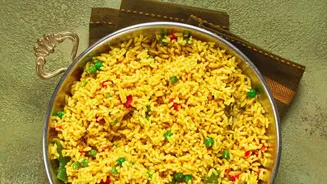
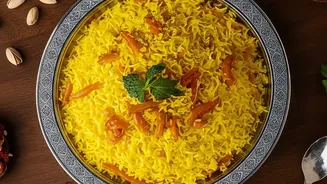
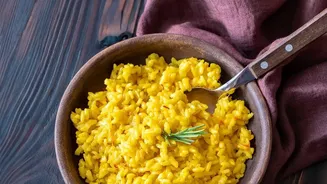
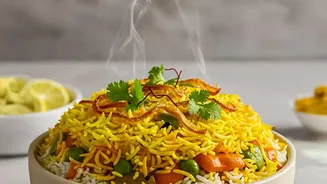
On the savoury side, saffron is the star of many iconic rice dishes. In Italy, it's the defining ingredient of Risotto alla Milanese, a creamy and luxurious dish originating in Milan. Legend has it that the dish was invented in the 16th century by a glassmaker's apprentice who used saffron to tint glass and decided to add it to a wedding feast's rice as a joke. The result was an instant classic, a rich rice dish cooked slowly with broth, onions, butter, and that signature golden hue. Persian cuisine showcases saffron beautifully in dishes like Tahchin, a baked rice cake with a crispy, golden crust called 'tahdig'. Saffron rice is also fundamental to many types of Indian Biryani, where it imparts both colour and a royal fragrance to the layered rice and meat or vegetables. These dishes celebrate saffron's ability to provide a deep, umami-like flavour and an enticing aroma that signals a special meal.
The Sweet Side of Saffron
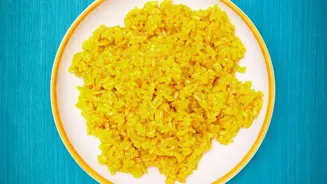
Just as it elevates savoury food, saffron transforms simple ingredients into exquisite desserts. In India and Pakistan, Zarda is a beloved sweet rice dish made for celebrations. The name comes from the Persian word 'zard', meaning 'yellow', a direct reference to the golden colour saffron provides. Basmati rice is cooked with sugar, ghee, and fragrant spices like cardamom and cloves, then studded with nuts and raisins. The saffron provides not just colour but a delicate floral note that balances the sweetness. Similarly, Persian culture has Sholeh Zard, a fragrant and comforting rice pudding. Meaning 'yellow pudding', it involves slow-cooking rice until it's exceptionally soft, then enriching it with sugar, rosewater, and a generous amount of saffron. It’s often garnished with cinnamon and slivered almonds and is traditionally prepared for religious ceremonies and to share with loved ones.
Where Sweet Meets Savoury
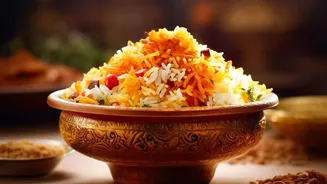
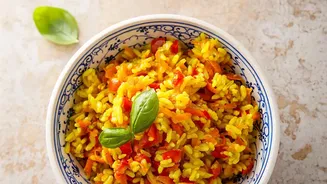
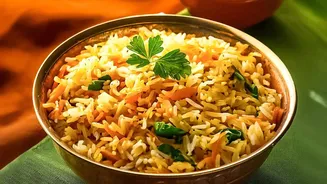
Some of the most fascinating saffron rice dishes are those that blur the line between sweet and savoury entirely. Persian Jewelled Rice, or Javaher Polow, is a prime example. This celebratory dish gets its name from the colourful ingredients that resemble gems scattered through the fluffy rice. It features saffron-tinted basmati rice tossed with a mix of sweet and tangy elements like barberries, raisins, candied orange peel, and carrots, alongside savoury components like toasted nuts and sometimes even spiced onions. The result is a complex tapestry of flavours and textures in every bite—a dish that is simultaneously a side to a main course and a spectacle in its own right, perfectly illustrating how saffron can unite the two sides of our palate.