


The Universe's Speed Limit
Everything in the universe has a speed limit, and that limit is the speed of light. While it’s incredibly fast—about 300,000 kilometres per second—it isn't instantaneous. Space, on the other hand, is vast beyond comprehension. This combination of finite
speed and infinite space creates a fascinating effect: when we look at distant objects, we see them as they were in the past.
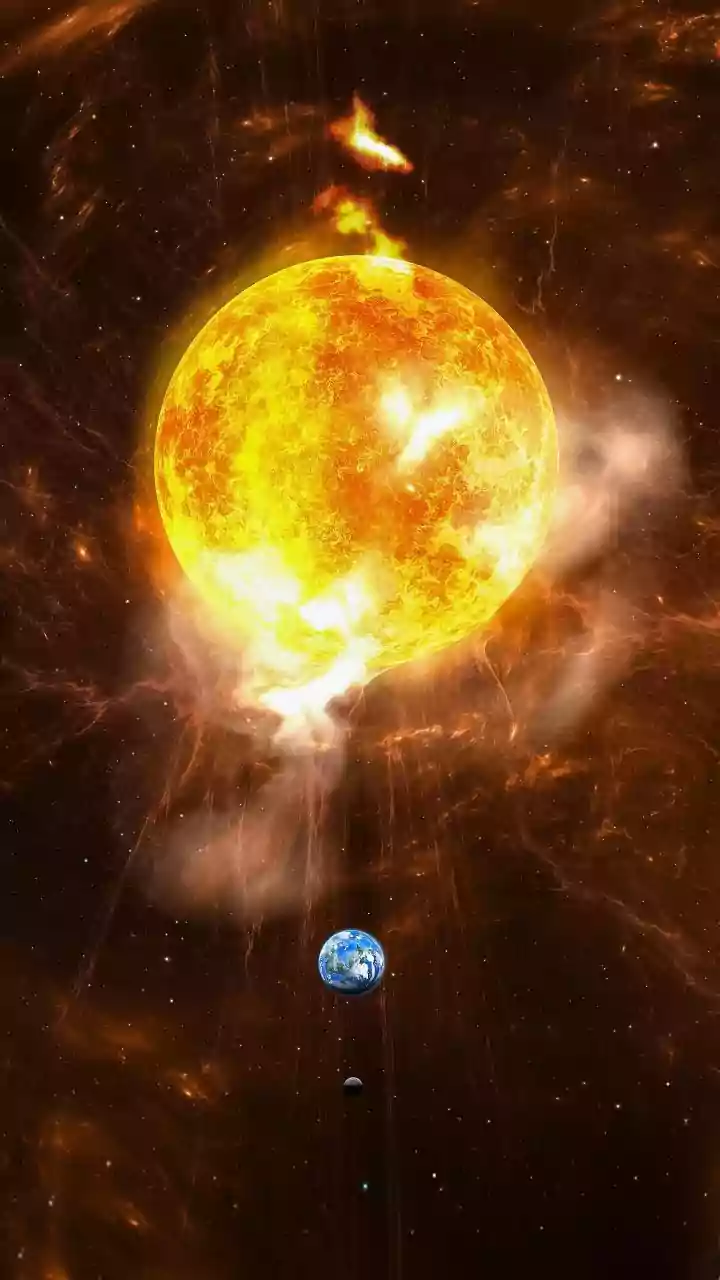
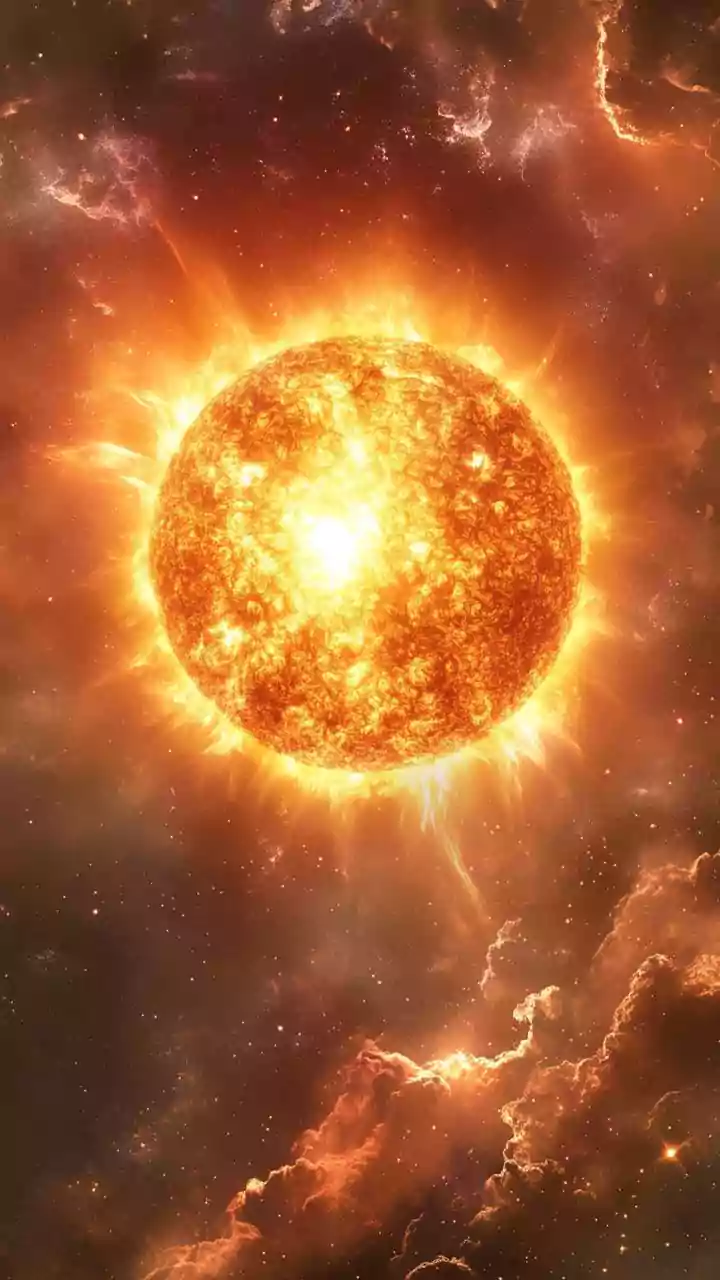
The most familiar example is our own Sun. Its light takes about 8 minutes and 20 seconds to reach Earth. So, if the Sun were to suddenly vanish, we wouldn’t know about it for over eight minutes. Every sunset we watch is an image of a Sun that was already eight minutes into its past. This delay is the fundamental principle that turns the entire night sky into a museum of time.
Postcards from the Past
To measure these immense cosmic distances, astronomers use a unit called a 'light-year'. It’s not a measure of time, but the distance light travels in one year—a staggering 9.46 trillion kilometres. When we say a star is 100 light-years away, it means the light we see from it tonight began its journey 100 years ago.
Consider Polaris, the North Star. It’s approximately 433 light-years from Earth. The photons hitting your eyes tonight left Polaris around the year 1591, during the height of Mughal emperor Akbar’s reign in India. The star Betelgeuse in the Orion constellation is even further, about 640 light-years away. The light we see from it now started travelling towards us around the 1680s, when the Maratha Empire was a dominant power. You are, quite literally, witnessing history with your own eyes.
Telescopes as Time Machines
This principle is what makes modern astronomy so powerful. Telescopes aren't just for seeing things that are far away; they are for seeing things that are far back in time. The further a telescope can see, the older the light it can capture. The Hubble Space Telescope has shown us galaxies as they were billions of years ago, when the universe was much younger.
Now, the James Webb Space Telescope (JWST) is pushing that boundary even further. It is designed to capture infrared light from the very first stars and galaxies that formed after the Big Bang, over 13.5 billion years ago. It’s not just looking across space; it’s peering into the dawn of cosmic time. Every image it sends back is a baby picture of the universe, allowing scientists to piece together the story of how everything we know came to be.
Looking at Cosmic Ghosts
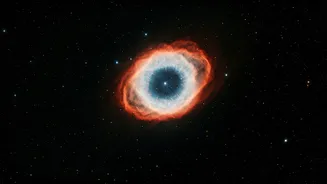
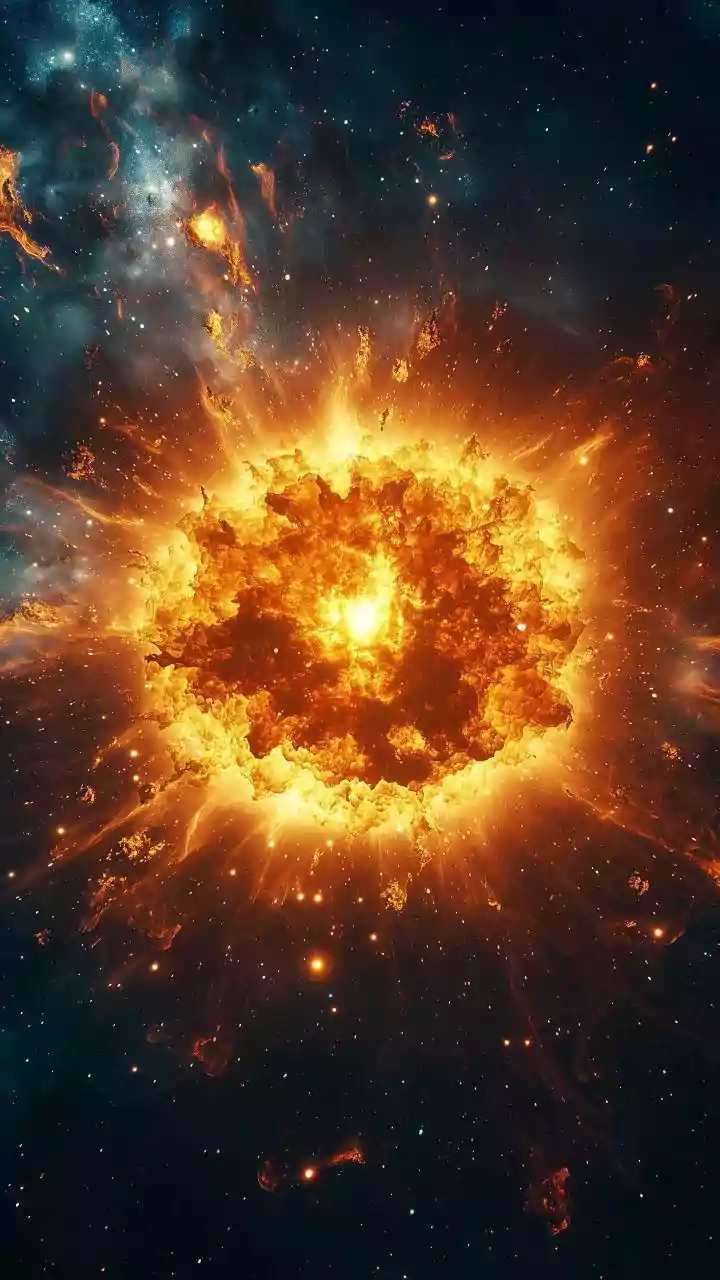
The implications are mind-bending. Because the light takes so long to reach us, many of the stars you see in the night sky might not even exist anymore. For a massive star that is, say, 1,000 light-years away, its lifespan might only be a few million years. It’s entirely possible that such a star completed its life cycle, exploded in a supernova, and died thousands of years ago. Yet, from our vantage point, its light continues to stream towards us, a ghostly echo travelling through space. We would have no way of knowing it’s gone until its final burst of light—or the subsequent darkness—completes its thousand-year journey to Earth.
A Dose of Cosmic Perspective
Understanding this doesn’t require a degree in astrophysics. It simply requires a moment of quiet reflection. This cosmic time delay connects us to the past in the most profound way imaginable. It’s a humbling reminder of our place in the universe—a fleeting moment on a tiny planet, looking out at an ancient sea of light.
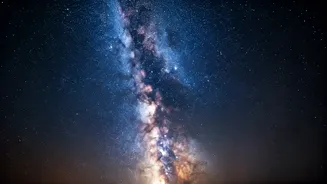
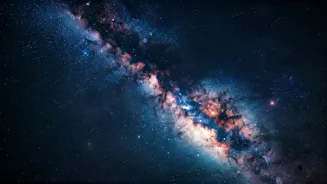
It infuses the act of stargazing with a sense of wonder and perspective. The light from the Andromeda Galaxy, our closest major galactic neighbour, is 2.5 million years old. When that light began its journey, our distant hominid ancestors were just beginning their own journey on Earth. We are connected to that deep past every time we glance in its direction.