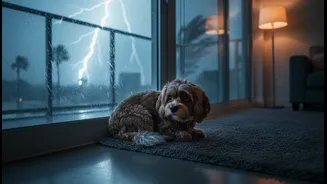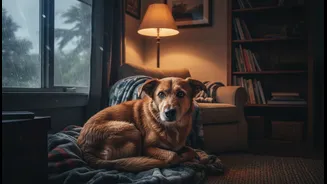






Build a Monsoon Safe Haven
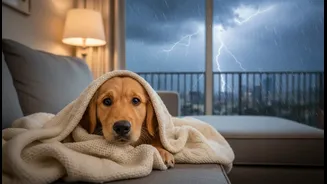
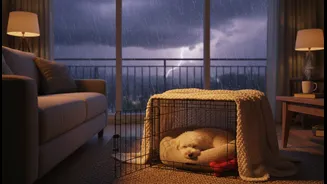
The first step is to create a secure den where your pet can retreat. In an apartment, this can be a crate, a closet, or even a bathroom—any small, enclosed space where they feel protected. Make it inviting with their favourite soft blankets, toys, and
a water bowl. The goal is to make this their go-to comfort zone, so never force them inside. Let them discover it as their personal sanctuary. Closing the curtains can also help by blocking out startling flashes of lightning.
Muffle the Roar of the Storm
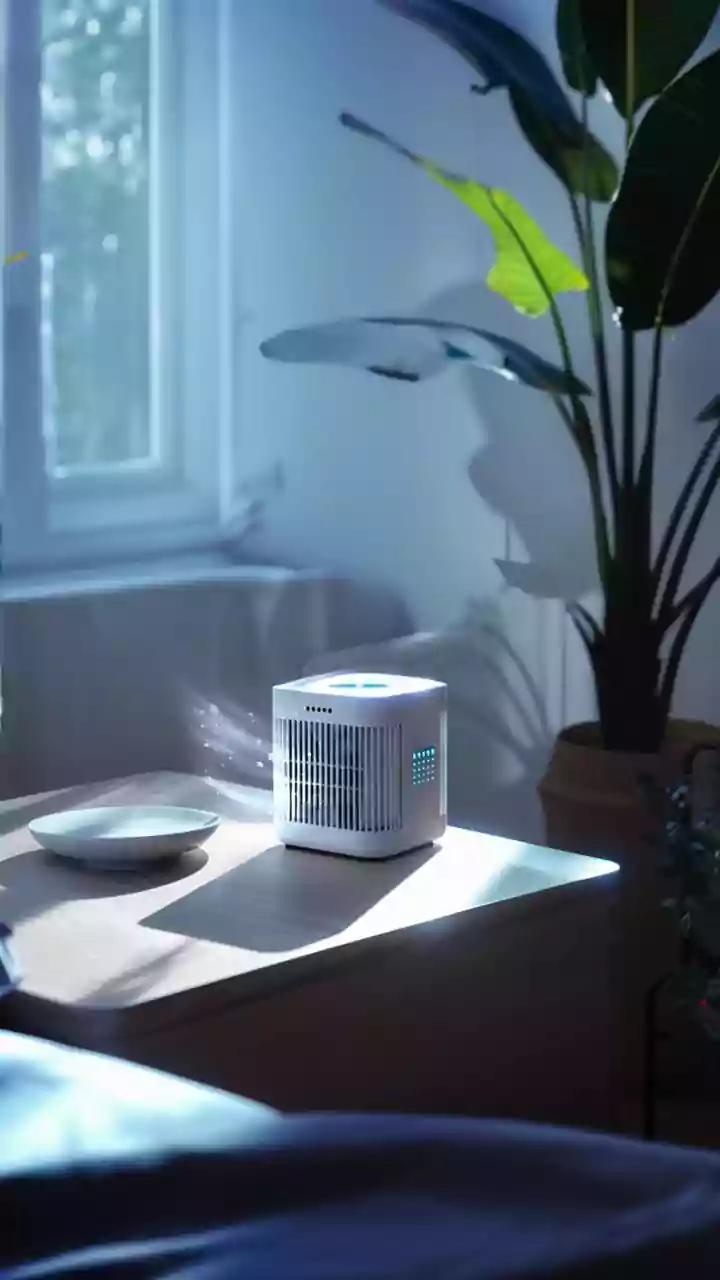
A pet's hearing is far more sensitive than ours, making thunder especially jarring. You can help muffle the sound by closing all doors and windows. Playing soothing classical music, turning on the television, or using a white noise machine can effectively mask the rumbles from outside. Even a running fan can provide a consistent, calming sound that distracts from the unpredictable storm. The key is to create a buffer of familiar, steady noise to drown out the scary sounds.
The Power of Positive Distraction
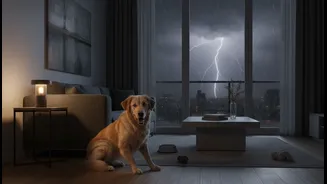
Instead of focusing on the storm, redirect your pet’s attention with engaging activities. If they are only mildly anxious, a favourite game of tug, a puzzle feeder filled with treats, or a long-lasting chew can work wonders. This helps them build a new, positive association with the sound of rain and thunder. Rather than seeing storms as a threat, they can start to see them as a time for special treats and playtime with you. However, if a pet is too stressed to engage or accept a treat, it's a sign they need more support.
Your Calmness is Their Anchor
Pets are incredibly intuitive and often mirror our emotions. If you are anxious or jumpy during a storm, they will pick up on your stress, confirming their fears that something is wrong. It's important to act calm and normal. Speak in a relaxed voice and go about your usual activities. While it's tempting to over-console a trembling pet, experts suggest that excessive coddling can sometimes reinforce the idea that their fear is justified. Instead, project confidence to show them there is nothing to be afraid of.
Try Desensitisation for Long-Term Relief
For long-term improvement, you can work on desensitising your pet to storm sounds. This involves playing recordings of thunder at a very low volume while your pet is relaxed. Pair the sound with something positive, like a high-value treat or a fun game. Over several weeks or months, you can gradually increase the volume, always keeping it low enough that it doesn't trigger anxiety. This process, called counter-conditioning, slowly teaches their brain to associate the once-scary noise with a pleasant experience. Sessions should be short, around 10-15 minutes, to avoid stress.
When to Consider Calming Aids and a Vet
For some pets, severe anxiety requires more intervention. Products like anxiety wraps or Thundershirts apply gentle, constant pressure that can have a calming effect, similar to swaddling an infant. Pheromone diffusers for both cats and dogs can also help create a more relaxed environment. If your pet’s storm phobia is severe—leading to destructive behaviour, attempts to escape, or self-harm—it’s crucial to consult your veterinarian. They can rule out other medical issues and may recommend prescription anti-anxiety medication to keep your pet safe and comfortable.