



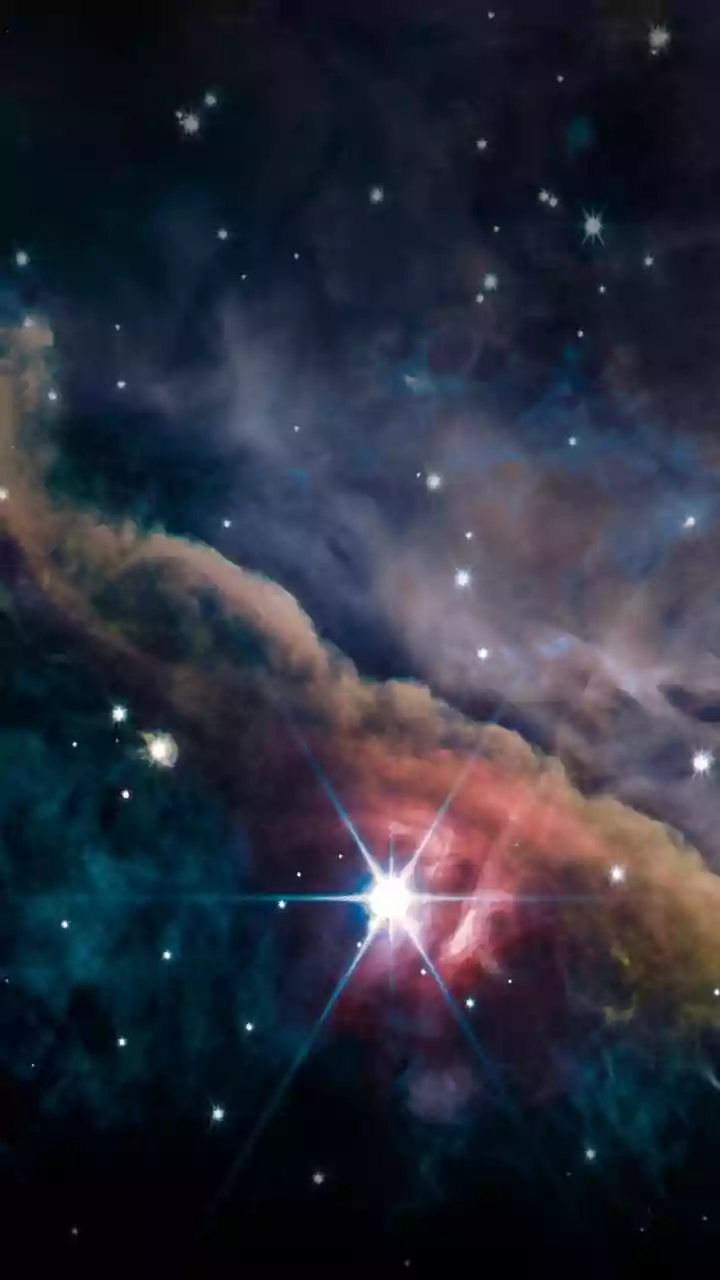





A New Way to Experience the Cosmos
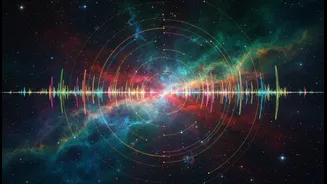
Imagine listening to the symphony of a star-forming region or hearing the unique signature of a supermassive black hole. This is the world of data sonification, a process where scientists convert astronomical data into sound. While there's no sound in the vacuum
of space, this technique provides a new, immersive way to conceptualize the vast amounts of information collected by telescopes like NASA's Chandra X-ray Observatory and the James Webb Space Telescope. These are not arbitrary musical compositions; they are faithful translations of data, designed to be captivating and scientifically accurate. The goal is to represent the universe through another sense, opening up cosmic exploration to a wider audience.
From Pixels to Pitch
The process of turning an image into sound involves mapping different data points to various elements of sound. Scientists and musicians collaborate to assign pitches, volumes, and even different instrumental textures to specific features in an image. For example, the brightness of a star or galaxy can determine the volume of a note, so the brightest parts of an image are the loudest. An object's vertical position in the image can correspond to its pitch, with objects at the top being higher-pitched and those at the bottom lower. Different types of light, such as X-rays or infrared, can be represented by different instruments—like a piano for X-rays and strings for infrared data—allowing listeners to distinguish multiple layers of information at once.
More Than Just Music
The primary motivation behind sonification is to make astronomy more accessible, especially for individuals who are blind or have low vision. It provides a rich, detailed way to experience the data that was previously only available visually. However, the benefits extend to everyone. Scientists are finding that listening to data can reveal subtle patterns, trends, and anomalies that might be missed by visual analysis alone. The human ear is excellent at discerning complex patterns and filtering signals from noise, a phenomenon known as the "cocktail party effect," which can be a powerful tool for scientific discovery. Furthermore, these cosmic soundscapes have proven to be a powerful tool for public engagement, capturing the imagination of millions and fostering a deeper appreciation for the cosmos.
The Symphony of the Stars
Recent sonification projects have translated some of the most iconic space images into sound. The 'Cosmic Cliffs' of the Carina Nebula, captured by the James Webb Space Telescope, has been transformed into a vibrant and full soundscape. The gauzy, blue-hued areas of gas produce windy, drone-like sounds, while the denser regions are represented by a clearer, more melodic composition. Stars are often represented by individual notes, like a glockenspiel or piano, with the brightest stars triggering cymbal crashes to mark their prominence. In another project, data from the supermassive black hole at the center of the M87 galaxy was translated by mapping radio waves to low tones, visible light to mid-range tones, and X-rays to the highest tones, with the loudest point corresponding to the black hole itself. These examples show how sound can add a rich, new dimension to our understanding of cosmic structures.