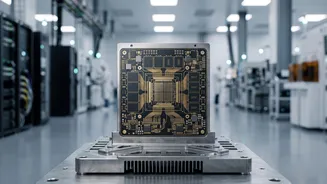








A fresh set of US regulations is sending ripples through Asia’s booming data centre industry. New licensing rules aimed at restricting China’s access to advanced technology are now impacting key digital hubs, forcing a major recalibration.
The New Regulatory Hurdle
On November
16, 2026, the U.S. Department of Commerce's Bureau of Industry and Security (BIS) issued a new rule that extends its export controls in a significant way. The regulation now requires data centres anywhere in the world to obtain a U.S. license if they provide significant remote computing capacity to companies headquartered in China or other restricted nations like Russia and Iran. This move specifically targets the practice of Chinese firms renting processing power from data centres in third-party countries to train advanced Artificial Intelligence (AI) models, thereby circumventing direct bans on purchasing high-end U.S. chips. The rule took effect on November 19, 2026, and gives existing data centres 90 days to comply or obtain the necessary licenses for their restricted clients.
Which Nations Are in the Spotlight?
The rule casts a wide net, but specifically names five countries as presenting a 'higher-than-normal risk of diversion': Singapore, Malaysia, Indonesia, Thailand, and Brazil. Data centres in these nations now need a U.S. license to import specified advanced semiconductors, such as those made by Nvidia, unless the chips are for a U.S.-headquartered company. This destination-based requirement puts the onus on chip exporters and data centre operators to conduct rigorous due diligence on their customers, including their ownership structures, to ensure they are not indirectly serving entities from restricted countries. Operators who refuse to provide necessary customer information will be treated as requiring a license. The move has been met with concern, with Thailand's Foreign Minister warning it could undermine the country's ambition to become a data hub, while Singapore's government is studying the impact carefully.
Closing a Geopolitical Loophole
This policy is a logical extension of Washington's ongoing efforts to limit China's technological and military advancement. U.S. national security officials argue that controlling physical hardware shipments is insufficient if restricted entities can simply 'rent' the same capabilities from offshore cloud providers. The new regulation is designed to prevent U.S. chips from being used to train advanced AI models that could support military and intelligence activities threatening American interests. The policy pivot became more urgent following a scandal involving a major U.S. chipmaker and a Singapore-based data centre company suspected of diverting technology to China, which put a spotlight on this remote access loophole.
The Ripple Effect on Asia's Tech Boom
The implications for Southeast Asia's thriving data centre market are significant. The region, particularly hubs like Johor in Malaysia, has attracted billions in investment for data infrastructure, partly due to its ability to serve a wide range of clients, including major Chinese tech firms like ByteDance and Alibaba. The new rules threaten to bifurcate the market, creating a divide between facilities serving U.S. hyperscalers like Google and Amazon, and those catering to Chinese-linked tenants, who now face greater compliance risks and uncertainty. Financiers who have poured roughly $49 billion into Asia Pacific data centre loans since 2023 are now reassessing their deals. Some analysts predict a slowdown in investment as lenders re-evaluate risks associated with export controls, while stock prices for regional data centre operators have already taken a hit.