


What Exactly Is a Planetary 'Parade'?
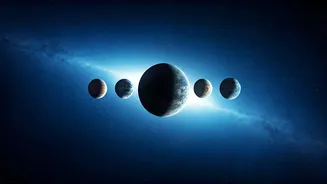
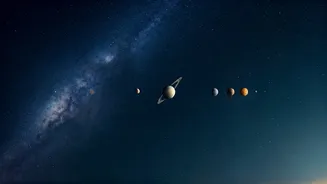
Tonight, the solar system is giving us a unique perspective. A planetary alignment, often called a “parade,” occurs when several planets gather in a small sector of the sky from our viewpoint on Earth. It’s not that they are actually in a perfect physical
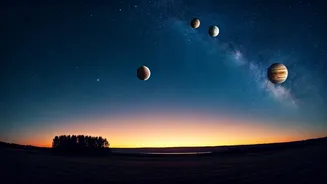
line out in space—that’s incredibly rare. Instead, their orbits have brought them to a place where they appear clustered together. This evening’s event is special because it involves five planets: Mercury, Jupiter, Venus, Uranus, and Mars. They will form a celestial arc stretching from the low western horizon upwards. While the term “massive” might suggest a sky crowded with planets, they will be spread out, creating a graceful string of pearls rather than a tight cluster. Still, seeing this many planetary neighbours at once is a fantastic opportunity.
Your Guide to Spotting Each Planet
The key is to know what you’re looking for. Start your search just as dusk settles in. The easiest to spot will be Venus, the dazzlingly bright “evening star” that will outshine everything else in the western sky. Look a bit lower and to the left of Venus to find Jupiter, which will also be quite bright but much closer to the horizon. Mercury will be even lower than Jupiter, making it the most challenging to see as it will dip below the horizon very quickly. Higher up in the sky, well above Venus, you’ll find Mars, identifiable by its distinct reddish-orange glow. Finally, for the dedicated observer, Uranus is nestled between Venus and Mars. However, due to its distance, you will almost certainly need a pair of binoculars or a small telescope to distinguish it from a faint star.
When and Where Should I Look?
Timing is everything for this event. The ideal viewing window opens about 20-30 minutes after sunset. You’ll need a clear, unobstructed view of the western horizon. This is especially crucial for spotting Mercury and Jupiter, which will be low in the sky and will set not long after the sun does. The entire planetary arc will be visible for about an hour. As the sky grows darker, Venus and Mars will remain prominent, but the lower planets will have disappeared. So, be ready to head outside as soon as the sun’s glow begins to fade. Any open space, park, or rooftop with a clean westward view will be a perfect observation spot. Check your local sunset time and set a reminder!
Do I Need a Telescope?
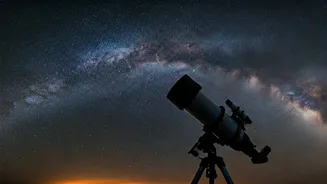
The short answer is no, but it helps! Four of the five planets—Venus, Jupiter, Mars, and Mercury—are all bright enough to be seen with the naked eye. Anyone can step outside and enjoy the sight of these celestial bodies without any special equipment. However, a good pair of binoculars will dramatically enhance your experience. With binoculars, you might be able to spot Jupiter’s largest moons or get a better sense of Mars’s colour. And for Uranus, binoculars or a telescope are essential. It's too faint and distant to be reliably seen with the naked eye, especially from a city. So, if you have binoculars, tonight is the night to dust them off.
Tips for Stargazers in the City
Living in a bright city like Mumbai, Delhi, or Bengaluru? Don't despair. While light pollution is a challenge, this planetary lineup is bright enough to cut through a fair amount of urban glow. Venus, in particular, is so brilliant it’s often visible even from the most light-polluted areas. The key is to minimise direct light in your immediate surroundings. Find a local park, a quiet rooftop, or a spot on a balcony that isn’t facing a bright streetlamp. Give your eyes at least 15 minutes to adjust to the darkness; this will help you pick out the fainter objects like Mars and Jupiter. The lower the planets are on the horizon, the more atmospheric haze and light pollution they have to shine through, so managing your expectations for Mercury is wise.