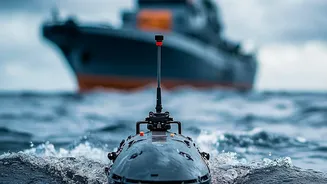







The dream of self-driving ships navigating the world's oceans is closer than ever, but how do you test them without risking disaster? Researchers at IIT Madras have an answer: a sophisticated virtual testing ground called SeaNav.
What is SeaNav?
SeaNav, short for Sea Navigation,
is a cutting-edge digital twin platform developed by the Department of Ocean Engineering at the Indian Institute of Technology Madras. Think of it as an ultra-realistic video game for ships. It creates a high-fidelity virtual maritime world where autonomous navigation systems can be tested, validated, and trained without ever touching real water. This is crucial because real-world testing for self-driving vessels is incredibly expensive, complex, and potentially dangerous. SeaNav provides a safe, controlled, and scalable alternative to navigate these challenges, addressing a major hurdle for the global shipping industry, which is responsible for carrying over 80% of world trade.
A 'Digital Twin' of the High Seas
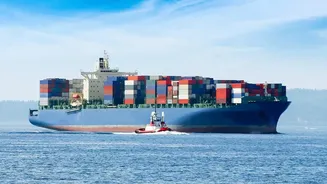
The power of SeaNav lies in its realism. Built on the Unity3D engine, it constructs a 'digital twin' that accurately simulates the complex dynamics of the ocean. This includes replicating ocean waves, vessel movements, and various navigation environments with remarkable precision. To ensure the simulations are true to life, the system has been calibrated using a benchmark tanker vessel that is approximately 320 meters long. This allows the results from virtual tests to closely mirror what would happen in actual commercial shipping operations. Unlike simpler simulators, SeaNav also models realistic sensor limitations, such as noise and delays, preparing navigation systems to work in fog, rain, and low visibility.
Why Autonomous Shipping Needs a Virtual Playground
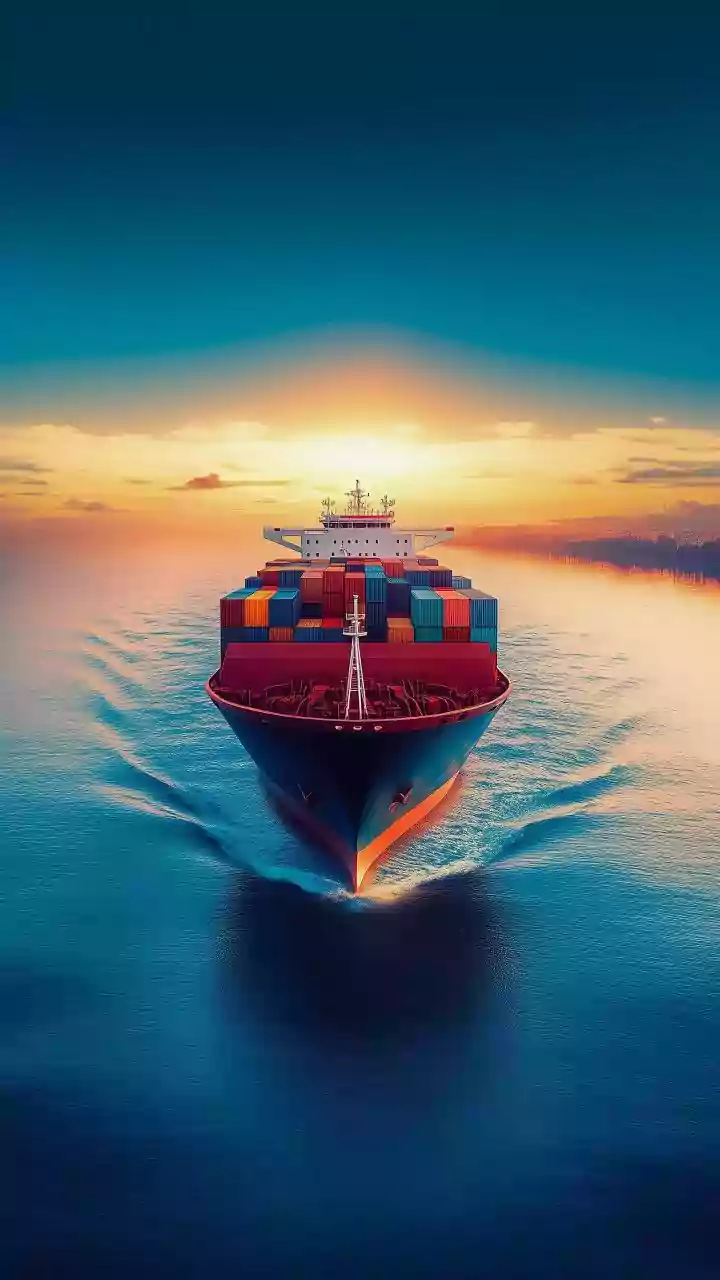
The push for autonomous ships, or Maritime Autonomous Surface Ships (MASS), is driven by the promise of enhanced safety and efficiency. With human error implicated in a vast majority of maritime incidents, automation offers a path to fewer accidents and more reliable voyages. These smart ships can optimise routes around bad weather and traffic, saving fuel and reducing emissions. However, the artificial intelligence (AI) and complex algorithms that guide these ships must be flawless. SeaNav allows developers to push their systems to the limit, testing collision avoidance manoeuvres and responses to unexpected events in a virtual space where the stakes are zero. It creates a crucial bridge between simulation and real-world deployment.
Immersive Training and Broader Applications
SeaNav isn't just for AI; it's for humans, too. The platform includes an immersive Virtual Reality (VR) interface using Meta Quest headsets. This allows maritime professionals, researchers, and trainees to experience the simulation from the ship's bridge, providing realistic training for emergency response, tricky port approaches, and complex manoeuvres. The technology's multi-vessel simulation capability also opens doors for other applications, including coastal surveillance, coordinating search-and rescue operations, and even maritime defence strategies. Dr. Suresh Rajendran, an Associate Professor at IIT Madras's Department of Ocean Engineering, notes that the platform creates an environment where both autonomous systems and human operators can be trained safely and efficiently.
Steering India's Maritime Future
The development of SeaNav is a significant milestone for India's technological ambitions. It strongly aligns with national initiatives like the 'Sagarmala Programme' and 'Maritime India Vision 2030', which both emphasise the need for smart ports, digital technologies, and autonomous systems. By creating this indigenous platform, India reduces its reliance on foreign technology and positions itself as a key player in the future of maritime innovation. This work, housed within research groups like the Center for Marine Autonomous Systems (CMAS) at IIT Madras, aims to make India a leader in automation for marine operations. The platform can be used to strengthen safety and develop AI_assisted navigation strategies for major Indian ports, including those in Chennai, Mumbai, Visakhapatnam, and Kochi.