
Why Yoga For Flexibility?
The idea that you need to be flexible to start yoga is a common myth. In truth, yoga is the practice that creates flexibility. It works by gently stretching your muscles and the connective tissues around them. Unlike other forms of exercise that can shorten
muscles, yoga focuses on lengthening them. The key isn't to push yourself into pretzel shapes overnight, but to establish a gentle, daily routine. Consistency, even just 10-15 minutes a day, tells your body it's safe to release tension, leading to a greater range of motion over time.
Cat-Cow Stretch (Marjaryasana-Bitilasana)
This is the perfect warm-up for your spine. It's a gentle, flowing movement that increases spinal awareness and flexibility. Start on your hands and knees, with wrists under your shoulders and knees under your hips. As you inhale, drop your belly towards the mat, lifting your chest and tailbone for Cow Pose. As you exhale, round your spine toward the ceiling, tucking your chin to your chest for Cat Pose. Flow between these two poses for 5-10 breaths, syncing your movement with your breath. This simple sequence relieves tension in the back and prepares it for deeper stretches.
Downward-Facing Dog (Adho Mukha Svanasana)
Perhaps one of yoga's most recognized poses, Downward-Facing Dog is a full-body stretch that targets hamstrings, calves, and shoulders. From your hands and knees, tuck your toes and lift your hips up and back, forming an inverted 'V' shape. Spread your fingers wide and press firmly into your hands. For beginners, it's crucial to bend your knees generously. This allows you to focus on lengthening your spine, which is more important than getting your heels to the floor. You can 'pedal' your feet, bending one knee and then the other, to gently open up the backs of your legs.
Standing Forward Bend (Uttanasana)
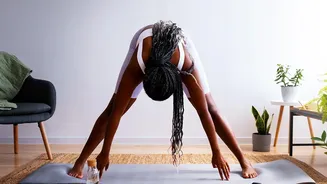
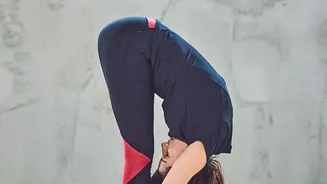
This pose is a fantastic way to release the entire back side of your body, from your heels to your neck. Stand with your feet hip-width apart and keep a soft bend in your knees. As you exhale, hinge forward from your hips, not your waist. Let your head hang heavy to release neck tension. Don't worry about touching your toes; the goal is to lengthen the spine and stretch the hamstrings. You can rest your hands on your shins, the floor, or hold opposite elbows. A generous knee bend makes this pose more accessible and protects your lower back.
Cobra Pose (Bhujangasana)
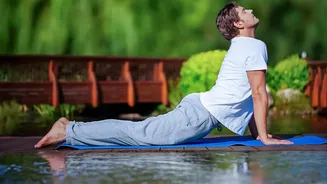
As a gentle backbend, Cobra Pose helps improve spinal flexibility and opens up the chest and shoulders, countering the effects of slouching. Lie on your stomach with your legs extended and place your hands under your shoulders, keeping your elbows close to your body. On an inhale, press into your hands to gently lift your head, chest, and shoulders off the floor. Keep your gaze forward and your hips on the mat. Only go as high as you can without straining your lower back. This pose strengthens the back muscles and improves posture.
Seated Forward Bend (Paschimottanasana)
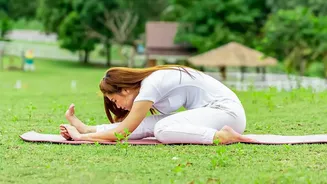
This pose provides a deep stretch for the hamstrings and spine. Sit on the floor with your legs extended in front of you. You might want to sit on the edge of a folded blanket to help tilt your pelvis forward. Inhale to lengthen your spine, and as you exhale, begin to fold forward from your hips. If your hamstrings are tight, keep your knees bent. You can hold onto your shins or ankles. If you can't reach, loop a towel or yoga strap around your feet to gently assist the stretch without rounding your back.