


Why the Dough Is Everything
The magic of a perfect naan lies not in a special oven, but in its foundation: the dough. Unlike tandoor cooking, which uses intense, all-over heat to bake the bread in minutes, a tawa provides heat from the bottom up. This requires a dough that is specifically
prepared to be soft, pliable, and capable of puffing up with minimal cooking time. The goal is to create a dough with a delicate gluten structure that remains tender and chewy, rather than becoming tough or cracker-like on the pan. The right leavening, hydration, and resting period are all crucial components that work together to mimic the tandoor effect on your stovetop.
Assembling Your Ingredients
This recipe can be made with or without yeast. Using baking powder and baking soda is a common and quicker alternative. Here’s what you’ll need: Flour (Maida): All-purpose flour is the traditional choice for its ability to produce a soft, chewy texture. Leavening: You can use instant yeast or a combination of baking powder and baking soda. Yeast provides a deeper flavour and classic rise, while baking agents offer a faster, no-fuss alternative. Yogurt (Curd): A key ingredient, yogurt adds a slight tang and, more importantly, tenderises the dough, keeping the naan soft. Sugar: A small amount of sugar helps to activate the yeast (if using) and aids in browning. Warm Liquid: Lukewarm milk or water is used to bring the dough together. The warmth helps activate the leavening agents. Fat: A tablespoon of oil or melted ghee in the dough adds richness and softness. For Topping: Finely chopped garlic, fresh coriander, and melted butter or ghee for brushing.
Step-by-Step: Perfecting the Dough
Patience during this stage is rewarded with incredibly soft naan. First, combine your dry ingredients—flour, salt, sugar, and your chosen leavening agent (baking powder/soda or yeast). If using yeast, activate it first in warm water with a pinch of sugar until it froths. Next, make a well in the centre of the dry ingredients and add the wet components: yogurt, oil/ghee, and the activated yeast mixture or lukewarm milk/water. Begin mixing from the centre, gradually incorporating the flour until a shaggy dough forms. Transfer the dough to a lightly floured surface and knead for 8-10 minutes. The final dough should be smooth, soft, and slightly tacky but not sticky. If it's too sticky, add a teaspoon of flour at a time; if too dry, add a few drops of water.
The Crucial Resting Period
Once kneaded, place the dough in a lightly oiled bowl, cover it with a damp cloth or plastic wrap, and let it rest in a warm place. This step, known as proofing, is non-negotiable for soft naan. It allows the gluten to relax, making the dough easier to roll, and lets the leavening agents get to work creating the air pockets that will make the naan light and puffy. If you're using yeast, the dough should be left for 1-2 hours, or until it has doubled in size. For a non-yeast version with baking powder/soda, a resting time of 30 minutes to an hour is sufficient.
Shaping, Flavouring, and Cooking
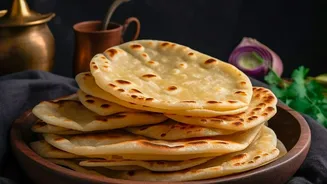
After the dough has rested, gently punch it down and divide it into equal-sized balls. On a floured surface, roll each ball into a classic oval or teardrop shape, keeping it slightly thicker than a roti. Sprinkle generously with finely chopped garlic and coriander, then gently press them in with the rolling pin. Now for the tawa technique: Heat a cast iron tawa on medium-high heat until it's very hot. Brush water on the underside of the naan (the side without toppings). Carefully place the naan, water-side down, onto the hot tawa. The water will make it stick to the surface. Cook for about a minute until bubbles appear on the surface. Now, holding the tawa by its handle, flip it upside down directly over the gas flame. This cooks the top and creates the signature charred spots. Cook for 30-60 seconds, moving the tawa around for even cooking. Once done, use a spatula to remove the naan and brush generously with melted butter or ghee.
Tips for Restaurant-Quality Results
Use a Hot Tawa: A properly heated tawa is essential. If it's not hot enough, the naan will become dry and hard instead of soft and fluffy. Don't Use Non-Stick: A cast-iron tawa works best because the wet dough needs to stick to the surface when you flip it. A non-stick pan will prevent this. Rest the Dough Balls: After dividing the main dough, let the individual balls rest for another 10-15 minutes. This makes them easier to roll without springing back. Don't Roll Too Thin: Naan should have some thickness to it, allowing it to puff up and develop a soft, pillowy interior. Keep Naan Covered: As you cook the naans, place the finished ones in a cloth-lined container or hotpot to keep them warm and soft.