


The Old Guard of Forecasting
Traditionally, weather and climate prediction has relied on numerical weather prediction (NWP) models. These are massive simulations, grounded in the laws of physics and thermodynamics, that run on some of the world's most powerful supercomputers. They
work by taking the current state of the atmosphere and calculating forward in time how it will evolve. This method has been the backbone of meteorology for decades, becoming progressively more accurate as computing power has grown. However, NWP models are incredibly demanding, both in terms of time and energy. A single detailed 10-day forecast can take hours to run on a supercomputer, consuming vast amounts of electricity. This computational cost has always been a limiting factor in how quickly and how often detailed forecasts can be produced.
A New Paradigm: AI-Driven Models
Artificial intelligence offers a fundamentally different approach. Instead of solving complex physics equations from scratch, AI models like Google DeepMind's GraphCast and Huawei's Pangu-Weather are trained on decades of historical weather data. By analyzing this vast dataset, which includes everything from satellite imagery to ground-level observations, these deep learning systems 'learn' the patterns and relationships that govern the weather. The result is a model that can take the current atmospheric state as an input and produce a highly accurate forecast of the future state. The key difference is that AI models are data-driven, not physics-based, allowing them to spot correlations that may not be explicitly programmed into traditional models.
The Promise of Speed and Accuracy
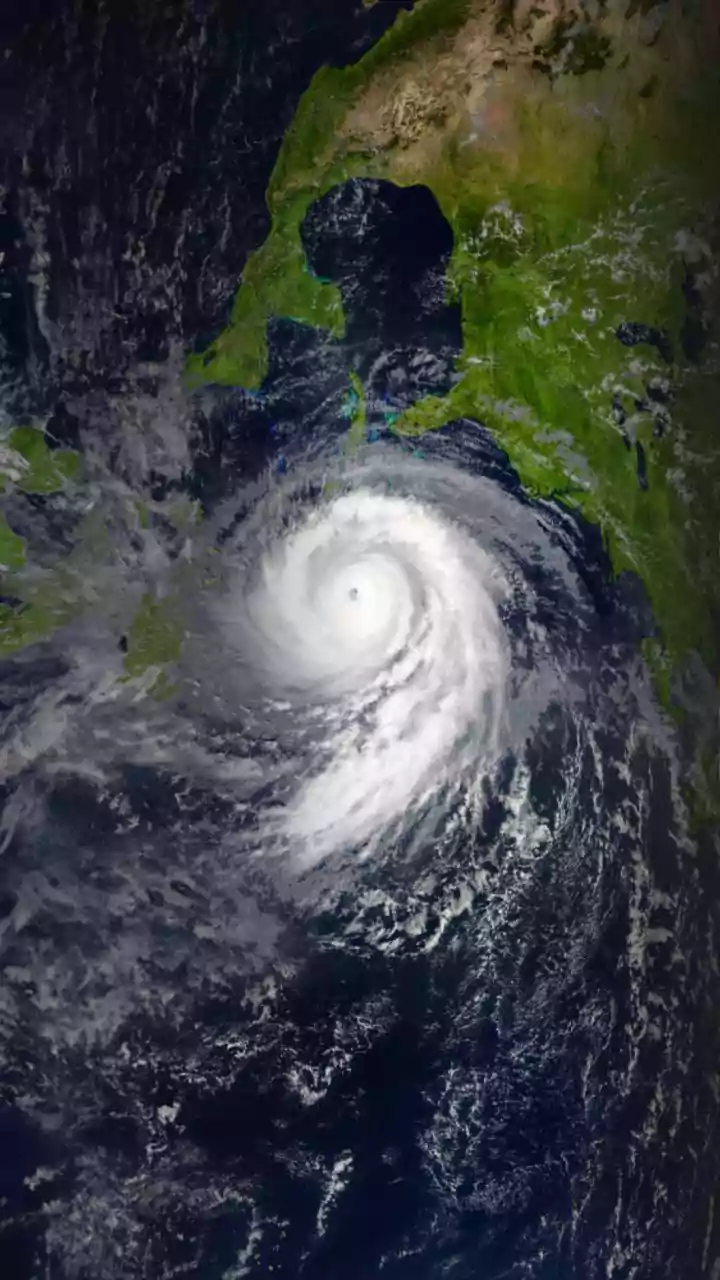
The most immediate and dramatic advantage of AI models is speed. A 10-day forecast that takes hours for a traditional supercomputer can be generated by an AI model like GraphCast in under a minute on a single specialized machine. This incredible efficiency is a game-changer. It not only saves tremendous amounts of energy but also allows for the creation of large 'ensemble' forecasts—running the model many times with slight variations to map a range of possible outcomes—far more cheaply and quickly. In terms of accuracy, these new models are already competing with and sometimes surpassing the best conventional systems, especially for medium-range forecasts of 3 to 10 days. They have shown particular skill in predicting the paths of tropical cyclones and other large-scale weather patterns.
A Tool, Not a Replacement
Despite the impressive results, scientists are quick to point out that AI is not a silver bullet. A major challenge is that AI models can be 'black boxes,' making it difficult for researchers to understand precisely why a model made a particular prediction. This is a significant issue in a field where understanding the physical drivers of weather is paramount. Furthermore, current AI models are trained on historical data. While they are excellent at predicting conditions within the range they have seen, recent studies show they can underperform when forecasting unprecedented, record-breaking extreme events like intense heatwaves. Traditional physics-based models, because they are grounded in first principles, may still have an edge in these uncharted territories.
The Hybrid Future of Forecasting
Most experts believe the future of climate and weather forecasting lies not in a complete replacement of the old guard, but in a 'hybrid' approach. This involves combining the strengths of both systems. AI can be used to speed up parts of traditional models, correct their biases, or provide rapid initial guidance that is then refined by physics-based simulations. Research institutions and national weather services, like the US National Oceanic and Atmospheric Administration (NOAA), are actively developing these integrated systems. The goal is to create a framework that is faster and more efficient thanks to AI, while retaining the trustworthiness and physical grounding of conventional models. This blended approach could offer the best of both worlds, leading to more accurate and reliable forecasts for everything from daily weather to long-term climate change.