


The Pre-Drive Vehicle Inspection
Before you even think of starting the engine, a thorough vehicle check is non-negotiable. Your car's wipers are your first line of defence against blinding rain; ensure the blades are in excellent condition and clear the windscreen without streaking.
Check that all your lights are functional—low beam, high beam, fog lamps, and hazard lights. Wet roads significantly increase braking distances, so have your brakes inspected. Most importantly, check your tyres. They are your only connection to the slippery tarmac. Ensure they have adequate tread depth—at least 3mm is recommended for monsoon conditions—to prevent hydroplaning and skidding on sharp bends.
Master Your Lights to See and Be Seen
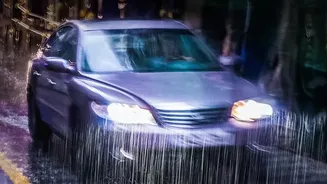
At night, and especially in the rain, visibility is drastically reduced for you and other drivers. Use your low beams in heavy rain, as high beams can reflect off the raindrops and cause a glare, further impairing your vision. Use fog lamps only in genuinely foggy conditions, not just rain, as they can be dazzling to oncoming traffic. Use your indicators generously and well in advance of a turn. If visibility drops to near-zero, the safest option is to pull over. Find a safe spot away from the main road, and keep your hazard lights on so other vehicles are aware of your position.
Adopt a 'Slow and Steady' Mindset
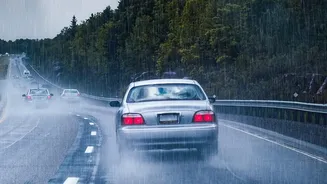
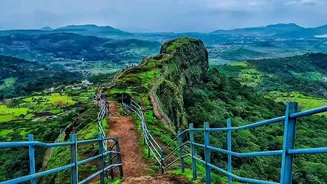
Driving in the Ghats is not a race. The winding roads, hairpin bends, and steep gradients require your full attention. During a monsoon night, this is doubly true. Reduce your speed significantly. This gives you more time to react to sudden obstacles like potholes hidden under water, fallen branches, or animals crossing the road. Avoid sudden acceleration, hard braking, or jerky steering movements, as these can easily cause you to lose control on a wet surface. Remember the golden rule on hills: give way to vehicles coming uphill.
Be Wary of Water and Debris
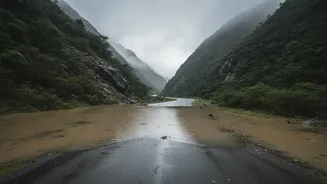
What looks like a shallow puddle could be a deep, wheel-damaging pothole. If you must drive through a waterlogged patch, do so slowly and in a low gear. After exiting the water, tap your brakes lightly to dry them out. One of the greatest dangers in the Ghats during the monsoon is landslides. The Western Ghats, in particular, are prone to them due to steep slopes and intense rainfall. Be extremely vigilant. If you see small streams of mud, falling rocks, or leaning trees on the hillside, it could be a warning sign of an unstable slope. It is better to turn back or wait than to risk crossing a potentially hazardous section of road.
Stay Connected and Carry an Emergency Kit
Mobile network coverage can be patchy in remote Ghat sections. Inform someone of your route and expected arrival time. Download offline maps for your planned route before you start. Your emergency kit should be tailored for a monsoon trip. Include a powerful torch, a fully charged power bank, a first-aid kit, a tow cable, and a tyre inflator kit. Having high-energy snacks and sufficient water is also crucial in case you are stranded for an extended period. Many routes lack facilities for long stretches, so being self-sufficient is key.
Know When to Stop Completely
The most important safety precaution is knowing when not to drive at all. Before you leave, check the weather forecast for your entire route. If warnings for extremely heavy rainfall or storms have been issued, postpone your journey. If you are already on the road and conditions become too severe—with zero visibility or signs of landslides—the bravest and smartest thing to do is to find a safe place to stop. A roadside village, a small town, or a designated lay-by are all better options than pressing on through a dangerous storm. Your destination will still be there tomorrow.