

The Dazzling Perseid Meteor Shower
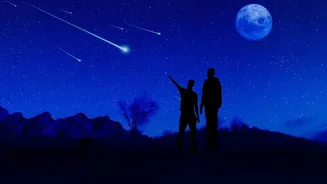
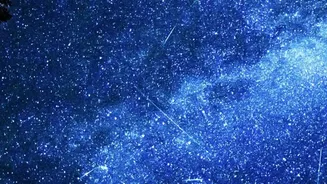
August’s main event is the annual Perseid meteor shower, one of the brightest and most active of the year. The shower will be active from mid-July to late August, but the best time to watch is during its peak on the night of August 12-13. The timing couldn't
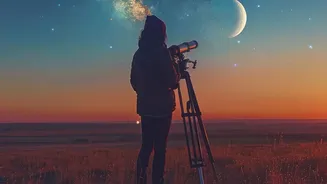
be better, as the peak coincides with a new moon, meaning the sky will be exceptionally dark and free from moonlight interference. Under these ideal conditions, you could see between 50 and 100 meteors per hour. These meteors are debris left behind by the comet Swift-Tuttle, and they slam into our atmosphere at high speeds, often creating bright, fast streaks and even the occasional fireball. For the best view, find a spot away from city lights, let your eyes adjust to the dark for about 30 minutes, and look towards the constellation Perseus in the northeastern sky. The show gets better as the night goes on, with activity starting around 11 p.m. local time and continuing until dawn.
A Parade of Six Planets
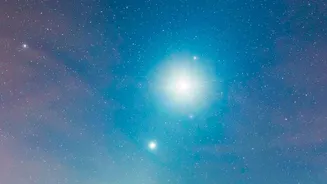
In a rare celestial treat, a six-planet alignment will grace the pre-dawn sky from August 12 to 18. Jupiter, Mercury, Mars, Saturn, Uranus, and Neptune will appear to form a line across the sky. Four of these planets—Jupiter, Mercury, Mars, and Saturn—will be bright enough to be seen with the naked eye. Mars will be identifiable by its distinct reddish glow high in the eastern sky, while Saturn will shine with a steady, yellowish tint further south. Jupiter will be a very bright, silvery point of light, though it will be low on the horizon just before sunrise. To spot the fainter Uranus and Neptune, you'll need a good pair of binoculars or a telescope. This planetary parade offers a fantastic opportunity to see multiple worlds in our solar system at once. The best time to watch is in the hour before your local sunrise.
Saturn Shines Brightly
While Saturn will officially reach opposition in early October, it will be a prominent and beautiful object throughout August. The ringed planet will be visible for much of the night, rising in the east around sunset and making its way across the sky. It will appear as a bright, non-twinkling, yellowish point of light. Even a modest telescope will offer a view of its famous rings, which are becoming more open to our line of sight. You can find Saturn shining steadily in the constellation Cetus. On the evenings of August 29 and 30, the moon will appear near Saturn, making the planet even easier to locate.
The Sturgeon Full Moon and a Lunar Eclipse
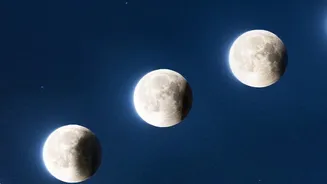
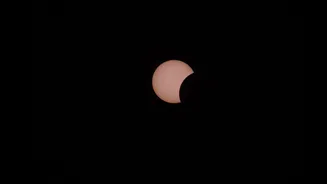
August’s full moon, known as the Sturgeon Moon, will reach its peak illumination on Friday, August 28. The name comes from Native American traditions, marking the time when the giant sturgeon fish were most easily caught in the Great Lakes. This year, the Sturgeon Moon is accompanied by a special event: a deep partial lunar eclipse on the night of August 27-28. During the eclipse, the Earth will pass between the sun and moon, casting a shadow that will cover about 96 percent of the lunar surface at its peak, leaving only a bright sliver. This deep eclipse will be visible across North and South America.
Spotting the Summer Triangle
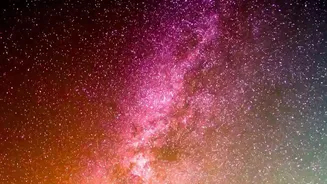
High in the August sky, you'll find a prominent star pattern known as the Summer Triangle. This is not a formal constellation but an asterism, formed by three bright stars from three different constellations. The stars are Vega in the constellation Lyra (the Lyre), Deneb in Cygnus (the Swan), and Altair in Aquila (the Eagle). This pattern is easy to spot and serves as a great celestial landmark. From a dark location, you can see the faint, glowing band of the Milky Way running right through the triangle, a breathtaking sight that reveals the combined light of billions of distant stars in our galaxy. Look high in the southeastern sky after dark to find it.