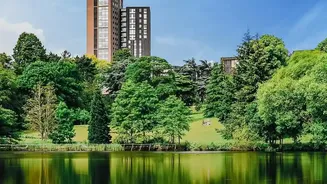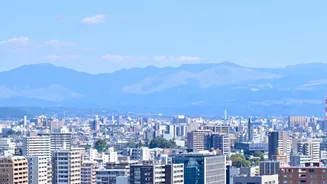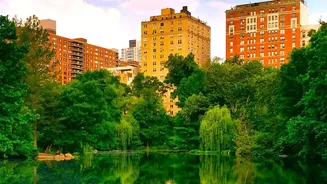





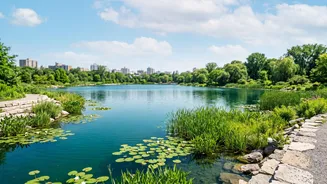
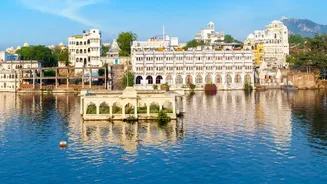
As Indian cities swelter under rising temperatures, an often-overlooked feature provides natural relief. Urban lakes are more than just scenic spots; they are vital in cooling our concrete jungles and combating the urban heat island effect.
Understanding the Urban Heat Island
If you have
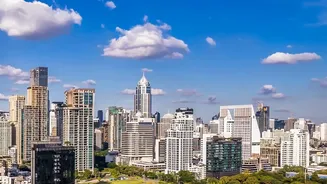
ever felt that the heart of a city is significantly warmer than its outskirts, you are not imagining it. This phenomenon is known as the Urban Heat Island (UHI) effect. Cities, with their dense concentrations of concrete buildings, asphalt roads, and dark surfaces, absorb and retain far more solar radiation than surrounding rural areas, which are rich in natural landscapes and open land. Factors like reduced green cover, heat released from vehicles and industrial processes, and buildings that block wind flow all contribute to making urban centres several degrees hotter. This effect is particularly pronounced in India, where rapid urbanization continues to transform landscapes and intensify heat stress in major metropolitan areas.
How Water Bodies Act as Natural Air Conditioners
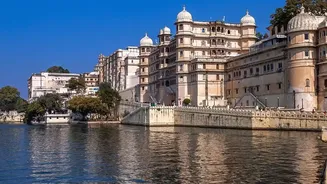
Urban lakes, rivers, and even smaller ponds serve as powerful, natural counter-measures to the UHI effect. Their primary cooling mechanism is evaporative cooling. Water has a high heat capacity, meaning it can absorb a large amount of heat before its own temperature rises significantly. As the sun beats down, water at the surface evaporates, turning from liquid to vapour. This process requires energy, which is drawn from the surrounding air in the form of heat, thereby lowering the air temperature. The result is a 'cool island' effect where the air immediately over and around the water body is noticeably cooler than in other parts of the city.
The Science of a 'Lake Cool Island'
The cooling influence of a lake is not just confined to its immediate shoreline. Studies have shown that this effect can extend for hundreds of meters, and in some cases, up to a kilometre away from the water's edge, creating a 'lake cool island'. The extent of this cooling depends on several factors, including the size and shape of the water body, local wind patterns, and the surrounding landscape. Research in Indian cities like Ahmedabad and Chandigarh has provided direct evidence of this phenomenon. A study of Sukhna Lake in Chandigarh found an appreciable temperature dip of around 7.5°C nearby during the summer. Another study focusing on the Yamuna river in New Delhi noted that the mean temperature around the river was nearly 2°C lower than the rest of the city. Larger, well-shaped lakes are generally more effective because their extensive surface area allows for more continuous evaporation.
Size Matters, But So Does Design
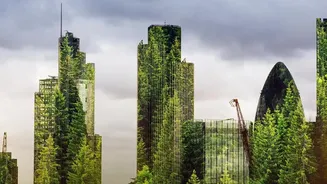
While large water bodies are proven to be effective coolants, the role of smaller ponds and canals is more complex. Some research suggests that very small, isolated water bodies might have a negligible cooling effect on air temperature. However, their effectiveness can be dramatically enhanced through smart urban design. When smaller water features are combined with other green infrastructure, like trees that provide shade and vegetation that aids in evapotranspiration, their collective cooling power increases. For instance, a network of smaller water bodies integrated into parks and greenways can cool a larger area more effectively than a single, isolated lake. This highlights the need for integrated planning, where 'blue' (water) and 'green' (vegetation) infrastructure work together.
More Than Just a Cool Breeze
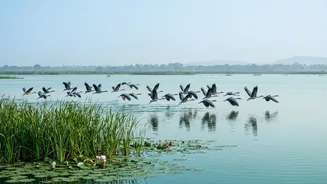
The benefits of urban lakes extend far beyond temperature regulation. They are hubs for biodiversity, providing critical habitats for birds, insects, and aquatic life in otherwise sterile urban environments. They also improve air quality, as the process of evaporation can help cleanse the air of pollutants. Furthermore, these water bodies contribute to groundwater recharge, enhance the aesthetic appeal of a neighbourhood, and provide invaluable recreational spaces for residents, boosting mental and physical well being. By reducing the ambient temperature, they can also lower the demand for energy intensive air conditioning, leading to reduced electricity consumption and lower greenhouse gas emissions.