







The End of the All-Night Edit
For any content creator in India, from a YouTuber in Mumbai to an Instagrammer in a small town, the workflow has a familiar bottleneck: video editing. What the audience sees as a slick 10-minute vlog or a 60-second Reel often takes hours, if not days,
of painstaking work. Cutting footage, correcting colours, adding subtitles, and finding the right music is a time-consuming grind. This is where AI video editors are stepping in, not as a futuristic concept, but as a practical solution that's reshaping the creator workflow from the ground up. These tools promise to slash editing time, making it possible to turn raw footage into a polished video in a fraction of the time.
What Can AI Editors Actually Do?
The magic of these AI tools lies in automation. They tackle the most repetitive and tedious parts of video editing, freeing up the creator to focus on storytelling. For instance, AI can automatically detect and remove long pauses or filler words, a huge time-saver for 'talking head' videos and interviews. Many tools can generate subtitles and captions with near-perfect accuracy in multiple Indian languages, crucial for a mobile-first audience that often watches videos on mute. Other powerful features include automatic colour correction, background noise reduction, and even suggesting the most engaging or 'viral' moments from a long video to be repurposed into short clips.
Popular Tools Making Waves in India
A number of AI video editing tools have gained popularity among Indian creators for their accessibility and powerful features. Browser-based editors like InVideo and VEED are favorites because they don't require powerful, expensive computers. Tools like Descript have revolutionized podcasting and interview editing by allowing creators to edit video by simply editing a text transcript. For creators focused on short-form content, platforms like Opus Clip and CapCut can take a long YouTube video and automatically generate several engaging, ready-to-post Reels or Shorts, complete with captions and reframing for vertical screens.
A New Workflow: From Hours to Minutes
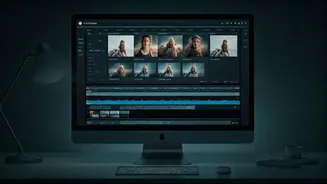
So what does the new AI-powered workflow look like? A creator might upload several hours of raw footage from their phone to a cloud-based AI editor. Within minutes, the AI generates a full transcript. The creator then edits the video by simply deleting text from the transcript, automatically removing the corresponding video segments. With another click, the AI adds accurate subtitles in both English and Hindi. It then suggests five short, punchy clips for social media, reframed for a 9:16 aspect ratio. Finally, it might apply a consistent brand look with pre-set colours and a logo. A process that once took a full day can now be condensed into a single focused session.
Beyond Speed: Smarter and Wider Reach
The benefits of AI extend beyond just speed. These tools are making content creation more strategic. By quickly repurposing a single long-form video into multiple short clips, creators can maintain a consistent presence across different platforms without burning out. Furthermore, AI-powered translation and dubbing tools are helping Indian creators break language barriers. A tech reviewer in Hindi can now use AI to create a dubbed version of their video in Tamil or English, massively expanding their potential audience without having to re-record anything.
Does This Mean the End of Creativity?
A common concern is that AI will replace human creativity. However, most creators see it differently. They view AI not as a replacement, but as a co-pilot. By handling the technical and repetitive tasks, AI frees up mental energy for the creator to focus on bigger-picture ideas, storytelling, and connecting with their audience. The goal isn't to have a robot make the video, but to use the robot to do the boring parts, so the human can be more creative. Authenticity and a unique perspective are still what make a creator successful, and AI is simply becoming another tool to express that vision more efficiently.