

A New Treasure Map for the Moon
Recent scientific efforts have culminated in the creation of the most detailed maps yet of water ice concentrations at the lunar South Pole. These maps, compiled using data from multiple missions and advanced remote sensing techniques, pinpoint locations
where water ice is not only present but potentially accessible. Unlike previous understandings that saw the Moon as a barren wasteland, we now know that vast quantities of water ice are trapped in permanently shadowed regions—deep craters and depressions that haven't seen sunlight in billions of years. These new maps highlight specific craters and ridges, like those around the Mons Mouton area, as prime candidates for future exploration and resource extraction. They act as a foundational guide, telling future robotic and human missions exactly where to land to find this crucial resource.
Why Water is Lunar Gold
On Earth, water is essential for life; in space, it is the key to an entire economy. The immense cost of launching anything from Earth is a major bottleneck for space exploration. Water is heavy, and transporting it to the Moon costs millions of dollars per kilogram. But finding it on the Moon changes everything. Lunar ice offers a local source for drinking water and breathable oxygen for astronauts, dramatically reducing the supplies that need to be launched from Earth. More importantly, water (H2O) can be split into its core components: hydrogen and oxygen. When liquefied, these two elements form one of the most powerful and efficient rocket propellants known. This turns the Moon from a destination into a critical piece of infrastructure—a cosmic gas station.
From Ice to Fuel: The Science of ISRU
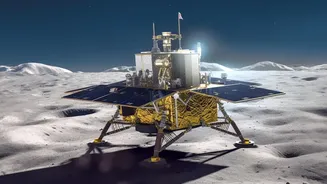
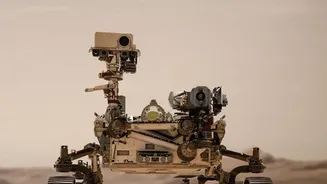
The concept of using local materials is known as In-Situ Resource Utilization, or ISRU. The process for turning lunar ice into fuel is well-understood, even if it hasn't been done on a large scale on the Moon yet. It begins with rovers drilling or scooping the icy regolith (lunar soil). This material is then heated in a contained unit, causing the ice to sublimate directly into water vapor. The vapor is collected and then condensed back into liquid water. From there, a process called electrolysis uses electricity—generated by nearby solar panels on the sunlit crater rims—to split the water molecules into hydrogen and oxygen. These gases are then cooled to cryogenic temperatures and stored as liquids, ready to fuel the next generation of rockets.
The Strategic Importance of a Lunar Gas Station
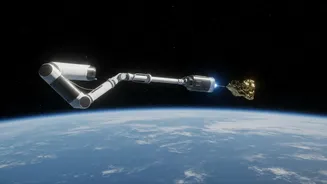
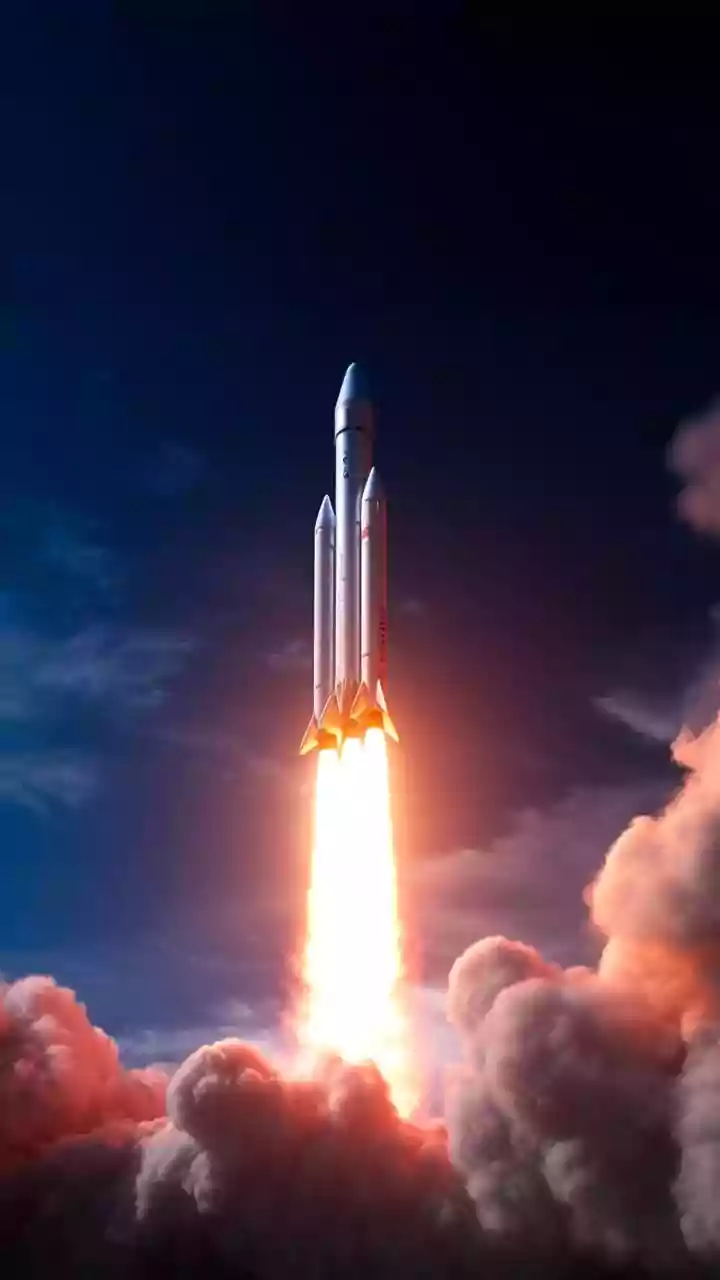
The ability to refuel in space would revolutionize our access to the solar system. Rockets launching from Earth have to carry all the fuel needed for their entire mission, which severely limits their range and payload. A lunar refueling depot would allow spacecraft to launch from Earth with minimal fuel, top up their tanks at the Moon, and then proceed to more distant destinations like Mars. This drastically lowers the cost and complexity of deep-space missions. The Moon's lower gravity also means it takes far less energy to launch a rocket from its surface compared to Earth. This could kickstart a bustling cislunar economy, involving not just national space agencies but also private companies focused on mining, transportation, and logistics.
India's Pole Position
India is uniquely positioned to be a major player in this new lunar gold rush. With the historic success of the Chandrayaan-3 mission, which made India the first and only nation to soft-land a spacecraft near the lunar South Pole, ISRO has demonstrated its expertise and staked a claim in this strategically vital region. The Indian government has laid out an ambitious roadmap, including plans for a crewed lunar landing by 2040 and the eventual establishment of a lunar base. ISRO is already collaborating with Japan's JAXA on the LUPEX mission, a lunar polar exploration rover designed specifically to investigate the presence and quantity of water ice. These initiatives, combined with the new water ice maps, place India at the forefront of the race to unlock the resources that will fuel the next half-century of space exploration.